

- Home
- Companies
- Western Green / MKB
- Applications
- Xtreme Armor - Anchor Reinforced ...
Xtreme Armor - Anchor Reinforced Vegetated System (ARVS) for Shoreline Applications - Soil and Groundwater
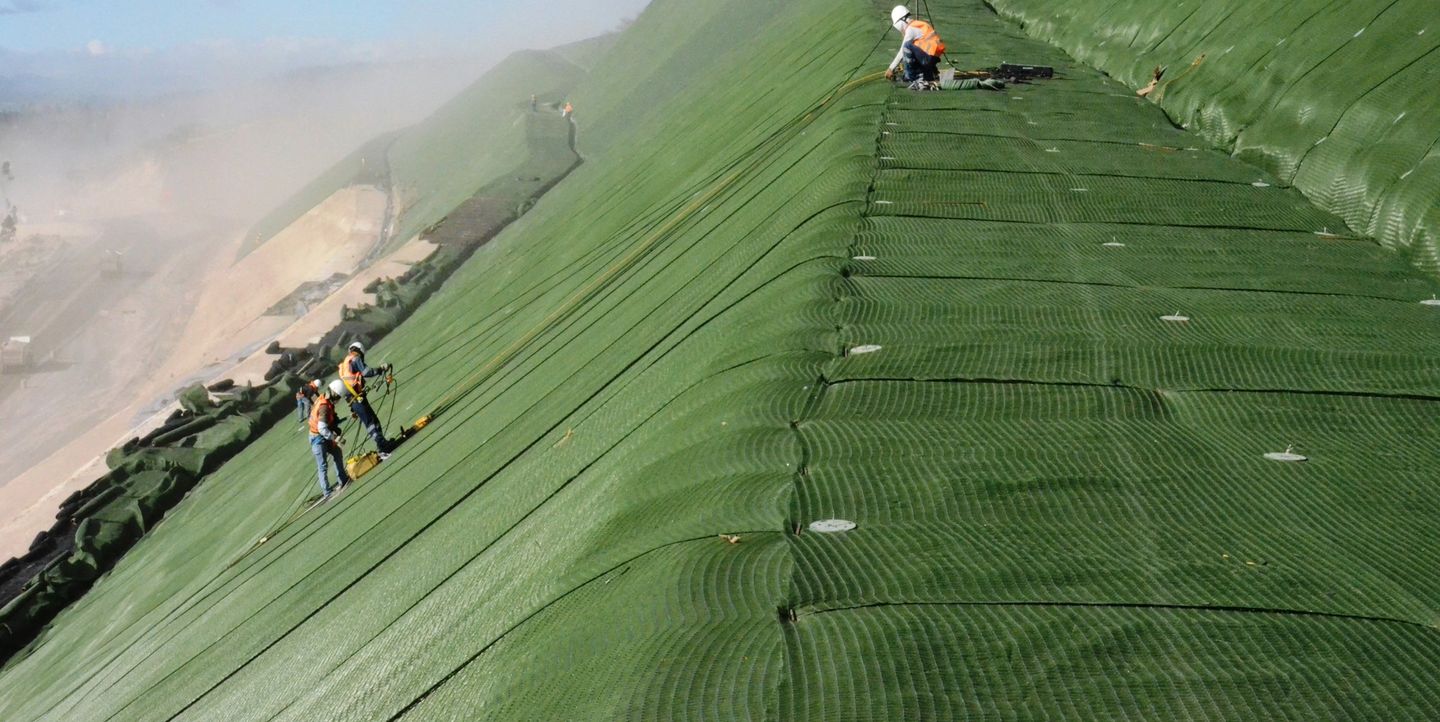
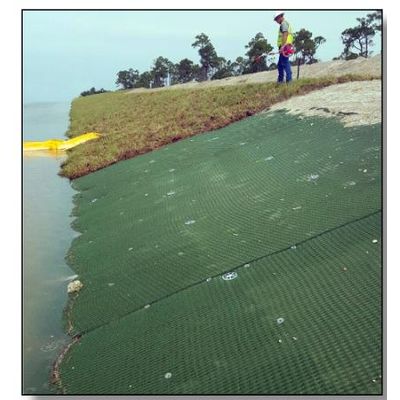
Shoreline applications for Anchor Reinforced Vegetated Systems (ARVS`s) present a particular challenge. Whether armoring the sides of levees, canal banks, lake shores or pond shores, each project brings a unique set of factors. Hydraulic forces including wave attack, overtopping flow, cross-current flow and propeller thrust may all be present on site. Additionally, the geotechnical forces on site could cause shallow plane instability.
Challenges of Shoreline Applications
A shoreline at risk may experience any of the following:
- Shallow plane failures, exacerbated by saturated soils.
- Rising and falling water levels and groundwater levels creating cyclical pressure gradients that must be released.
- Salt water and brackish conditions
- Foot and light vehicle traffic.
- Success in these challenging applications requires high performance systems, prudent and careful design and excellence in installation
Design Considerations
A successful design for a shoreline application would incorporate a number of various factors. The overall stability of the soil used to form the bank or levee must be evaluated and considered with the varying degrees of potential soil saturation. The selection of High Performance Turf Reinforcement Mat (HPTRM) and anchorage are significantly impacted by the stability of the soil within the slope. The size and frequency of Percussion Driven Anchors (PDAs) are selected based primarily on these conditions. The scope of the system must be planned to accommodate the normal water level to fall within a protected lap-zone. The vegetation, selected to weather saturated or dry conditions, can be placed to accommodate more infrequent waves or events higher up the bank. The toe of the slope will likely be terminated underwater, which requires the use of a ballast filled trench. Finally, the hydraulic forces and overall expected longevity must be considered and accounted for.
Western Excelsior Armoring Advantages
The high tensile strength and low modulus HPTRMs offered by Western Excelsior provide excellent resistance to the potential loading by geotechnical forces. Each HPTRM can be installed with a variety of anchors and fasteners to ensure performance and economy. The optimized weaving pattern is small enough to avoid wildlife entanglement, but open enough to allow for the establishment of vegetation and the release of porewater pressure. WEC woven HPTRMs are also long lasting and mechanically durable to resist foot traffic, light vehicle loads and debris impact.