


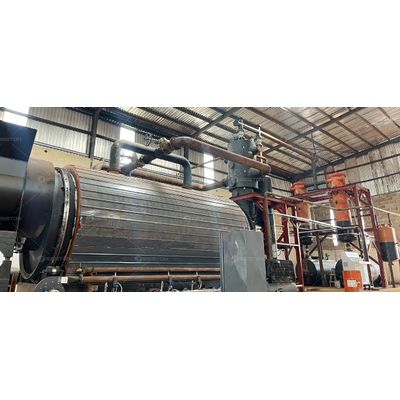
Carbon Credit Opportunities for Tyre Pyrolysis Plant
The global shift toward carbon neutrality has opened new economic pathways for industrial recyclers, particularly those operating a tyre pyrolysis plant. As environmental regulations tighten and voluntary carbon markets expand, facilities that convert waste tires into usable resources are increasingly positioned to generate verified carbon credits. This economic incentive not only enhances project bankability but also reinforces the environmental value of pyrolysis-based recycling systems.
Emission Reduction Through Waste Diversion
Every ton of end-of-life tire diverted from landfilling or open burning prevents significant greenhouse gas emissions. Traditional disposal methods release methane, carbon dioxide, and volatile organic compounds during uncontrolled decomposition or incineration. In contrast, a tyre pyrolysis plant captures and repurposes these emissions through a controlled thermolytic process.
By transforming tires into pyrolysis oil, carbon black, and syngas, the plant effectively prevents the release of CO₂ equivalents, making these avoided emissions eligible for carbon credit certification. The magnitude of these reductions varies by processing capacity, energy efficiency, and recovery rates, but the quantifiable environmental impact offers a compelling case for monetization.
Alignment With Verified Carbon Standards
To access voluntary or compliance carbon markets, pyrolysis operators must adhere to recognized carbon methodologies. Organizations such as Verra (VCS), Gold Standard, and Puro.earth provide protocols for assessing carbon offset projects based on waste avoidance and biochar production. In the context of tyre pyrolysis, carbon credit eligibility is typically grounded in:
- Avoided emissions from landfill or combustion
- Substitution of fossil-derived fuels with pyrolysis oil
- Use of recovered carbon black in place of virgin carbon black
- Internal reuse of syngas, reducing external fossil fuel demand
Each of these displacement mechanisms contributes to a lower net carbon footprint, which is calculated through life cycle assessment and third-party verification.
Role of Plant Efficiency and Data Monitoring
The volume and quality of carbon credits generated are closely tied to the efficiency of the tyre pyrolysis plant. High thermal efficiency, effective gas capture, and minimal leakages translate into higher emission offsets per ton of tire processed. Advanced facilities incorporate real-time data acquisition systems that track input-output ratios, thermal performance, and gas compositions—critical metrics for carbon accounting.
Modern pyrolysis systems designed for circularity further increase credit eligibility by integrating energy recovery loops, waste heat utilization, and ash minimization strategies. These design optimizations not only enhance carbon intensity scores but also align with sustainability reporting standards like ESG frameworks and Scope 3 emission disclosures.
Market Potential and Revenue Integration
Carbon credits derived from tyre pyrolysis projects can be sold in international markets, providing a supplementary revenue stream alongside the sale of pyrolysis oil, gas, and carbon black. With rising prices in the voluntary carbon market, particularly for credits backed by verifiable waste-to-resource technologies, pyrolysis operators gain a competitive edge in both financial and environmental performance.
Forward-thinking enterprises are bundling their tyre pyrolysis plant with digital monitoring and third-party certification systems, making credit generation an integrated function rather than a secondary benefit. This convergence of waste management and climate finance exemplifies how industrial decarbonization can translate into measurable economic returns.
Conclusion
A tyre pyrolysis plant represents more than a solution for tire waste—it is an active contributor to emissions reduction and circular economy. By aligning with verified carbon standards and optimizing operational performance, plant operators can unlock carbon credit opportunities that reinforce the financial and environmental viability of pyrolysis as a long-term sustainability strategy.