

Engineering: Custom temperature control in complex structures - Case Study
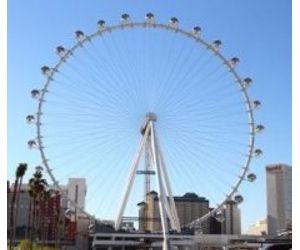
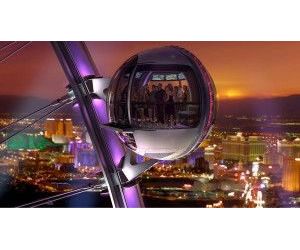
The Challenge:Control the temperature in each cabin of the world’s largest observation wheel: CaesarsEntertainment’s High Roller observation wheel at the Linq. The High Roller is 550 ft. tall and features 28 cabins, which hold 40 guests apiece. It is expected to operate 18 hours per day, 365 days a year. However, designing the complex HVAC/R systems used for temperature control was daunting considering daytime temperatures average highs of 104°F in July and lows of 39°F in December in Las Vegas. User safety and comfort were top priorities. The solution also had to fit beneath the floor of each glass-encased cabin and conform to the walls of the observation wheel with no square corners.
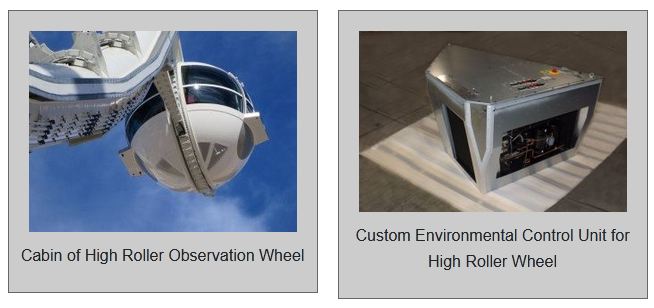
Air Innovations’ temperature control solution includes 2 custom environmental control units (ECUs) in each cabin, with each ECU composed of dual, redundant refrigeration circuits. Since each circuit operates independently, each environmental control unit has a failsafe should one of the circuits experience a failure. The net result is 4 independent circuits per cabin.
Each temperature control system communicates directly with and can be controlled by the base operation (at the bottom of the wheel). The independence of each circuit coupled with the remote control allows for load-shedding on moderate temperature days. In the highly unlikely scenario that all electrical systems in the cabin shut down, Air Innovations included a fifth cooling failsafe: a battery-operated ventilation fan that provides a level of ambient cooling until that cabin reaches the ground. Each custom environmental control system can also provide heat.
- Design ambient range is 25°F to 108°F (-3°C to 42°C), full sun exposure.
- Airflow is 1,200 CFM per ECU (2 ECUs per cabin)
- Internal control range 67°F and 73°F (19°C and 23°C)
- 4kW electric re-heaters to provide heat on cold days
- UL listed
- All design specifications were met.
- Each custom environmental control unit conforms to the convex sides of the mechanical compartment beneath the floor.
- The design supports rapid change-out without any access to ductwork or piping connections to the ECU. All access is from above the ECU (not beneath or beside it, which would require more down time). All utilities are connected via a tub and designed on a nesting principal.
- The environmental control units for this complex engineering structure incorporate multiple redundancies, supporting both safety and system efficiency.