


- Home
- Companies
- Elvatech Ltd.
- Articles
- Handheld XRF in Scrap Recycling: From ...
Handheld XRF in Scrap Recycling: From Scrap Heap to Profitable Business
Owners and managers of scrap recycling companies know that profit is not made at the baler or the scale, but at the sorting stage. A single mistake in identifying metal grades during scrap intake can wipe out the entire margin on a batch of material. Misclassify high-grade alloy scrap as something cheaper (or vice versa), and you either overpay your suppliers or undercharge your buyers – in both cases, money is lost. In short, turning a chaotic pile of mixed metal into a controlled, profitable operation depends on accurate sorting.
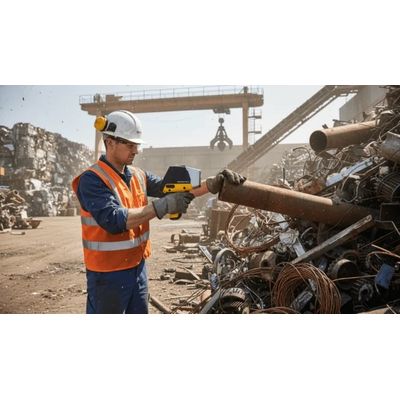
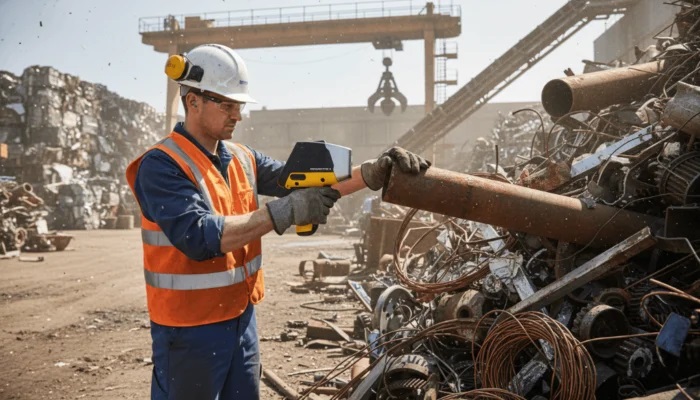
This is where handheld XRF analyzers come in. A modern handheld X-ray fluorescence (XRF) device like the ProSpector 3 Advanced empowers scrap yards to verify metal composition on the spot, ensuring every piece of scrap is correctly identified and valued. Below, we’ll explain why XRF is essential for scrap recyclers, how it works in practice, what the return on investment (ROI) looks like, and how yards are using these analyzers in daily operations. We’ll also tackle some frequently asked questions about using handheld XRF for scrap sorting.
Scrap pricing is all about chemistry. Testing the composition of incoming scrap isn’t an “optional extra” – it’s the very basis of how you price and sort material. The value of scrap metal hinges on its alloy grade and purity. Relying on visual inspection or old paperwork alone is risky, because different alloys can look very similar yet have very different values and handling requirements.
- Stainless Steel Mix-ups: Grades 304, 316, 321, duplex, and other high-alloy steels often look identical to the naked eye, but their levels of chromium, nickel, molybdenum, titanium, niobium, etc. vary widely. These differences mean different market prices and different melt properties. Confusing a 316 stainless (with ~2% Mo) for a 304 (with no Mo) could mean paying high-grade prices for lower-grade scrap or vice versa, directly hitting your bottom line.
- Aluminum Alloy Confusions: Many aluminum grades also appear similar. For example, alloy 1100 (essentially pure aluminum with ~0.05% copper and no magnesium) versus alloy 6063 (an aluminum alloy with ~0.5% magnesium) are a common source of mix-ups. If you accidentally mix 1100 and 6063 in one load, the magnesium content of 6063 could push the melt chemistry out-of-spec for what was supposed to be pure aluminum. Smelters impose penalties or reject loads that don’t meet the expected specifications, so a mistake here can be costly.
- Brass vs. Bronze and Other Lookalikes: Copper-based scraps are another trouble spot. Brass (copper-zinc alloys) and bronze (copper-tin alloys) can be tough to tell apart visually, especially once oxidation or coatings are present. A mix-up might lead to an entire bin being valued as common brass when in fact it contained higher-value bronze (or vice versa). Similarly, high-temperature nickel alloys can be mistaken for stainless steel if you don’t test them, potentially missing out on much higher nickel scrap prices.
In all these cases, a handheld XRF analyzer provides a fast, definitive composition check. Instead of guessing or sending samples to a lab, you can point-and-shoot to get an alloy grade ID in seconds, right on the yard. This prevents “grade mix-up” errors that erode profits and helps ensure you pay the right price for incoming scrap and get the full value for outgoing product.
X-ray fluorescence (XRF) might sound complex, but in practice it’s a straightforward and proven method for material identification. Here’s how it works, short and sweet:
- Irradiate: The handheld analyzer emits a beam of X-rays when you trigger it. You simply hold the device against the metal piece and pull the trigger.
- Fluorescence Response: When the X-rays hit the atoms in the metal, each element in the alloy responds by emitting its own signature fluorescent X-rays (like a fingerprint). For example, iron gives off one set of X-ray energies, nickel another, chromium another, and so on.
- Measurement: The device’s detector reads the energies of these returning X-rays. Because each element’s fluorescence is unique, the analyzer can determine exactly which elements are present and in what percentages.
- Identification: The onboard software instantly compares the measured chemistry to a built-in library of alloy grades. In seconds, the screen displays the elemental breakdown (e.g. Fe 68%, Cr 18%, Ni 8%, Mo 2%, etc.) and typically suggests the grade (e.g. “Stainless Steel 316”). This immediate positive material identification (PMI) tells you what you have so you can sort it correctly.
Importantly, XRF is non-destructive – it doesn’t damage the sample at all – and requires virtually no sample prep. There’s no need to cut or grind the metal; you can test pieces of various shapes and sizes directly (cleaning heavy corrosion or dirt off is usually the only prep needed). And unlike chemical tests, XRF leaves no mark and produces no waste.
Handheld XRF analyzers typically measure elements from magnesium (Mg, atomic number 12) through heavier elements like copper, zinc, tin, lead, etc., all the way up to uranium on the periodic table. This covers all the major alloying elements found in steels, aluminum alloys, brasses/bronzes, nickel alloys, titanium alloys, and so forth. Modern analyzers like the ProSpector 3 Advanced can even measure light elements like Mg, Al, Si, P, and S accurately, thanks to its higher energy X-ray tube and advanced detector. (Very light elements like carbon or boron are not measurable by XRF – more on that in the FAQ).
In scrap yard conditions, the XRF process is built for speed and simplicity. Most tests take just 1–5 seconds for a basic grade ID. For more complex alloys or low concentrations of an element (for example, measuring 0.5% Mg in aluminum 6063 may require a few extra seconds), the analyzer might automatically extend the test to ~10–15 seconds to collect a clear reading. Either way, it’s fast – you can sort hundreds of pieces per hour with one device, dramatically faster than any traditional lab analysis.
A handheld XRF analyzer is a significant investment (typically on the order of tens of thousands of dollars), so any scrap business understandably asks: “How quickly will this pay for itself?” The short answer is that for most medium to large scrap yards, an XRF gun often pays for itself within a few months to a year, and sometimes even with a single avoided mistake.
Consider a few scenarios in a metal recycling context:
- Preventing Grade Mix-up Losses: Suppose you accidentally purchase 5 tons of what you think is 304 stainless steel turnings, but it actually includes a lot of 303 stainless (which has high sulfur and is valued less), or some mild steel bits mixed in. If you paid the 304 price for that whole load, you’ve overpaid by a wide margin. At, say, $0.50/lb price difference, 5 tons (10,000 lbs) misgraded could mean $5,000 lost in one transaction. That alone might be a substantial fraction of an analyzer’s cost. Conversely, if you sort out high-value grade 316 stainless pieces from a pile of 304, you gain additional revenue by selling them at the higher price. Each avoided mix-up directly protects your profit.
- Avoiding Penalties or Rejections: Many mills and foundries impose strict penalties if a delivered scrap batch doesn’t meet the specified grade or chemistry. For instance, shipping aluminum scrap that unknowingly contains too much magnesium or copper can result in the melt being out of spec. The furnace operator might then downgrade the price or send the material back. You’d incur extra freight, handling, and have to resort the material – an expensive headache. Using XRF to verify outgoing loads prevents such surprises. It reduces the risk of out-of-spec shipments that lead to penalty charges or returned loads. Essentially, it’s an insurance policy that pays for itself the first time you catch a problem before the truck goes out.
- Optimizing Blends for Best Value: Some scrap processors use XRF to segregate and blend feeds more precisely for furnace charging. For example, if you know the exact chemistry of your scrap inventory, you can combine batches to hit a target spec for an order, minimizing the use of expensive virgin alloys. This means you squeeze more value from scrap and rely less on buying primary metals. The resulting savings in melt costs show up in your bottom line over time.
On top of loss prevention and cost optimization, there’s an intangible ROI in terms of customer trust and reputation. If your buyers know you consistently deliver correct-grade material, you become a preferred supplier. That can lead to higher volumes and better contracts, indirectly boosting revenue.
Bottom line: A handheld XRF analyzer gives financial returns by both plugging leaks (preventing costly mistakes) and adding opportunities (capturing every bit of high-grade value). Many scrap yards find that the device essentially pays for itself after processing a handful of large loads – everything after that is pure gain. And unlike a one-time tool, an XRF gun will keep saving you money year after year for a decade or more (with proper care), since these devices are built to be durable in rough environments.
Handheld XRF analyzers like ProSpector 3 Advanced have become a standard tool at modern scrap yards. Here are the key points in the workflow where they add value:
- Scrap Receiving (Inbound): At the gate or unloading area, inspectors use XRF to verify the material from suppliers. Does the delivered scrap match the grade the supplier claimed? For instance, if a batch is labeled “mixed copper alloy scrap,” XRF can instantly tell you how much is brass vs. bronze vs. aluminum-bronze, etc., so you can pay the supplier appropriately for each type. If a barrel of “316 stainless” actually contains mostly 304, you’ll catch that and adjust the price or reject the load. This protects you from overpaying for lower-grade material and deters any attempt (intentional or not) to pass off cheaper scrap as high-grade.
- Inventory Sorting (On-site processing): As you and your team sort piles of mixed scrap, XRF is like a trusty assistant that can identify unknown pieces on the fly. Instead of relying on grinder spark tests or guesswork, one quick scan tells you exactly what alloy you’re holding. This is especially useful for stray pieces that found their way into the wrong bin (e.g. a nickel superalloy piece in a steel pile – high nickel content would be missed by a magnet test but easily caught by XRF). By purifying each category – only 6061 in the 6061 bin, only yellow brass in the brass bin, etc. – you maximize the value of each outgoing load. You can also create new segregated categories for specialty alloys when it makes economic sense (for example, separating high-temp alloys or high-copper-content aluminum alloys that command premium prices).
- Quality Control for Outgoing Loads: Before sending out a full container or truck of sorted scrap to a mill, many operators do a final XRF spot-check on samples from the load. This is a final assurance step to confirm the chemistry is within the buyer’s specifications. If you spot any off-grade pieces, you can remove them before shipping. This practice greatly reduces disputes and surprises with your customers. It ensures that, say, the “chromium steel” load actually has the specified Cr range, or the zirconium content in a “Mixed turnings” load is below the threshold the smelter set. Essentially, you’re doing positive material identification (PMI) as a quality guarantee, which can be a selling point for your business.
- Regulatory and Safety Checks: Occasionally, XRF is used to check for the presence of regulated elements. For example, if you export scrap, you might need to certify it’s free of lead, mercury, or other restricted substances beyond a certain limit. XRF can quantify Pb, Hg, Cd, etc., in coatings or alloys to ensure compliance (e.g. with RoHS or other environmental regulations). While not an everyday use, it’s a handy capability to have in-house rather than sending samples to a lab.
- Specialty Scrap Streams: For certain niches like catalytic converters (which contain Platinum Group Metals)or electronic scrap, handheld XRF can identify high-value elements (like Pt, Pd, Rh, Au). The ProSpector 3 Advanced, for instance, can detect these precious metals, helping recyclers sort catalytic converter internals or circuit boards by content category. This ensures you don’t miss out on high-value units in a pile. (Of course, very fine details like exact precious metal content may require more specialized analysis or a different instrument, but XRF can quickly flag which items are in the high-value ballpark.)
In all these applications, a few common themes emerge: speed, confidence, and documentation. XRF provides immediate answers, boosting your sorting speed. It gives you confidence that nothing high-value slips by and nothing out-of-grade slips in. And most devices allow you to save results or even generate reports – useful if you need to show a supplier or customer an analysis report of a disputed material.
Modern handheld analyzers are also built tough for these jobs. The ProSpector 3, for example, is dustproof, waterproof (IP67 rated) and drop-tested for industrial environments. That means it can handle rain on the yard or the occasional drop without breaking. Hot summer day or cold winter morning, it’s designed to keep working accurately. These ergonomic, battery-powered units are made for yard crews – lightweight and cordless, often with swappable batteries that last a full shift – so they integrate easily into your team’s workflow.