


- Home
- Companies
- Cypher Environmental Ltd.
- Articles
- How Rolling Resistance is Quietly ...
How Rolling Resistance is Quietly Burning Fuel at Your Mine (And What to Do About It)
Fuel is something no mine can operate without and one of the most volatile and closely watched cost drivers in open-pit mining. When prices fluctuate, every operation feels the impact, just as we do in our personal lives. Fuel is consistently a tier-one or tier-two expense, and because haulage fuel burn scales directly with total resistance (grade plus rolling resistance) the condition of your haul roads quietly governs engine load and cost per tonne.
“Fuel typically ranks among the top three operating costs for open-pit mines — and much of that spend is tied directly to haul roads,” according to research published by Tannant and Regensberg (2001) and Joseph and Szymanski (2013).
Mining haul roads aren’t just a backdrop for operations, they are a critical part of a mine’s fuel system. Even small reductions in rolling resistance (RR) can translate into massive savings. Studies indicate that a 2% decrease in rolling resistance can reduce fuel costs by up to 40% on haul roads, resulting in millions of dollars in savings for operations with fleets of 40 haul trucks (Tannant & Regensberg, 2001; Joseph & Szymanski, 2013).
Improving road quality and lowering rolling resistance is therefore not just a matter of efficiency; it’s a key lever for controlling mining operating expenses.
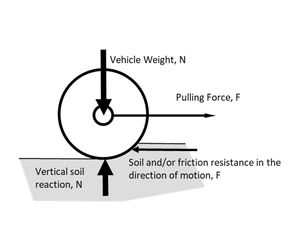
Rolling resistance is the energy required to accelerate and maintain a vehicle’s speed over a given surface, arising from the combined deformation of the tires and the road itself. As Todd Burns, CEO of Cypher Environmental, puts it:
“I liken it to riding a bicycle with an under-inflated tire compared to one that’s properly inflated. It takes a lot more energy to pedal from point A to point B — and the same principle applies to massive haul trucks traveling on unstabilized, as compared to stabilized roads.”
- Hard, well-packed roads push back less — trucks maintain speed with minimal fuel.
- Soft, loose, or uneven surfaces push back more — trucks burn extra diesel to maintain production.
Lower Rolling Resistance = less energy per load, lower fuel costs, and smoother, safer operations.
By stabilizing haul roads using Cypher’s cleantech formulations, both which help to reduce deflection and surface roughness, rolling resistance also lowers, allowing haul trucks to transport the same material with less energy. The results? Improved fuel efficiency, shorter cycle times, reduced maintenance, and measurable operational savings.
“When we stabilize roads, the road itself helps make haul trucks more fuel-efficient and productive - cutting down cycle times and saving money while reducing GHG emissions.” - Todd Burns
Rolling resistance is the sum of all forces opposing the forward motion of a wheel/tire.
A major source of rolling resistance in unpaved roads is the depth of wheel sinkage into the surface under the vehicle’s weight.
- Affected by both stiffness and bearing strength of the road material
- Deflection and surface roughness also play key roles in determining overall resistance
Across modern open-pit operations, properly stabilized haul roads typically maintain rolling resistance between 2–3.5%. Even modest reductions, just a single percentage point, can have a cascading effect across fuel consumption, cycle times, maintenance, and operational safety.
Truck haulage alone can account for 40–50% of total operating expenses at a surface mine (Thompson & Visser, 2003). Reducing rolling resistance directly lowers the energy required per haul, which in turn:
- Reduces diesel consumption and GHG emissions
- Extends tire life
- Lowers maintenance demands
- Shortens cycle times
- Reduces strain on equipment and operators
But the benefits go even further. A reduction in rolling resistance doesn’t just trim litres used – it also reduces the number of fuel-truck deliveries required. That means fewer on-road trips, lower Scope 3 emissions, and reduced exposure to potential safety incidents associated with fuel transport. Although not the focus of this discussion, Scope 3 emissions are reduced across the board once roads are stabilized, due to all ancillary road equipment being used less to maintain the roads, including graders and water trucks.
Fuel consumption of haul trucks is influenced by road grade, speed, payload, aerodynamics, and rolling resistance. Research indicates that rolling resistance can account for roughly 10–25% of haul fuel, depending on road conditions, truck type, and duty cycles (Mining Doc – May 2025). Even modest improvements in rolling resistance, just 2–3 percentage points, can translate to an estimated 8–20% reduction in total fleet fuel consumption.
The benefits don’t just stop at fuel. Reducing rolling resistance improves cycle-time predictability, smooths maintenance planning, and lowers operational risk. Factors such as road materials, geometry, climate, and haul duty cycles influence outcomes, which is why direct measurement and ongoing monitoring are critical. Every percentage point of rolling resistance saved has a cascading effect across the operation, enhancing efficiency, safety, and overall predictability.
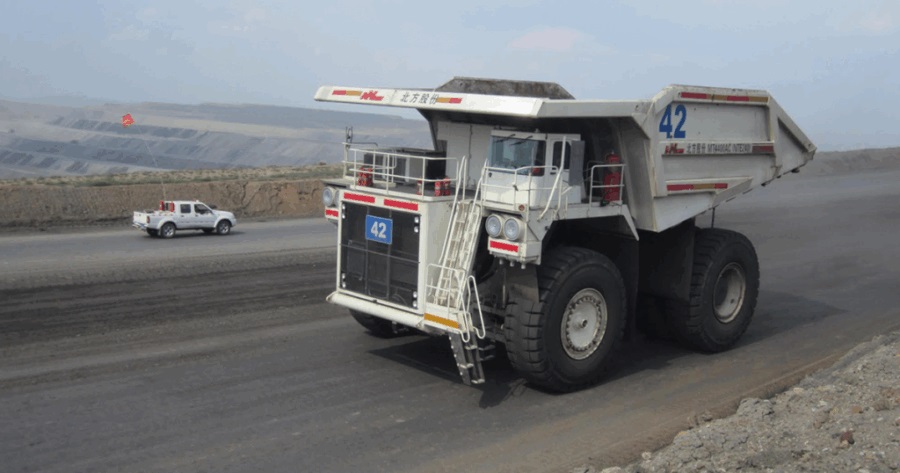
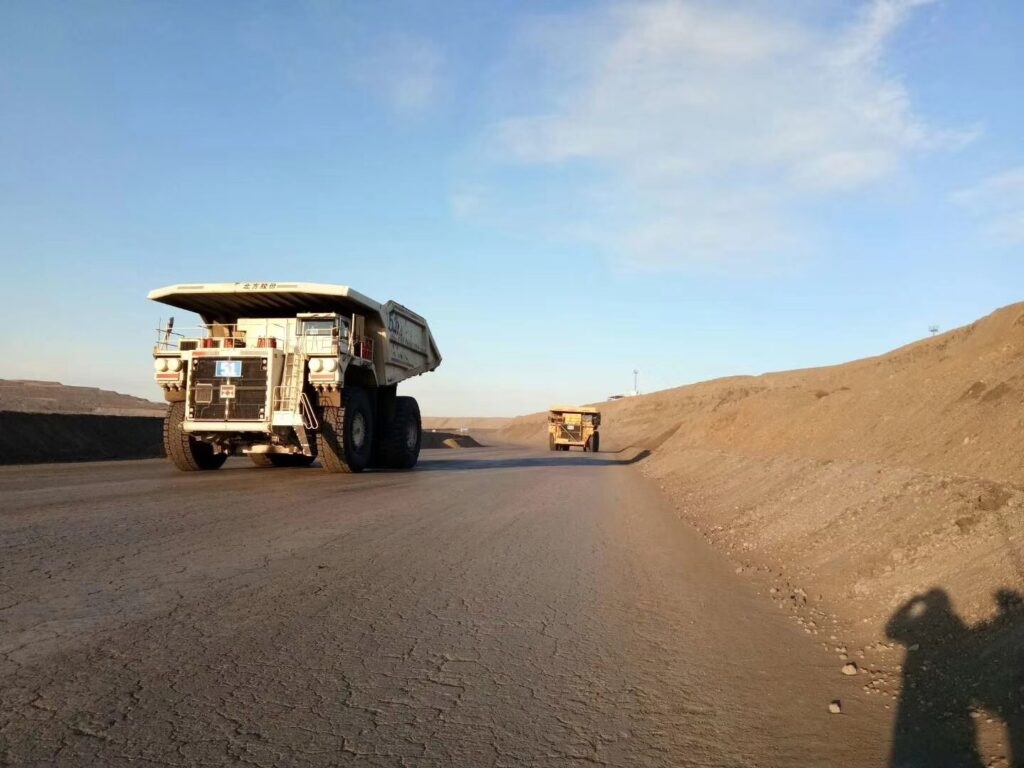
- Syncrude Canada Ltd. (now operated by Suncor): Stabilizing haul roads reduced rolling resistance from 7% to 2.7% (a 4.3% overall improvement), which correlated with an estimated ~90% reduction in additional fuel costs attributable to rolling resistance* and a 35% increase in fleet productivity. The improved engineering properties also reduced maintenance needs and material costs by enabling the use of high-clay soils.
*For comparison, unstabilized roads constructed with similar bentonitic clay shale typically have rolling resistance of 7–13%, increasing ~1.5% for every inch (2.54 cm) of wheel penetration (Dionne, 1987).
- Shenhua Beidian Shengli Energy Co., Ltd.: On a 10 km stabilized haul road, rolling resistance improvements led to a 17.4% reduction in fuel consumption, saving an estimated USD $3.6 million and corresponding estimated reductions in greenhouse gas emissions by 10,000 MT in a single year.
These examples demonstrate that even modest improvements in rolling resistance yield substantial fleet-scale benefits, from cost savings and increased productivity to lower emissions and reduced maintenance. The graphic below illustrates Performance vs. Rolling Resistance for a 10,000 ft flat haul with a CAT 793 haul truck, comparing stabilized (RS) and unstabilized conditions.
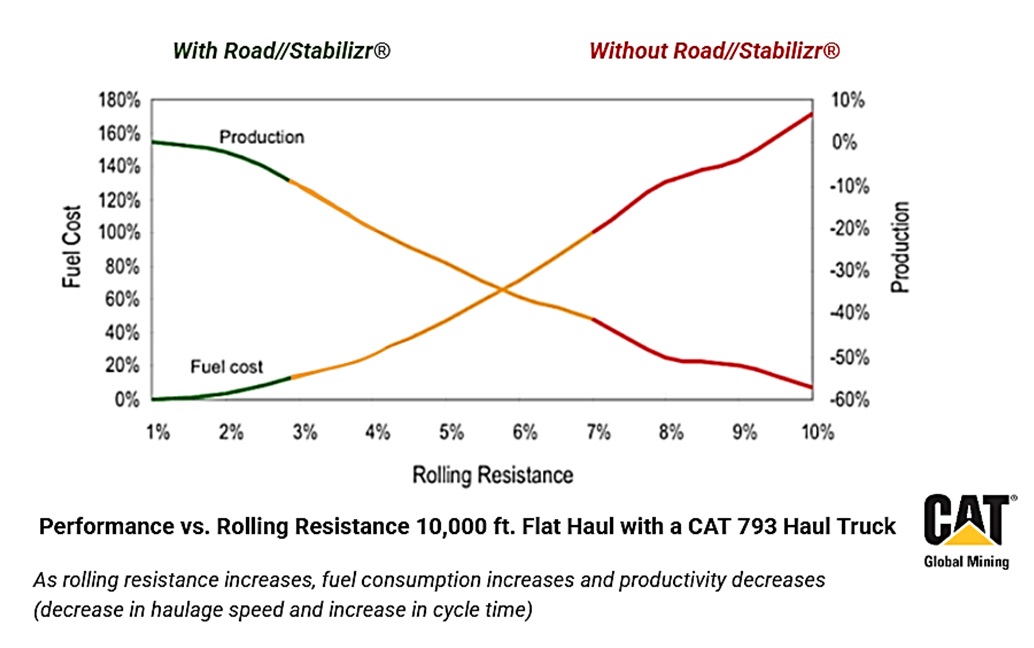
According to The Mining Association of Canada, “Fuel/energy costs are among the top three cost categories for mining operations.” By proactively managing road conditions, mines can unlock measurable cost savings long before considering major fleet upgrades.
Haul roads aren’t just a cost center, they are a key driver of operational efficiency and savings. By stabilizing roads and managing rolling resistance, you can directly influence fuel consumption, CO2 emissions, water use, tire wear, and overall operational risk, consistently and at scale. Even improving one kilometer or mile at a time still delivers measurable impact.
Don’t let rolling resistance quietly burn through your budget. Reach out to Cypher Environmental today — and start turning your roads into an engine for efficiency, savings, and sustainability. Contact us now at info@cypherenvironmental.com