


Cypher Environmental Ltd. articles
Fuel is something no mine can operate without and one of the most volatile and closely watched cost drivers in open-pit mining. When prices fluctuate, every operation feels the impact, just as we do in our personal lives. Fuel is consistently a tier-one or tier-two expense, and because haulage fuel burn scales directly with total resistance (grade plus rolling resistance) the condition of your haul roads quietly governs engine load and cost per tonne.
“
Clay is an abundant resource that can be found in many parts of the world. However, as a road-building material, it is highly problematic. Clay tends to swell and lose strength with moisture followed by contraction when it dries, causing cracks and surface erosion and leading to subgrade failures. These fluctuations require frequent and costly maintenance, ultimately draining road budgets year after year. So, how can we overcome these challenges in building strong clay roads?
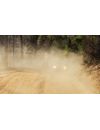
In the mining and forestry industries, where heavy traffic and substantial loads are common, road dust presents significant challenges. Beyond the obvious nuisance, dust can pose serious risks to worker health, equipment longevity, site safety, and to the ecosystem. Addressing these risks requires effective and reliable dust control technologies. Implementing these solutions not only mitigates the dangers of road dust
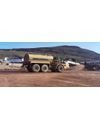
In the mining industry, controlling operating expenses (OpEx) is a constant challenge. With the ongoing climate crisis demanding more sustainable practices and environmental regulations tightening, the mining industry has not been immune to the financial challenges of these demanding times and controlling mining OpEx is more important than ever.
With over 15 years of experience working with mining majors across the globe, Cypher Environmental offers solutions that are aimed at reducin
If you’re aiming to boost the productivity and efficiency of your mine, it’s crucial to regularly reassess your long-term dust control for haul roads. With rapid technological advancements, staying updated on the latest innovations and techniques ensures effective results while prioritizing environmental protection and conservation.
In this article, we will take a closer look at each of the following traditional methods of dust suppression and why they may not be the best
Road dust.
With the plethora of environmental concerns that we face today, the trouble with road dust can often be overlooked. However, despite its innocuous appearance, the dangers of road dust are very real for people who live in areas with a higher proportion of unpaved surfaces. In fact, according to the US Federal Highway Administration (FHWA), as much as 35% of the 4 million miles (or 6.4 kilometres) of roadways in the United States are classified as rural with
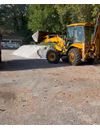
From mine haul roads, secondary roads, stockpiles and tailings to airstrips, construction sites and municipal roads, these are the applications we see most often for DUST/BLOKR®, our dust suppression solution. However, dust control is necessary in a variety of industries and settings. One such example was the Platanodasos tennis court in Katerini, Greece. Cypher Environmental distributors Vumos Oy (Finland) collaborated with Dimitris Papalampros to provide dust control for the tennis
Are you in the market for a dust control and/or soil stabilization product? When evaluating different dust control and soil stabilization products, one factor to consider is the ease of application.
Cypher’s DUST/BLOKR® and ROAD//STABILIZR® are shipped in a concentrated form, mixed with water on-site and at the time of application. Once mixed, our products can be applied using standard road construction equipment.
Summary: The numerical studies suggest that the current CBR design methods can lead to under-design results, especially for mine haul roads that are used by ultra-large trucks and heavy loads. The new proposed design method with stabilized pavement layers can lead to better design in road structure and smaller strain and displacement. The stiffness change from road stabilization also noticeably reduced the rolling resistance and fuel consumption.
In cooperation with the Department of Civil and Environmental Engineering at the University of Alberta, we are pleased to bring you this exciting report.
The experiment program was conducted and documented by students Linping Wu, Riley Cram, Diana Nicholson and Wei Victor Lui in conjunction with the Cypher Environmental engineering team.
The overall objective of the proposed research was to develop a new design approach for mine haul road paveme