

- Home
- Companies
- Finn Corporation
- Articles
- How to Choose a Hydroseeder: 10 Key ...
How to Choose a Hydroseeder: 10 Key Questions to Ask
Buying a hydroseeder can seem like a daunting prospect, but asking the right questions early on can help save you and your company thousands of dollars, and prevent major headaches down the road.
Learn how to find the right fit for your needs with a handy checklist of questions to get you started when it comes to evaluating equipment, capacity, and features, and more:
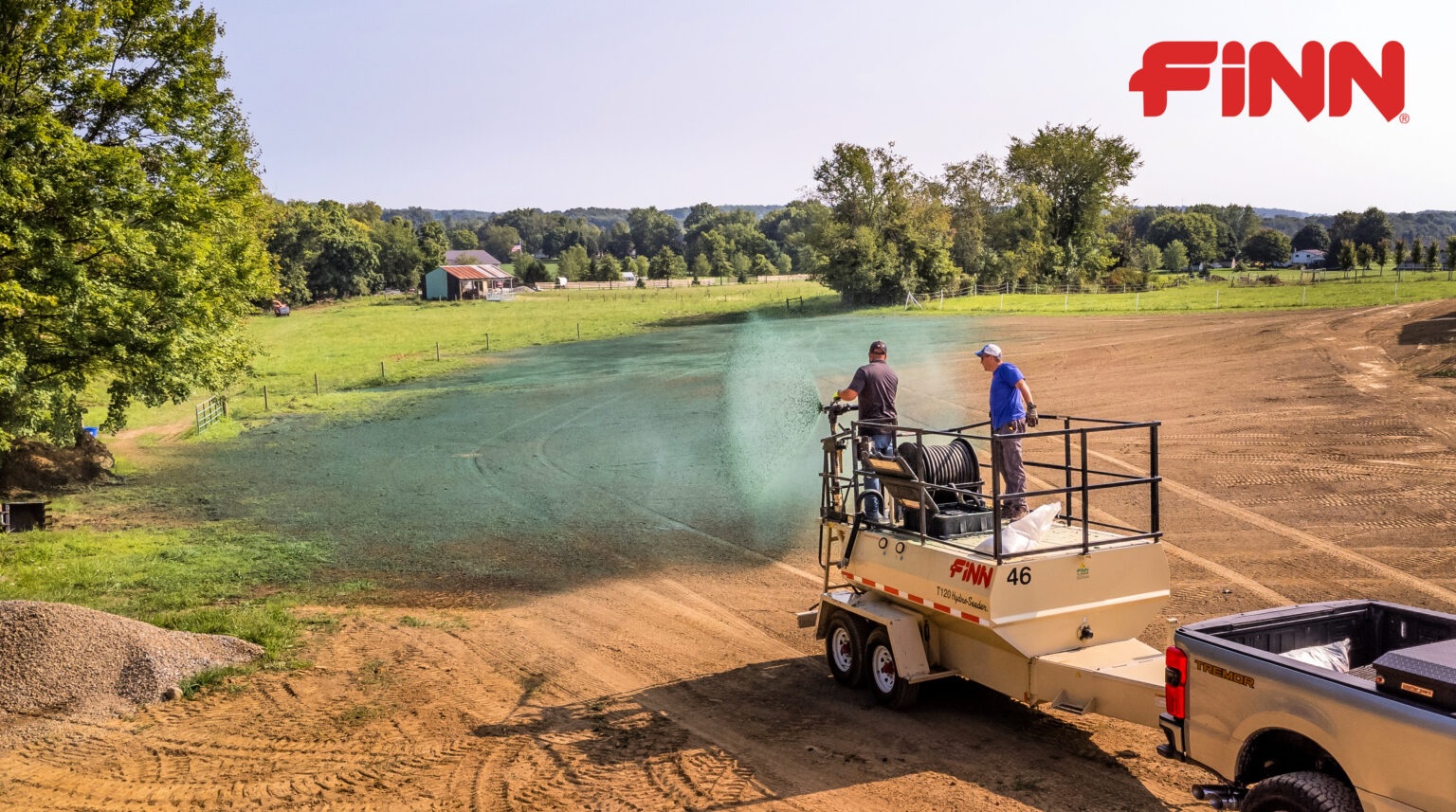
Every landscaping or contracting business is different. From the size of your team to the size of jobs you can – or want – to take on, the details that define your business can also help determine the type of hydroseeding equipment you might need.
To help you drill down to the most important details, start with the following questions to help identify the most pressing needs for hydroseeding projects:
1. What do I need a hydroseeder for?
- Really step back and consider this: In your day-to-day operations, are you seeding large areas regularly? Do you find these types of projects are taking more of your resources than you want? Could this process be much more efficient with a hydroseeder? If the answer is yes, then you’re definitely ready to move onto more detailed hydroseeder questions.
2. How often will I use a hydroseeder?
- Considering the frequency of use is important for several reasons: hydroseeding equipment can be a big decision, and you want to make sure you’re going to get enough use out of it. Evaluating how often you take on hydroseeding jobs will help you get to the right answer for your business. Maybe the answer is that you generally look at about one hydroseeding job per week — depending on the size of that job, it may make sense to save time and money with a hydroseeder purchase. If you find that hydroseeding projects come up less frequently, like once a quarter for example, it may be that renting a hydroseeder makes more financial sense for your business.
3. What materials will I use most in the hydroseeder?
- Another important question to ask yourself in the how to buy a hydroseeder process is what kind of materials are you using most often. If you’re a larger contractor, for instance, using lots of heavier materials like Bonded Fiber Matrix (BFM) or high-viscosity mixes, you’ll need a hydroseeder model that’s designed specifically to handle those heavier slurries, like the Finn T330 Hydroseeder. Smaller contractors often find that with lighter materials, a more compact hydroseeder, like the Finn T90 or even the Finn T30 Hydroseeder, can easily handle lighter slurry mixes.
The next set of questions to ask yourself before buying a hydroseeder are those related to the options available on different hydroseeder models. Hydroseeders fall into 2 major categories (paddle agitated or jet agitated) and the type of projects you do most often will help you determine which equipment type will work best. Hydroseeders also have vastly different capacities when it comes to coverage and volume — understanding these will make selecting from hydroseeder models much easier.
4. What type of hydroseeder (jet agitated or paddle agitated) is a better fit for those needs?
- Jet-agitated hydroseeders are great for contractors handling jobs that require light/medium slurries. These machines are typically more cost effective, and can require a little less maintenance than their paddle-agitated counterparts. Paddle-agitated hydroseeders, by contrast, are designed to handle thick, heavy slurries that jet-agitated machines can struggle with. This feature makes them great for larger contractors like DOT projects, or anywhere large-scale mixing and application needs to happen quickly and completely.
5. What coverage areas and capacities are available in the different hydroseeder models I’m considering?
- For almost every size of job, there’s a corresponding hydroseeder model that makes sense. For small landscape contractors just starting out, a small, powerful and maneuverable machine like the Finn T30 can be just the right fit. Discharging 280 gallons up to 70 feet makes residential projects, athletic fields, golf courses, and more feel like a breeze. On the other end of the spectrum, large, heavy-duty models like the Finn T330 can handle 3,000 gallons, and discharge a distance of 230 feet, making it great for large, high-capacity projects like commercial construction, highway embankments, and large-scale erosion control.
6. Are there any features that would make hydroseeding for my particular project needs easier?
- Like most equipment, hydroseeders come with optional features to improve efficiency and make specific types of projects easier. Asking the right questions helps you determine which model might best fit your workflow—and what customizations might make the most sense. For example, several Finn hydroseeders come with slurry output options of a platform with a tower and guard rail, an electric hose reel, or both. If you have to pick just one and your projects often involve detailed landscaping or limited access, choosing the hose reel option would allow you to get into smaller, hard-to-reach areas. If you are often seeding larger open areas, the platform may make more sense for you. Other available features—like radio remote controls and optional air flush—can improve accuracy and efficiency in other areas, helping you get more done when turn-around times are tight.
Thinking of the ‘before’ questions is important, but you can’t forget the operational questions so you have a grasp on what the machine is like to run, clean, and maintain. You also never want to feel alone after an important purchase like a hydroseeder — that’s why it’s crucial to understand what kind of post-purchase support you can expect. Asking the following questions on the front end of the process can help you stay ahead of any maintenance or service-related surprises down the road:
7. How easy is it to load, mix, and clean the machine between jobs?- You want to know what you’re getting yourself in for when it comes to operating the hydroseeder in the field.
- Landscaping can be unpredictable, and things just happen when we’re out on the job. Knowing where you can order parts, and how quickly you’re likely to receive them, or how quickly you can expect to have your hydroseeder serviced, can all help you plan ahead and avoid downtime or lost projects due to equipment issues.
- Downtime can be costly, so you really want to understand how to take care of your hydroseeder — both from the day-to-day operations and any seasonal maintenance or storage protocols that need to be taken care of before you’re planning on stowing the machine for any length of time in the off season.
- There’s no substitute for seeing equipment in person. Being able to inspect everything from the controls, tank design, hose layout, and craftsmanship can help you get a better feel for what it will be like operating the hydroseeder on the job. It also helps you get to know your local dealer, so you can see what it’s like working with them, and whether or not it’s convenient from a scheduling and maintenance perspective.
Choosing the right hydroseeder can have a huge impact on your productivity, precision, and operating costs. By asking the right questions up front—about workflow, materials, equipment options, and support needs—you’ll choose a machine that not only fits your business, but has the capacity to grow with it, too.
Ready to explore hydroseeder options to find the right match for your needs? Learn more about our hydroseeder lineup, or connect with your local Finn dealer to get started.