


Finn Corporation articles
Buying a hydroseeder can seem like a daunting prospect, but asking the right questions early on can help save you and your company thousands of dollars, and prevent major headaches down the road.
Learn how to find the right fit for your needs with a handy checklist of questions to get you started when it comes to evaluating equipment, capacity, and features, and more:
True Mtn

Weather can play a major role in hydroseeding success - but it doesn’t have to dictate your results. With the right materials, timing, and application adjustments, landscapers and contractors can achieve strong, professional results in a wide range of conditions.
Our guide breaks down how to adjust hydroseed application for rain, heat, wind, and cold, with practical tips to help you protect seed, reduce material loss, and stay on schedule no matter what the forecast has in store
True Mtn
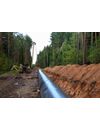
Key Benefits of Hydroseeding for Oil & Gas Industries
Hydroseeding offers a cost-effective and environmentally-friendly method to meet stringent environmental regulations, stabilize land disrupted by pipeline projects, drilling operations, and more.
Ron Ciolfi
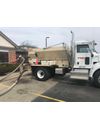
As with any large equipment or machinery, safety is critical when planning to operate mulch and bark blowers. It begins with practicing proper landscaping safety techniques. The first step to ensuring both the site and the team at work are as safe as possible is to thoroughly read the Operations Equipment Manual (OEM) for the specific bark blower or mulch blower that will be used.
Each model of mulch or bark blower machine is unique, so understanding the detailed instructions and safe
Ron Ciolfi
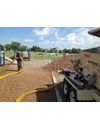
The efficiency and quality of just about any landscaping project can significantly depend on the tools you choose, and mulch blowers can be powerful additions to your toolkit, often functioning as essential equipment for any serious landscaper.
Mulch blowers streamline the mulching process, while helping ensure uniform and precise distribution of mulch over large areas and specific landscape elements like borders, beds, and beneath trees.
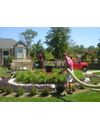
Understanding the best way to spread mulch evenly can mean the difference between a great-looking, environmentally-friendly landscape, and one that falls short in both areas. From spreading mulch basics to how to spread mulch evenly, and when to use a mulch blower to achieve the desired results, these landscaper insider tips can help elevate your next project’s aesthetics and help you get the most out of your investment.
Ron Ciolfi
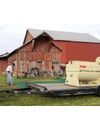
If you’re starting a lawn from scratch, you’ve probably come across the three common methods for seeding: sod, grass seed, and hydroseed.
In order to determine the best choice for your yard, you may want to ask yourself a few questions before you get started, and familiarize yourself with each of the processes so you can make the right choice for your lawn project.
Mike Donley
One of the best ways to enhance soil composition, prevent erosion, and improve the aesthetics of any landscaping project is to utilize bark and mulch blowing. For our purposes, bark and mulch blowing are effectively the same thing, and can generally be used interchangeably. Bark and mulch are both great choices to prevent weed growth and invasion, improve soil quality and fertility, hold moisture in the soil, and help it maintain an even temperature.
Bark and mulch can also help prote
Mike Donley
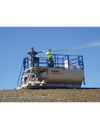
If you’re looking for a quick and effective way to seed a large area, get a lush, green, and healthy lawn, or re-establish vegetation in an area that’s been disrupted by construction activities or wildfire, hydroseeding, or hydromulching as it’s also commonly referred, has probably entered your radar.
And it’s easy to see why - hydroseeding is fast and cost effective, and delivers reliable, consistent results.
Mike Donley
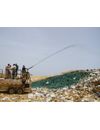
Traditional landfill management includes the application of a daily cover - typically and historically soil - to maintain as safe and hazard-free landfill site as possible. Alternative Daily Covers (ADCs) were introduced in 1993 when the Environmental Protection Agency (EPA) outlined federal regulations for using landfill covers other than soil.
These ‘alternative’ daily covers are made from a variety of materials, which can differ state to state based on regulations, thou
Mike Donley