


- Home
- Companies
- LG Sonic B.V.
- Articles
- Introduction to Water Quality ...

Introduction to Water Quality Monitoring System
Running a lake or reservoir without good data can feel a bit like driving at night with the headlights dimmed. A water quality monitoring system gives operators a clearer view by turning occasional samples into a continuous story about the water. With online water quality monitoring in place, teams no longer wait for weekly laboratory results; they can watch how temperature, algae and dissolved oxygen move through the day and spot the first signs of trouble before complaints arrive.
In this article we look at how these systems work in practice for lakes and drinking-water reservoirs. We outline the core pieces of water quality monitoring equipment, explain the difference between a handheld water quality device at the shoreline and a buoy in the middle of the basin, and show how a real-time water quality monitoring system such as LG Sonic’s Monitoring-Buoy turns raw data into decisions operators can act on.

At its simplest, a water quality monitoring system is a network of instruments that measure conditions in the water and send those readings somewhere useful. In a lake or reservoir this usually means a floating platform or fixed frame that holds several sensors, plus at least one water quality monitoring device on shore that collects, stores and forwards the data.
Together, this water quality monitoring equipment tracks parameters such as temperature, dissolved oxygen, pH, turbidity and algal pigments like chlorophyll-a or phycocyanin. Unlike a simple portable water quality device that you dip into a bottle, these installations stay in the water full-time, so they capture short events - a storm, a mixing episode, a small bloom - that a weekly visit would probably miss.
Freshwater bodies change more quickly than many people expect. Sunlight, wind and inflows constantly rearrange temperature layers, move nutrients around and push algae into new parts of the basin. Without online water quality monitoring, managers may rely on a few grab samples that happen to miss a nighttime oxygen crash near the bottom or a brief algal surface scum near a drinking water intake.
A real-time water quality monitoring system fills in those gaps. When sensors send data every few minutes, patterns become visible: a slow warming of the upper layer, a steady rise in chlorophyll-a over several days, or turbidity spikes after intense rain. For utilities that depend on lakes and reservoirs for supply, seeing these trends early makes it easier to adjust operations before they turn into compliance issues or customer complaints. Agencies such as USGS and the U.S. Environmental Protection Agency provide open data and guidance that show how these patterns relate to long-term water quality trends.
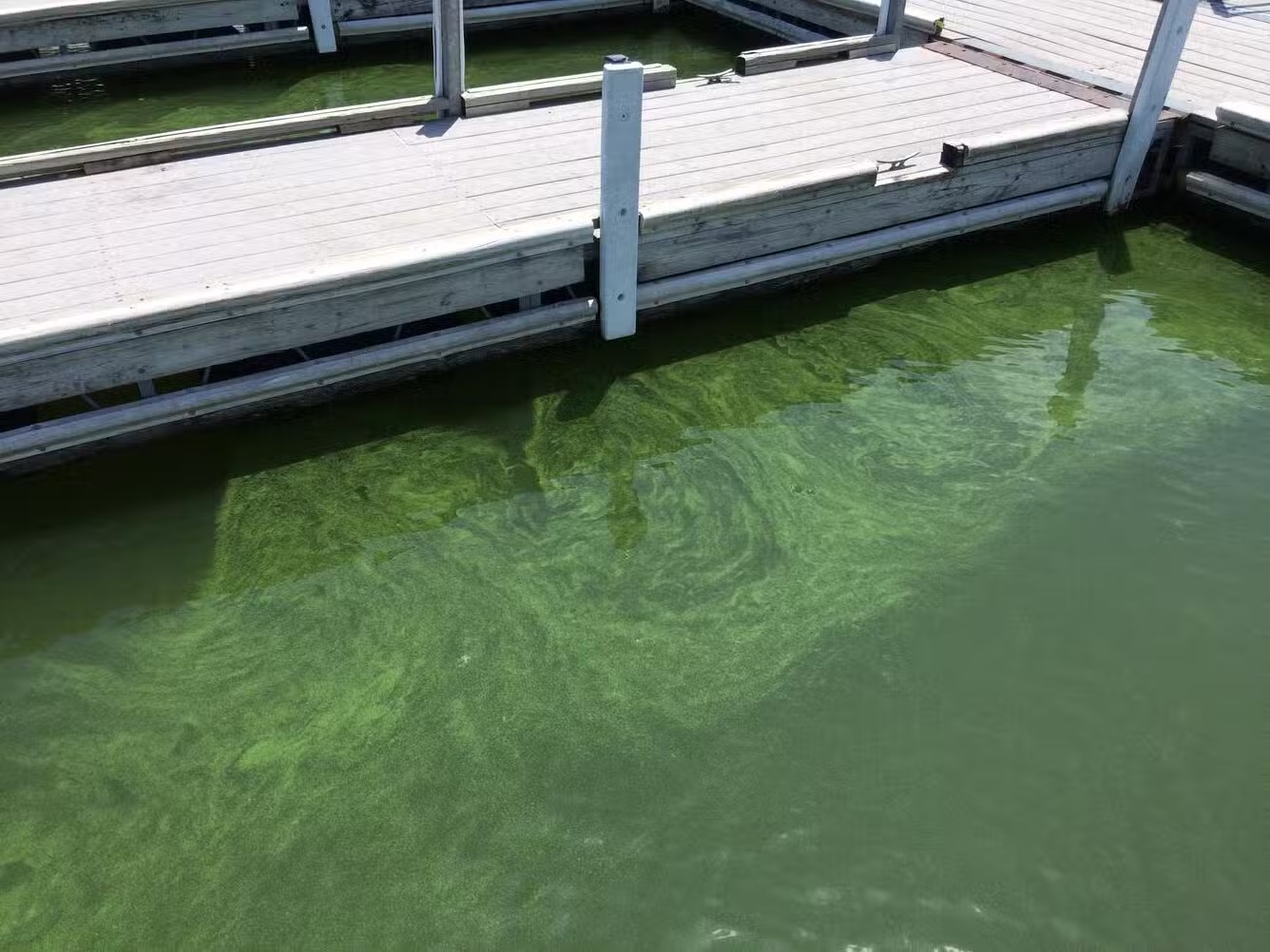
Most modern water quality monitoring equipment for lakes and reservoirs is built from the same basic building blocks. Whether the platform is a large buoy in the middle of a drinking water reservoir or a compact water quality device mounted on a pier, the following components usually appear in some form.
- In-situ sensors – multiparameter sondes or individual probes that measure pH, temperature, dissolved oxygen, turbidity, conductivity, and algal pigments such as chlorophyll-a and phycocyanin.
- Data logger and telemetry – a central unit that records values and sends them to the cloud using 4G, radio, or satellite communication.
- Power system – usually solar panels and batteries sized to support year-round, unattended operation, even in remote reservoirs.
- Software and dashboards – online tools that turn raw sensor readings into trends, alerts, and reports for operators, regulators, and stakeholders.
Portable meters and laboratory analyzers are still essential, especially for trace contaminants or regulatory confirmation. But a handheld water quality device can only measure a small bottle or a single point at the waterbody. In a large, wind-exposed reservoir, conditions can flip within hours and differ greatly between the surface and deeper layers, so a few samples each week rarely tell the whole story. Hence, this is not always the best and efficient way to monitor and treat water quality.
By contrast, an online water quality monitoring network places instruments where the water is hardest to reach on a daily basis. Buoy-based platforms host a multi-parameter water quality monitoring system that measures several depths and sends data back to the control room automatically. With this kind of real-time water quality monitoring system, staff can see the effect of storms, inflows and seasonal stratification without needing to be out on the water every day.

LG Sonic’s Monitoring-Buoy is designed specifically for this type of work in lakes and reservoirs. The platform serves as a floating water quality monitoring device, carrying sensors for chlorophyll-a, phycocyanin, pH, turbidity, dissolved oxygen and temperature. Solar panels and on-board electronics power the water quality monitoring equipment and the communication modules, so the system can operate year-round with only limited site visits.
When it is part of a wider online water quality monitoring system, the Monitoring-Buoy helps utilities and industrial site operators see how conditions change throughout the entire water column, not just at the surface. By analysing trends instead of isolated samples, teams can anticipate harmful algal blooms, adjust intake depths and optimise treatment strategies long before problems reach consumers. LG Sonic’s Monitoring-Buoy product page
Most buoy-based and fixed platforms that make up a water quality monitoring system track a core set of parameters. Taken together, these readings give a practical picture of ecosystem health and treatment risk.
- Temperature – shows how the water column stratifies and mixes, which in turn influences oxygen levels and algal growth.
- Dissolved oxygen – indicates whether conditions are suitable for fish and other aquatic life, and helps identify zones at risk of low-oxygen events.
- pH and conductivity – reflect the chemical balance of the water, changes in inflows, and potential corrosion risks in downstream infrastructure.
- Turbidity – tracks suspended particles from sediment, algae, or inflowing streams, which can affect both treatment costs and ecosystem health.
- Chlorophyll-a and phycocyanin – act as proxies for algal biomass, including harmful cyanobacteria, and support early warning of bloom conditions.
Guidance from organisations such as the World Health Organization highlights how important robust monitoring and risk-based management are for surface water sources. Continuous data from a lake-based water quality monitoring device helps operators check that they stay within local standards and document how the reservoir responds to improvement measures over time.
Data from a water quality monitoring system only create value when people actually use them. Dashboards and alerts help staff notice gradual shifts in algae indicators or faster jumps in turbidity after storms. When a real-time water quality monitoring system also pulls in satellite views of inland waters and local weather forecasts, early warning for bloom-prone reservoirs becomes much stronger. For example: WaterWindow by LG Sonic shows how satellite imagery can complement in-situ measurements in lakes and reservoirs.
Over time the data builds a story about the lake. Managers learn which parts of a reservoir warm first, when oxygen drops near the bottom, and how fast water quality tends to recover after interventions. That kind of knowledge supports investment planning, more open communication with regulators, and evidence-based decisions about catchment management.
A well-designed water quality monitoring system has become a core tool for anyone responsible for lakes and reservoirs. By combining robust water quality monitoring equipment, buoy-based platforms like the Monitoring-Buoy and cloud software that brings everything together, operators can move from simply reacting to complaints to preventing many problems altogether. In the long run, this kind of online water quality monitoring helps safeguard drinking water quality, protect aquatic life and build public trust in how precious freshwater resources are managed.