


Israel’s Water Scenarios Hold Lessons for Similar Regions
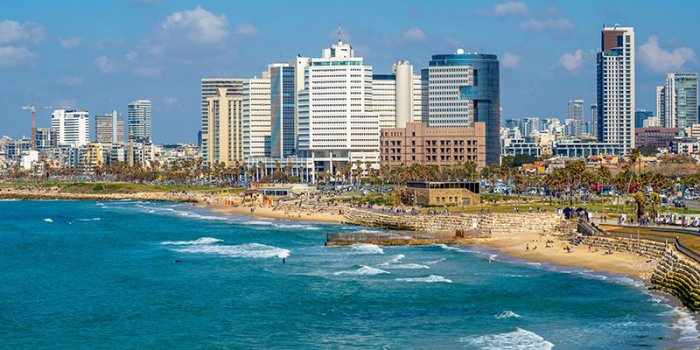
The researchers relied on historical water data that show per capita consumption rates have remained stable for the past two decades, establishing a link between projected demand and population growth. The team found that population growth may force construction of new desalination capacity, while per capita and absolute freshwater availability from natural sources declines.
The main takeaway from the study is that the total effects of population growth on Israel’s water system will likely dwarf the effects of climate change.
Middle Eastern and African countries are projected to grow to approximately 3.4 billion people by 2050. In Egypt, building new cities has been a key strategy of President Abdel Fattah el Sissi’s government. Along Egypt’s Mediterranean coast, for instance, a visionary city called New Mansoura is being constructed on the Nile delta. The population will grow from virtually zero to an estimated 1.5 million in a short time to manage Egypt’s population explosion.
But Egypt is not counting on freshwater from the Nile; climate change and an Ethiopian dam project are threatening river flows. Arid New Mansoura will rely heavily on desalination, and Fluence is supplying the technology for New Mansoura’s desalination plant. With desalination, a community, resort, industrial operation, or city can spring up on a coastline or island without needing a natural freshwater source, only seawater.
The city of Abidjan in Africa’s Ivory Coast has a population rate far above Israel’s and a crippling shortage of water. Although Abidjan, the nation’s largest city, has access to the freshwater Aghien lagoon, its tributaries around the city are polluted. Fluence is constructing a large-scale treatment plant for Abidjan to treat 150,000 m³ per day of Aghien waters to drinking water standards.
Although the New Mansoura and Abidjan plants are large, Fluence’s small-footprint, modular units are designed to bring the cost efficiency of centralized treatment to smaller-scale, decentralized plants, locating smaller facilities near the point of need.
In peri-urban areas like those around Abidjan, Aspiral™ wastewater units can treat sewage before it pollutes common water sources and reuse it for nonpotable applications. NIROBOX™ units can bring desalination to small coastal locations and islands with cost efficiencies that rival large desalination plants like the one in New Mansoura.
Fluence’s Water Management Services can deliver water infrastructure on any scale. Financing structures, including public-private partnerships, build-own-operate, and build-own-operate-transfer, bundle long-term operations and management and eliminate initial capital expenditures. Reach out to our experts to prepare for any scenario.