
- Home
- Companies
- Suzhou Jono Environmental Technology ...
- Articles
- Jono’s Bulky Waste Solution - Taizhou ...
Jono’s Bulky Waste Solution - Taizhou Gaogang Bulky Waste Treatment Project - Case Study
Project Overview
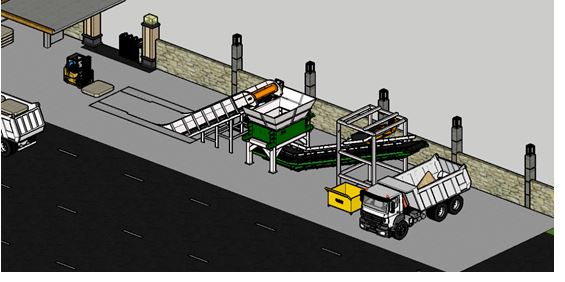
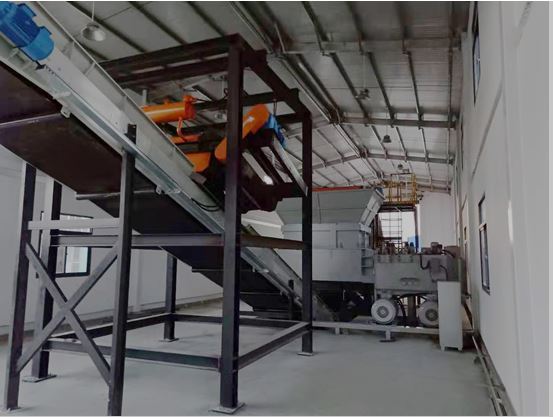
The Taizhou Gaogang Bulky Waste Treatment Project, located in the Gaogang Economic Development Zone of Taizhou City, Jiangsu Province, is designed with a treatment capacity of 100 tons/day, and a single-line processing capacity of 10–15 tons/hour. The facility primarily handles discarded household items such as sofas, mattresses, tables, chairs, and garden waste from residential areas. After sorting and shredding, metal materials are recycled, while wood, fabric, and leather are used as high-calorific fuels for waste-to-energy incineration.
Project Highlights
Solving the Urban Sanitation Gap: The project addresses a critical challenge in urban sanitation by providing a dedicated solution for managing bulky waste, which often lacks proper disposal pathways in traditional waste systems.
Waste-to-Energy Integration
By co-processing high-calorific waste with municipal solid waste, the project contributes to renewable energy generation and reduces landfill dependency.
Replicable Urban Treatment Model
The processing mode—localized collection, centralized crushing and volume reduction, and secondary transportation—is designed to be replicable across other urban areas, including transfer stations, waste processing plants, and incineration facilities.
Data-Driven and Compliant Operations
All operations are monitored via a centralized control system that ensures real-time data collection, safety compliance, and environmental standards. This enhances operational transparency and improves decision-making for urban sanitation authorities.
Conclusion
The Taizhou Gaogang Bulky Waste Treatment Project is more than a waste facility—it is a symbol of sustainable urban progress. By turning waste into resources, and by integrating collection, processing, and energy recovery into a single framework, it proves that responsible waste management is not only achievable but replicable.