
- Home
- Companies
- Suzhou Jono Environmental Technology ...
- Articles
- Jono’s MSW Solution- High-Efficiency ...
Jono’s MSW Solution- High-Efficiency MSW Pre-treatment for CFB Boiler Incineration - Case Study
Project Overview
This project is a mechanical pre-treatment system for mixed municipal solid waste (MSW), designed to support the efficient operation of a circulating fluidized bed (CFB) boiler incineration process. With a treatment capacity of 1,000 tons per day, the facility is engineered to deliver both environmental and operational benefits by ensuring waste is prepared in an optimized manner before combustion.
The pre-treatment line integrates two-stage shredding and advanced mechanical sorting. Through this process, mixed household waste is separated into three main categories: ferromagnetic metals, non-combustible materials (such as glass, stones, and ash), and combustible fractions. By removing impurities and recovering valuable resources, the system not only reduces the burden on downstream incineration but also contributes to circular economy practices.
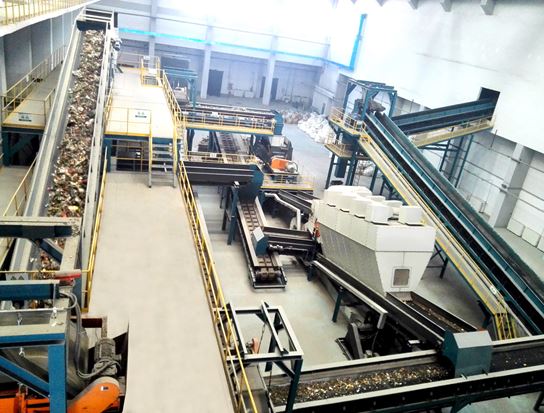
And the facility used in this project can process the combustible fraction into solid recovered fuel (SRF) with an optimized particle size of around 80 mm. This SRF is then fed into the CFB boiler for incineration, significantly improving combustion stability, increasing burn-out efficiency, and reducing the load on subsequent flue gas treatment systems.
Project Highlights
1. High Treatment Capacity
The facility is designed to handle 1,000 tons of mixed municipal solid waste per day, ensuring it meets the demands of large urban areas. Its robust design guarantees consistent operation even under varying waste composition and moisture conditions.
2. Advanced Pre-treatment Technology
The system utilizes a two-stage shredding process, ensuring that waste is reduced to a uniform size suitable for downstream processing. This enhances the separation efficiency and ensures stable fuel quality.
3. Efficient Resource Recovery
The mechanical sorting line effectively separates ferromagnetic metals for recycling, removes inert non-combustibles such as glass and stones, and isolates the combustible fraction for energy recovery. This reduces unnecessary material entering the incineration process and contributes to the sustainable use of resources.
4. Production of High-Quality SRF
By using advanced shredding technology, combustible waste is transformed into solid recovered fuel (SRF) with a particle size of approximately 80 mm. This fuel standardization ensures optimal performance in the CFB boiler and contributes to higher energy recovery efficiency.
The uniform SRF significantly improves the combustion state inside the boiler. As a result, the system achieves a higher burn-out rate, enhances energy output, and reduces unburned residues. This not only maximizes energy recovery but also minimizes the environmental footprint.
Conclusion
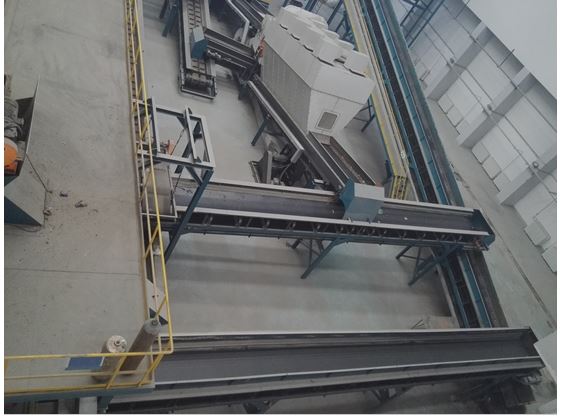
This project demonstrates how mechanical pre-treatment of municipal solid waste can play a crucial role in improving the efficiency and sustainability of waste-to-energy systems. The integration of two-stage shredding, mechanical sorting, and advanced SRF production provides a reliable pathway for cities seeking to reduce landfill dependency, recover valuable resources, and generate clean energy from waste. As urban populations continue to grow and waste generation increases, projects like this will be essential in shaping the future of sustainable waste management.