

- Home
- Companies
- Ecological Laboratories, Inc. (ELI)
- Articles
- Sludge Reduction & Cost Savings at ...
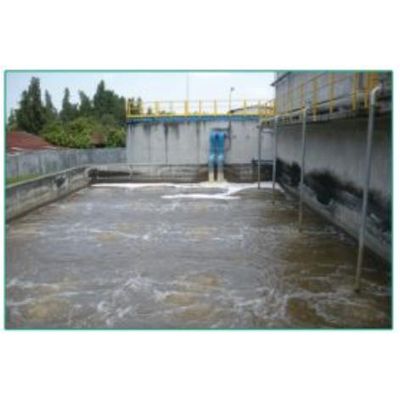
Sludge Reduction & Cost Savings at Sequential Batch Reactor Plant in Southern Pennsylvania - Case Study
Location: SBR Plant in Southern Pennsylvania
A 0.5 mgd SBR plant in southern Pennsylvania uses MICROBE-LIFT/IND and MICROBE-LIFT/OC and achieves the following improvements:
- Maximizes throughput from aerobic digester to sludge press. If the digester gets full, they cannot remove waste solids from the SBR basins.
- Reduces foaming in aerobic digester so blowers do not have to be turned off
- Reduces filter press downtime for cloth washing
- Decreases time and manpower requirements for the above-mentioned cleaning
- Reduces chemical costs for filter press
- Improves the effectiveness of UV disinfection
- Makes it possible for primary contributors to increase their discharge flow to the WWTP facility
- Makes it possible to operate plant at lower MLSS thus reducing foaming and filamentous
- Better decant is possible in winter due to no frozen foam on decant trough
- Net savings of over $2,000 per month
Background
Plant personnel wanted to lower operational costs if possible but maintain good effluent quality. Also, foaming was a problem throughout the system. Aerobic digester blowers often had to be turned off due to excessive foaming, so the aerobic digesters, in effect, became anaerobic digesters. This resulted in the production of solids that settled poorly and were difficult to dewater and in the generation of filamentous bacteria. Foaming at the surface of the two SBR basins was not only unsightly, but it was a breeding ground for filamentous bacteria, and, when foam froze during winter months, decant trough function was impaired.
Initial evaluation of MICROBE-LIFTyiND and MICROBE-LIFT®/OC had the following objectives:
- Improve B.O.D. removal to reduce foaming organics
- Reduce the quantity of sludge generated
- Improve solids settleability and dewaterability
- Improve plate-and-frame filter press performance, while lowering flocculation-aid chemical usage
- Reduce operational costs