


- Home
- Companies
- LG Sonic B.V.
- Articles
- Taste and Odor in Drinking Water: ...
Taste and Odor in Drinking Water: Causes, Challenges, and How to Prevent It
Taste and odor in drinking water are persistent consumer concerns for utilities. They are driven by geosmin and MIB, naturally occurring compounds produced by algae in source water reservoirs. While not health hazards at typical concentrations, their sensory impact drives complaints and erodes trust, and conventional treatment often cannot fully remove them. Utilities are increasingly shifting to preventive measures at the source to address these issues.
What causes taste and odor in drinking water?
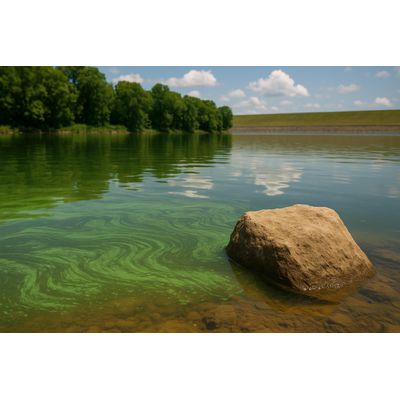
Taste and odor arise from naturally occurring organic compounds produced by algae and cyanobacteria in source water bodies such as reservoirs, lakes, and river intakes. The two most prevalent compounds are geosmin and MIB. Geosmin yields earthy, muddy scents; MIB yields musty or camphor-like odors. Humans detect geosmin at about 5 nanograms per liter, making removal challenging. Both persist through many treatment processes and are not hazardous at typical concentrations.
When do taste and odor problems occur?
Taste and odor events follow seasonal patterns with severity varying by year but timing remaining consistent. The main drivers are:
- Warm water temperatures in summer and early autumn accelerating cyanobacterial growth and compound production
- Thermal stratification concentrating algae near the surface
- Seasonal turnover in autumn releasing compounds from deeper water
- Nutrient loading from agricultural runoff and urban runoff feeding algal growth
The bloom leads to geosmin and MIB entering the intake, challenging removal downstream. Most utilities observe recurring seasonal windows, enabling anticipation.
Is water with earthy or musty taste safe to drink?
Yes in most cases. It is an aesthetic issue; geosmin and MIB are not toxic at drinking water concentrations. However, occurrence can erode consumer confidence and trigger bottled water substitution. Exceptions occur when taste and odor coincide with cyanotoxin-producing blooms, requiring health risk assessment.
Why is taste and odor difficult to remove at the treatment plant?
Geosmin and MIB are secondary metabolites released by algae and cyanobacteria in the source water. They are semi-volatile, low molecular weight, and resist many standard treatment processes. Coagulation and filtration remove solids but not these dissolved compounds; chlorination has limited effect and can create other byproducts; ozonation is more effective but costly and infrastructure intensive; activated carbon is commonly used but has limitations, especially during high concentrations.
Can taste and odor problems be predicted?
Yes. Real time monitoring and understanding seasonal patterns allow early warnings. Indicators include rising chlorophyll-a indicating algal biomass, surface temperatures around or above 20 C, declining dissolved oxygen in deeper layers indicating stratification, elevated phosphorus or nitrogen after rainfall, and historical patterns. Continuous monitoring integrated with source water management allows proactive interventions before compounds reach treatment.
How can taste and odor problems be prevented in source water?
The most effective approach is prevention at the source. Strategies include:
- Reservoir destratification to reduce cyanobacterial dominance
- Nutrient load reduction from agricultural and urban runoff
- Selective intake withdrawal from depths with lower algae
- Real-time water quality monitoring for early intervention
- Ultrasonic algae control to suppress cyanobacterial growth without chemicals
Ultrasonic technology addresses taste and odor at the origin, not as a downstream symptom, by reducing algal biomass before compounds form. LG Sonic emphasizes prevention over treatment, and MPC-Buoy systems pair continuous monitoring with ultrasonic algae control to maintain better source water quality.
Case studies
- Lake Sidney Lanier, Georgia — Gainesville Utilities deployed MPC-Buoys to suppress algal growth across the intake area, reducing treatment burden and delivering more consistent water quality.
- Johnstown — Ultrasonic technology was deployed to address elevated geosmin and MIB in source water, integrated with continuous water quality monitoring to stay ahead of taste and odor events.
- Berthoud, Colorado — Deployment of MPC-Buoy improved source water quality by reducing algal biomass and enabling more predictable conditions with reduced reliance on reactive treatment.
Frequently asked questions
- What causes taste and odor in drinking water? Geosmin and MIB are produced by cyanobacteria and other microorganisms in lakes, reservoirs, and river intakes. They are not harmful at typical concentrations, but detectable at very low levels, notably geosmin at about 5 ng/L.
- Why does tap water taste earthy or musty? Geosmin produced by cyanobacteria in source water is responsible; detectable at very low concentrations, causing sensory perception even when safety standards are met.
- Is water with a musty smell or earthy taste safe to drink? Typically yes; it's an aesthetic issue. Some events coincide with cyanotoxins requiring separate health risk assessment.
- When do taste and odor problems occur most often? Warm months; reservoir turnover; periods of elevated nutrient loading from runoff; reservoirs tend to show predictable seasonal patterns.
- Why is taste and odor difficult to remove during water treatment? The compounds resist many standard treatment processes; activated carbon is reactive and often insufficient during severe blooms; advanced oxidation can help but is costly and not always available.
- Can taste and odor problems be predicted? Yes. Monitoring environmental conditions and algal biomass provides early warnings; continuous monitoring with source water management enables proactive intervention.
- How can taste and odor be prevented in source water? Target source water management to reduce algal biomass; strategies include ultrasonic algae control, destratification, nutrient management, and real-time monitoring to lower compound load entering the plant.
- Assessing your reservoir’s risk A tailored assessment can identify vulnerabilities and intervention options based on nutrient loading, thermal stratification, seasonal patterns, and local biology.
Assessing your reservoir’s taste and odor risk requires a tailored assessment. If recurring complaints occur, the issue is likely developing in source water, and conventional treatment alone is not designed to prevent it. A reservoir-specific evaluation considers nutrient loading, stratification, seasonal patterns, and local biology to identify the most effective intervention. Talk to an LG Sonic expert to assess your reservoir’s risk and obtain a tailored recommendation based on your source water conditions, seasonal patterns, and treatment constraints.
For more information on source water management strategies, including ultrasonic algae control and real-time monitoring, contact a qualified provider to discuss a tailored solution.
Original: https://www.lgsonic.com/taste-and-odor-in-drinking-water/