

- Home
- Companies
- Jenfitch INC.
- Articles
- Winterizing Water Systems: The Hidden ...
Winterizing Water Systems: The Hidden Biofilm Problem - And Why Mineral Oxychloride JC9465 Sets a New Standard
Introduction
As facilities across agricultural, industrial, and municipal sectors prepare for seasonal shutdowns, winterization is often viewed as a simple operational pause: reduce flow, protect equipment, and wait for spring. But the science tells a different story.
Cold temperatures, stagnation, and variable organic loads create ideal conditions for biofilm accumulation, setting the stage for corrosion, microbial resurgence, system contamination, and costly start-up complications when warm weather returns. Traditional winterization chemistries—especially sodium hypochlorite and other unstable oxidizers—lose potency in these conditions, leaving systems vulnerable during the months when they need protection most.
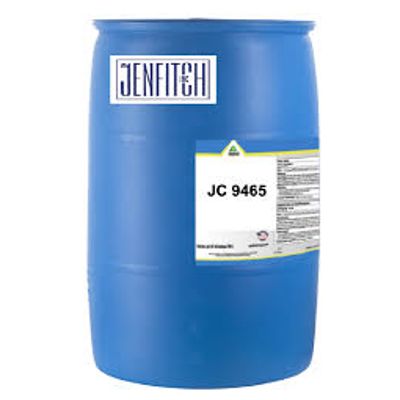
This winter, a growing number of operators are turning toward mineral oxychloride, such as Jenfitch`s JC-9465, as a more stable, effective solution engineered for real-world winter conditions.
What Actually Happens Inside Water Systems During Winterization
1. Reduced Flow Accelerates Biofilm Layering
In tanks, irrigation lines, distribution systems, cooling loops, and storage vessels, winter shutdowns slow or stop movement. Without hydraulic shear, suspended solids, organics, and microbial colonies settle and bind to surfaces, thickening the EPS (extracellular polymeric substance) matrix.
2. Cold Temperatures Lower Oxidizer Efficacy
Most oxidizing chemistries—including bleach—have temperature-dependent reaction rates. In cold systems:
- Reaction speed slows
- Chlorine species degrade faster
- Oxidizing power drops before it can penetrate biofilm
As a result, winter becomes a silent incubation period for entrenched microbial systems.
3. Stratification and Stagnation Promote EPS Hardening
Sedimentation layers, temperature gradients, and chemical depletion create micro-zones where biofilm thickens and becomes more resistant. During spring start-up, shear forces can dislodge these layers, releasing trapped pathogens, metals, and odor-causing compounds.
Why Traditional Winterization Approaches Fall Short
1. Bleach Degrades Rapidly in Cold + High Organic Load
Sodium hypochlorite is inherently unstable, breaking down faster at low temperature and high pH. In winterized systems, chlorine demand usually exceeds supply, causing rapid residual loss.
2. Other Oxidizers Struggle to Penetrate Biofilm
Quats, peracetic acid, copper-based chemistries, and chlorine dioxide face challenges under cold, stagnant conditions—especially when biofilm is mature. EPS layers can neutralize oxidizers before they reach embedded microbes.
3. Corrosion Concerns Limit Dosing
Many winterization chemicals are corrosive to metals found in agriculture, industrial water loops, and municipal infrastructure. This forces operators to choose between inadequate dosing and equipment damage.
The end result: biofllm not only persists but strengthens throughout winter.
The Winter Biofilm Threat
- A hardened winter biofllm poses multiple risks across industries:
- Microbial harborage (pathogens protected inside EPS)
- Corrosion under deposits
- Early-season contamination events
- Operational inefficiencies and blockages
- Odor, discoloration, and scale formation
- Regulatory and audit failures
For irrigation systems, biofilm accumulation can also lead to:
- Dripline clogging
- Flow uniformity issues
- Chemical injection inefficiencies
The stakes are high. Once winter biofilm takes hold, spring start-up becomes a costly remediation process rather than a simple system restart.
Mineral Oxychloride (JC-9465): Engineered for True Winter Conditions
Jenfitch`s JC-9465 represents a different class of winterization chemistry—one that remains stable, potent, and effective in the very conditions where traditional oxidizers fail.
1. Superior Stability at Low Temperature
Unlike hypochlorite, mineral oxychloride maintains active species over long periods, even in cold, high-organic environments. This makes it ideal for extended winter contact.
2. Proven Biofilm Penetration
JC-9465`s oxidizing species infiltrate and break down the EPS matrix, allowing deeper penetration into microbial communities. This reduces biofilm volume rather than simply bleaching surface layers.
3. Lower Corrosivity Than Traditional Oxidizers
Operators can achieve meaningful winterization dosing without compromising metal components. This is especially critical in:
- Irrigation systems
- Food and ag pipelines
- Industrial tanks
- Municipal distribution systems
4. Broad-Spectrum Performance Across Industries
JC-9465 is used in:
- Agriculture and irrigation lines
- Cooling towers
- Industrial process water
- Municipal storage tanks
- Livestock and poultry operations
- Food processing environments
Its combination of stability, safety, and biofilm control makes it one of the most adaptable winterization chemistries available
A Best-Practice Winterization Protocol Using JC-9465
Every system is different, but operators can follow a general framework:
Step 1 — Pre-Winter Flush
Remove accumulated solids and stagnant pockets to set the stage for effective chemical contact.
Step 2 — JC-9465 Dosage and Circulation
Introduce JC-9465 according to system size and organic load.
(Your technical data sheet or Charles` guidance will define final dosing recommendations.)
Step 3 — Extended Contact During Winter Months
Allow chemistry to maintain residual activity throughout the season. This is where mineral oxychloride`s stability far outperforms hypochlorite.
Step 4 — Spring Re-Activation
Perform a controlled rinse or circulation cycle to dislodge and flush any remaining residues. Systems treated with JC-9465 typically show significantly reduced biofllm volume and improved water quality upon restart.
A Safer, Cleaner Start to the New Season
Winterization is not downtime—it is a critical control point.
The conditions that define winter water systems—low flow, cold temperature, and high organic demand—are exactly the conditions where operators cannot afford chemical instability or weak biofilm control.
Mineral oxychloride solutions like JC-9465 provide a winterization strategy built for reality:
- Stable
- Penetrating
- Long-lasting
- Less corrosive
- Operationally efficient
As more facilities seek reliable winter protection, JC-9465 is emerging as the new standard for effective winterization programs across industries.
About the Author
Katie Cimino is the Marketing Manager for Jenfitch, Inc., specializing in scientific communication, product education, and translating complex oxidizing chemistry into practical solutions for industry professionals. She leads the development of Jenfltch`s educational articles, sales literature, and technical marketing tools supporting FlyGuard, JC-9465, and eco-forward water treatment innovations.