


Jenfitch INC. articles
A Chemistry-Based Approach to Fly and Odor Control
Abstract
Persistent fly infestations and odor generation in agricultural, industrial, and municipal systems are commonly treated as surface-level sanitation issues. However, growing evidence suggests these challenges are rooted in the structural and microbial dynamics of biofilm. This article examines the role of biofilm as a foundational driver of pest proliferation and presents a chemi
Katie Cimino
For nearly a decade, a seasoned water treatment technician had managed a 60,000-gallon open counter-flow cooling tower at a manufacturing facility near Houston, Texas. The system faced a persistent challenge: a water pH of 8.5.
Structural Microbial Risk in Commercial Ice Production Systems and Oxidative Control Using Stabilized Mineral Oxychloride Technology (JC 9465) Katie Cimino Jenfitch, Inc. Abstract Commercial ice production systems are widely assumed to present minimal microbiological risk due to freezing. This assumption is not supported by microbiological principles. Freezing suspends microbial replication but does not ensure lethality. Pathogenic and spoilage microorganisms can survive freeze–thaw cycles
Katie Cimino
Abstract
Huanglongbing (HLB), commonly known as citrus greening, continues to present a severe and expanding challenge for citrus production in California. Recent quarantine expansions in Riverside County, including areas surrounding Murrieta, underscore the increasing prevalence of the disease and the regulatory pressures faced by citrus operators. With no commercially available cure for HLB, California`s management strategy emphasizes prevention, vector control, san
katie Cimino
Abstract
Many water and process systems are experiencing increasing operational strain due to rising organic loads, biofilm development, and higher chemical demand. These challenges often manifest as instability in treatment performance rather than immediate regulatory exceedances. This article summarizes findings from full-scale municipal testing of Jenfltch JC9450 and translates those findings into operationally relevant outcomes for water system operators, facility ma
katie Cimino
How biofilm control strengthens food safety programs and supports Salmonella and E. coli risk reduction
Introduction: Egg washing as a critical food safety control point
Egg washing is a foundational food safety step in commercial shell egg production, designed to remove visible debris and reduce microbial contamination on eggshell surfaces prior to packaging or breaking. However, while regulatory frameworks and industry practices have h
katie Cimino
As industries across agriculture, food processing, wastewater treatment, and environmental operations face increasing pressure to reduce nuisance-insect activity, a new challenge has emerged:
How do we manage harmful fly presence without compromising pollinators, ecological balance, or community health?
Traditional neurotoxic pesticides—such as pyrethroids and organophosphates—have long been used for fly control. However, these tools can create unintended drift, re
katie Cimino
Abstract
Biofilms represent a pervasive and costly challenge across wastewater treatment facilities, food production environments, and agricultural systems. These surface-associated microbial communities form a complex extracellular polymeric substance (EPS) matrix that can retain up to 95% water, protect embedded microorganisms from oxidizing biocides, and serve as a breeding substrate for invertebrate pests such as filter flies (Psychodidae). The
katie Cimino
Introduction
As facilities across agricultural, industrial, and municipal sectors prepare for seasonal shutdowns, winterization is often viewed as a simple operational pause: reduce flow, protect equipment, and wait for spring. But the science tells a different story.
Cold temperatures, stagnation, and variable organic loads create ideal conditions for biofilm accumulation, setting the stage for corrosion, microbial resurgence, system contamination, and costly
katie Cimino
Abstract
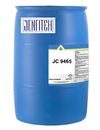
The certification of Jenfitch`s JC 9465 by the Washington State Department of Agriculture (WSDA) under the USDA National Organic Program (NOP) represents a notable development in the landscape of sanitizing agents approved for use in organic food-processing environments. As organic production expands nationally, processors face increasing limitations regarding allowable sanitation chemistries. JC 9465, a chlorine-based disinfectant, now holds a rare position
katie Cimino