


- Home
- Companies
- Oizom Instruments Pvt. Ltd.
- Articles
- Working Principles of Air Monitoring: ...
Working Principles of Air Monitoring: Light Scattering; Electrochemical, NDIR, PID
Jan. 1, 1900- By: By Oizom Instruments Pvt. Ltd.
Courtesy ofOizom Instruments Pvt. Ltd.
Oizom has years of experience in stimulating innovation by creating groundbreaking technology for environmental monitoring. With an IoT-based development approach, Oizom has been able to successfully unlock multiple solutions, catering to various industries.
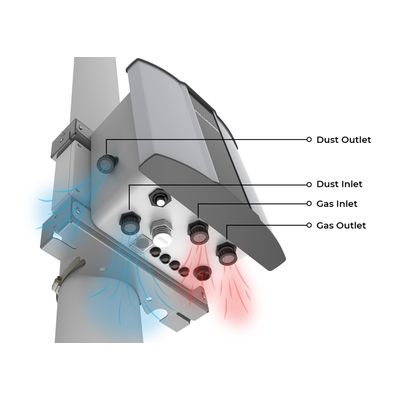
Our sensing technology works on proven working principles like NDIR, Electrochemical Analysis, Semiconductor, Optical Measurement, and Laser-Scattering. As a part of our proprietary ‘Micro Active Sampling’ (e-breathing technology), we have a smartly-designed sample intake and monitoring system inside a controlled environment. This isolates the effect of the external environment on measurement to achieve 13% higher accuracy than the industry standards.
Most popular related searches
air sample collection
particle size distribution
electrochemical analysis
electrochemistry
NDIR
air sampling
sensor system
controlled environment
sample collection
NDIR technology
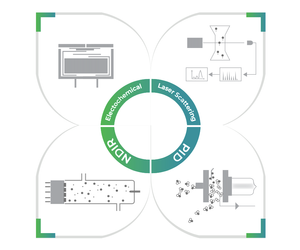
- Light Scattering: The sensor emits a laser beam to diffract through the air sample collected in the equipment. The intensity of the beam scattered from the particles provides particle size distribution and concentration.
- PID Method: The photoionization detection method is used to quantify TVOCs. Highly energized UV photons bombard the molecules and make them positively charged. These ionized molecules produce electricity which gives their volumetric concentration.
- Electrochemical Analysis: The gaseous emission is treated electrochemically by applying an external potential. Each gaseous molecule like CO2, H2S, CH4, etc. is identified depending on their oxidation or reduction potential.
- NDIR Technology: The gases emitted undergo Nondispersive Infrared Radiation where the sample air is subjected to infrared radiation. Different gaseous molecules absorb IR at different frequencies. The amount of IR absorbed gives the volumetric concentration.