


- Home
- Companies
- Aqua Survey, Inc.
- Services
Aqua Survey, Inc. services
Sediment Sampling
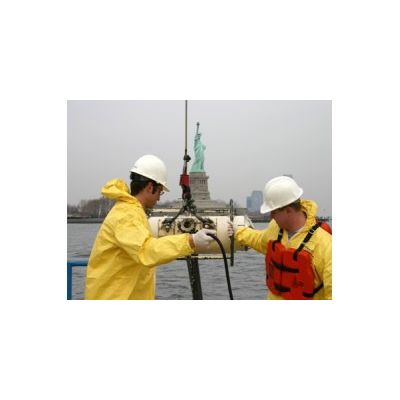
Sediment Vibracoring Services
Aqua Survey owns and operates more than ten heavy duty vibracoring systems. Vibracoring is considered to be the most cost effective technology to collect large numbers of sediment cores efficiently and with little distortion to the actual core. Three or four inch diameter cores can be collected continuously to a depth of about 40 feet.
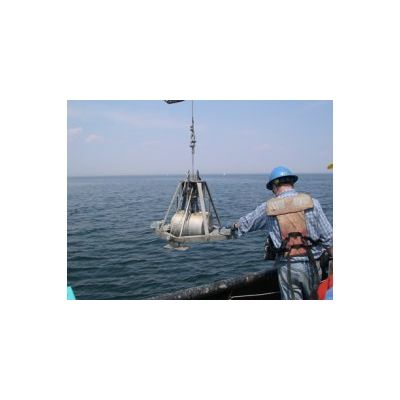
Benthic Grab Sampling Services
Aqua Survey has a wide variety of sampling equipment such as: benthic grab samplers, kick-nets, gill-nets, seines, bongo-nets, plankton-nets, epibenthic sleds, fish traps, trawls, underwater video camera, underwater digital still cameras, lightweight ROVs and other monitoring equipment. Specimen samples are collected, sorted, taxonomically identified and enumerated by ASI professionals. Seagrass beds and coral reefs can be digitally imaged/recorded and this data processed to determine their relative health.
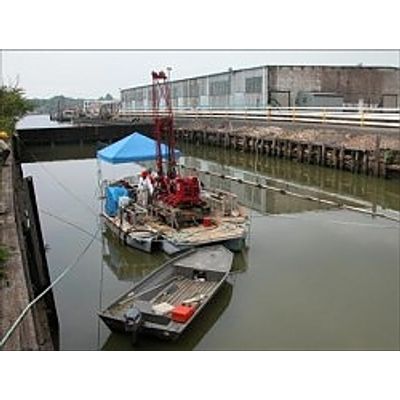
Drilling Services
Aqua Survey can deploy a CME-55LC track-mounted drill (or equivalent), a Diedrich D-25 skid-mounted drill, or a portable Winkie drill on several of our vessels. Unconsolidated or moderately consolidated sub-bottom samples can often be collected by vibracoring. Harder bottoms frequently require the use of percussive (hammer) or rotary drilling techniques. During standard drilling, a casing is either hammered or rotated into the bottom to sampling depth. To collect samples at prescribed depths, a split spoon is pushed into the casing and immediately removed and containerized. Unlike a split spoon, a Shelby tube is inserted and then pushed into the casing pipe. Then the sample is allowed to swell in the tube for up to 30 minutes to prevent loss during extraction. After removal, the sample tube is capped and wax-sealed for offsite geotechnical testing. Rotary drilling techniques are utilized to collect consolidated sediment and rock cores.
Toxicity Laboratory
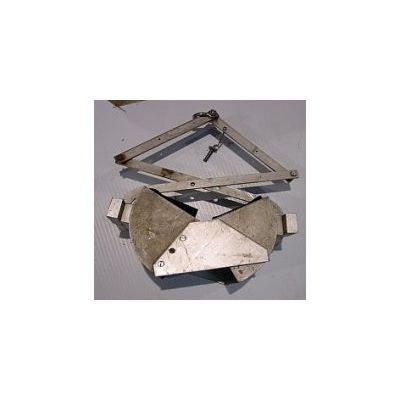
Taxonomy/Benthic Grab Sampling Services
To support benthic investigations Aqua Survey can deploy a Smith-Macintyre grab sampler to collect sediment and benthic macroinvertebrate samples. Once the macroinveretebrate samples are onboard the samples can be prepared with a sieving station to process the samples making them ready for the laboratory to sort and identify. A drop camera may also be deployed to assist with characterizing what is happening at the water-sediment interface. Specimen samples that are collected can be sorted, taxonomically identified and enumerated by ASI professionals.
Dredged Material Assessment Services
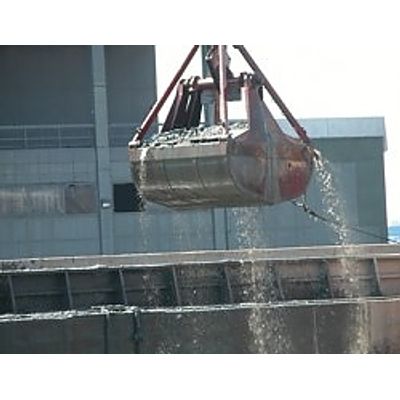
Aqua Survey collects proposed dredged material, processes the sediment samples, and preserves them for analyses. Our scientists regularly perform geotechnical, chemical and biological analyses in support of water quality and disposal alternatives studies. Aqua Survey will help clients prepare a sampling and analysis plan to submit for regulatory approval.
Geophysical Survey
Sub-Bottom Sonar Surveying Services
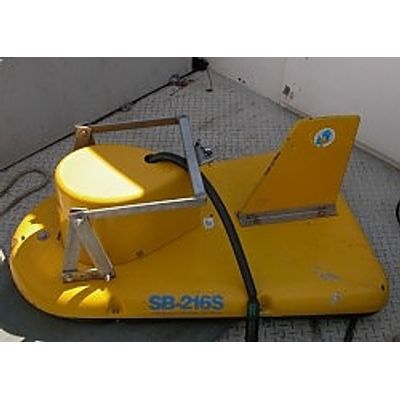
Aqua Survey utilizes Sub-Bottom sonar echoes to detect and map targets and layering within the beds of lakes, streams, rivers, estuaries and oceans. The harder the target or strata, the harder and more resolute the sonar’s echo is to the transducer. Sub-Bottom can be used to three-dimensionally delineate contaminated sediment volumes. This technology can also be used to survey a riverbed for buried utilities prior to advancing drilling or vibracoring equipment into the sub-bottom, thus lowering the probability of making contact with or damaging a utility service.
Electromagnetic Metal Detection Services
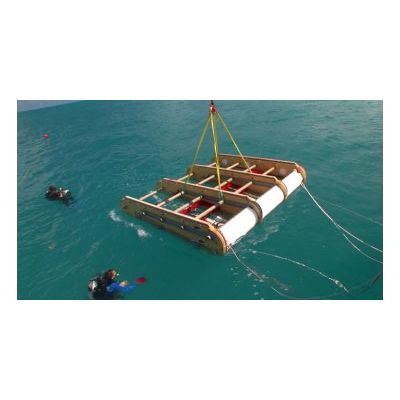
Aqua Survey utilizes electromagnetic (EM) detection systems to detect and map submerged metal targets. EM detectors are well known for their ability to detect unexploded ordnance (UXO) and treasure. ASI’s EM systems are high powered to maximize their detection range. EM systems can be towed behind survey vessels on floating platforms or submerged benthic sleds, to survey up to 6-meter swaths, towed by a diver (1-meter swath) or included within the nosecone of a vibracoring barrel (4-inch diameter).