

- Home
- Companies
- AquaBlok, Ltd.
- Products
AquaBlok, Ltd. products
HoleBlok - Well Sealing & Abandonment Seal
First Annular Sealant Materials to Provide Pollution Prevention together with Improved Benefits over Typical Coated Bentonite Pellets.
AquaBlok - Composite Particle System
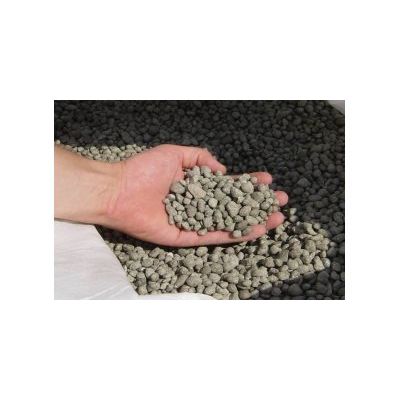
AquaBlok is a patented, composite-aggregate technology resembling small stones that is typically comprised of a dense aggregate core. In this application of the technology, a powdered high-swell sodium bentonite coating is utilized (Figure 1) with varying percentages of additive (bentonite) layer by percent of total weight.

PONDSEAL - Bentonite-based Sealing Solutions
Many waterways, independent of size and function, are constructed in porous or permeable soils that are not adequately compacted or amended during construction to reliably hold water. Even when soil basins or synthetic "liners" are properly prepared from the onset, a variety of environmental factors (e.g. repeated freeze/thaw cycles, prolonged desiccation, pockets of more permeable soils, animal damage, and even subtle seismic activity) can compromise an earthen basin, causing problems over time. Additionally, structural failures or oversights (e.g. a faulty overflow structure or a hydrologicly connected remnant agriculture tile) can eventually cause noticeable (and undesirable) water loss.
Sediment Capping and In-Situ Treatment
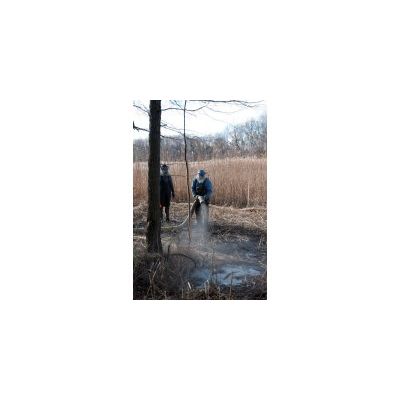
AquaGate+PAC - (Activated Carbon) For Active Capping or In-Situ Treatment
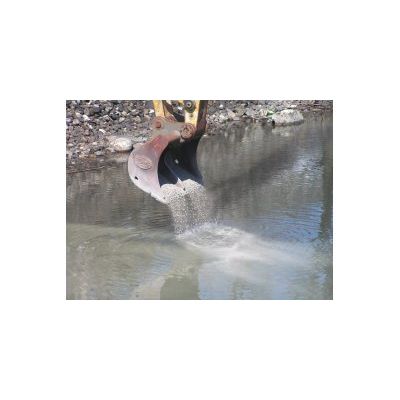
AquaGate+PAC provides a means to place powder activated carbon (PAC) through the water to a contaminated sediment surface. This can be done with the material blended with other granular capping materials (i.e. sand) to achieve a uniform distribution within an `Active Cap`, or it can be placed alone in very thin layers to achieve a low impact, in-situ treatment to reduce the bio-availability of contaminants within the sediment.
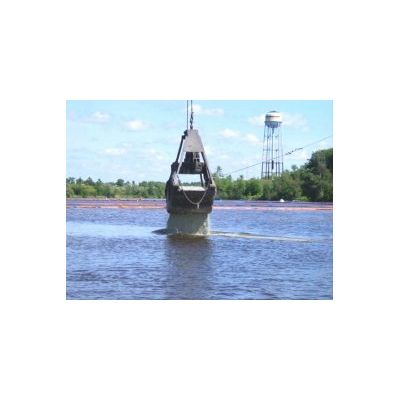
AquaBlok - Model 3070FW - For Low Permeability Capping
AquaBlok® is a natural clay-based material that can be placed through a water column to achieve thin, low permeability capping layers (i.e. hydraulic conductivity of 5x10⁻⁸ cm/sec or better), while providing a habitat suitable for benthic recovery. It has been used on hundreds of full-scale sites in the U.S. and has been successfully evaluated by the USEPA under it"s Superfund Innovative Technology Evaluation program.
AquaGate+Organoclay - (Organoclay) For Active Capping or Permeable Treatment Barriers
AquaGate+Organoclay provides a means to place powdered organoclay through the water or within a permeable barrier system. The material can be handled and placed in bulk either alone or in combination with other granular materials (i.e. sand) to achieve uniform distribution of the adsorptive material. Organoclays are generally accepted as a means to mitigate the movement of a wide range of hydrocarbon-based contaminants. It has been used successfully at full-scale at MGP and wood treating sites, among others.
Geotechnical Applications
LandfillGrade - Sealant Application for Certified Landfill Capping
Providing a Multi-Use, Self-Compacting, Bentonite-Based Seal for Repair of Penetrations to Certified Landfill Caps.
Cut-Off Walls
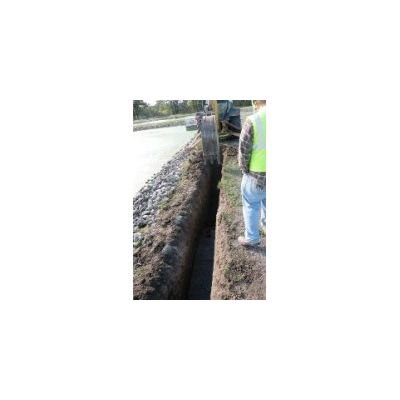
The traditional liquid slurry trench method is well known for creating hydraulic barriers and has been used for decades to stem the flow of subsurface water and water-borne contamination. In many cases, a backfill material with more structural strength is desired, particularly where subsurface flow rates are high or in earthen dams or dikes where loads must be supported.
Trench Dams
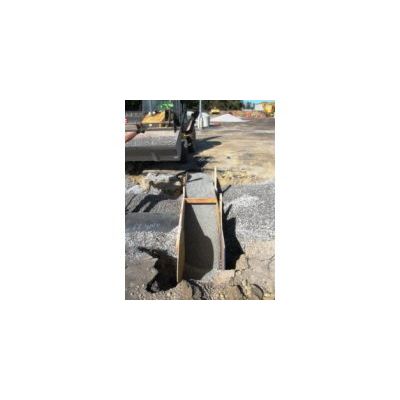
With typical formulations ranging in size from ¼” to ¾” (in diameter), AquaBlok looks, feels, and handles – at least before it gets wet, that is – much like any crushed stone that would be used to bed a pipe. The difference lies in AquaBlok’s unique veneer of bentonite that wraps each individual stone. Working together, the stone and the clay offer a pourable fill that “self-compacts” when exposed to water. The resulting body of material never sets firm like concrete, but instead has a consistency often described to be like “very crunchy peanut butter.”
Sediment Remediation
SubmerSeed - Composite-Aggregate Material
SubmerSeed is a composite-aggregate material made up of a dense aggregate core and viable wetland or aquatic seeds held in place with clay or clay-sized material and organic polymers. The technology provides an alternative to traditional means of plant propagation in wetland/aquatic settings, especially when faced with the challenges of establishing a favorable vegetative community in or near inundated conditions. The typical formulation of dry product relies on the nutrients available in the surrounding water and underlying sediment to support germination and nourish sustained growth. However, in certain instances, fertilizer-amended product formulations can also be made available.