

B&W Tek applications
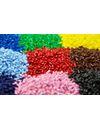
Every year over 400 million metric tons of plastic are produced globally for use in many applications, including construction, home appliances, medical instruments, and food packaging. Spectroscopy characterizes many important parameters associated with polymers and plastics production.
The intensity of the Raman signal changes with the amount of material present. This means Raman spectroscopy can be used as a quantitative technique. SERS can be used to enhance detection limits and measure materials in low concentrations.
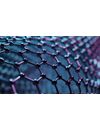
Carbon materials are shaping the future of energy storage and medicine. Carbon nanotubes (CNT) and graphene are two of the most popular carbon nanomaterials, but new materials and applications are emerging daily.

Spectroscopy is rooted in understanding the interaction of light with materials making it uniquely applicable to solar and energy storage applications. From the UV to the near-IR, B&W Tek has a range of components to enable your measurements.

Raw material identification and verification is a regulatory requirement for pharmaceutical manufacturers. The use of Raman outside of pharmaceutical applications is growing rapidly. Raman instruments provide a molecular fingerprint of samples for nondestructive identification and verification of materials such as active pharmaceutical ingredients (APIs), excipients, intermediates, and finished products.
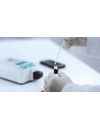
Surface Enhanced Raman Spectroscopy or SERS is a specialized Raman technique that enhances the Raman scattering efficiency through the use of nanoparticles in solution or a treated surface. SERS improves the detection limit of Raman to the part per billion level and beyond for some analytes.

Raman spectroscopy is rapidly growing in popularity as a tool for general chemical analysis. From incoming raw materials for production to final quality control measurements, Raman’s ability to provide qualitative and quantitative information increases its utilization in a variety of industries.

B&W Tek components come together to create customized configurations that teach and inspire future spectroscopists.