


Bristol Industrial & Research Associates Ltd (Biral) articles
Extreme weather events, which have been exacerbated by the ever-increasing threat of climate change, have skyrocketed in recent years causing widespread devastation. 2022 saw a myriad of meteorological occurrences, from powerful floods to extreme temperatures and wildfires, which according to predictions by the Met Office, forecast that global temperatures are set to
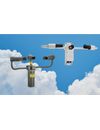
When it comes to automatic visibility and present weather sensors, most manufacturers opt to detect the forward scattering of infrared light via a single receiver to estimate visibility and to classify precipitation. However, the intensity of light scattering is not the same in all directions, since this is strongly dependent on the size, shape and composition of these particles.
Whilst this single measurement approach is quite effective and slightly lower cost, Biral sensors employ a
With COP26 under way and a year on from the announcement of the Government’s 10 Point Plan, the need to become more carbon neutral is as prominent as ever and is now taking place in numerous industries across the world.
It’s no secret that the weather is changing, with severe conditions happening more frequently and at pace, with soaring temperatures, storms, flooding and even volcanic eruptions all making headlines on a regular basis. However, it is easy to forget how the
In August 2021, Highways England unveiled a £27.4 billion investment plan in the strategic road network across the UK. Of that, more than half of the money will be used to improve the quality, capacity and safety of the motorways and A roads that have helped to keep the country going throughout the pandemic.
The UK has already begun to return to normal and the number of vehicles on our roads is continuing to rise. With cold winter weather and reduced daylight hours on the horizon

The way volcanoes are now being monitored is improving rapidly. As technology continues to evolve, it’s now enabling scientists to use software which can help detect in situ electrical discharges during explosive events at volcanoes around the world.
While current global thunderstorm networks have demonstrated their capability to detect volcanic lightning during major eruptions, the scattered geographical distribution of the sensors has led to reduced sensitivity and delayed or n
Lightning is a fascinating yet deadly phenomenon that affects countries all over the world. It is easy to forget when residing in countries like the UK, which experiences less thunderstorms than many others, that in the time it takes you to read a sentence around 200 bolts of lightning have struck the ground across the Earth. With around 100 strikes per second, lightning currently hits the ground around eig
Nathan Neal
Meteorological equipment specialists Biral has seen great success from its BTD-200 self-contained, standalone lightning warning system in applications and industries all around the world.
Following its use in leisure and industrial settings, Biral has recently been concentrating on targeting the entertainment industry, which includes the likes of theme parks and water parks.
The BTD-200 lightning warning
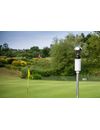
Meteorological equipment specialists Biral is getting noticed in the leisure industry following the launch of its BTD-200 self-contained, standalone lightning warning system last autumn.
Since making its debut at Met Tech last year, the BTD-200 has grown in popularity across a number of industries, and broke into the leisure industry earlier this year at the 2019
Visibiity is usually referred to as the maximum horizontal distance through the atmosphere that objects can be seen by the unaided eye. Visibility will depend upon several factors, for example:
- The size and colour of the object to be observed against the sky in the horizon
- The brightness of the sky itself (background luminance)
- Whether the object is emitting light (particularly important a night!)
- The skill of the observer at resolving the object a
Alec Bennett
The Biral Thunderstorm Detector BTD-300 provides real-time detection and ranging of thunderstorm activity within 83 km (51 miles). The sensor bases thunderstorm warnings on the detection and range of lightning flashes, as well as the presence of strong electric fields and electrically charged precipitation occurring at the installation site. The strong electric fields and charged precipitation provide the ability to warn of the potential for nearby lightning activity before the occurrence of
Alec Bennett