


Brooks Rand Instruments products
Automated Mercury Analysis Systems
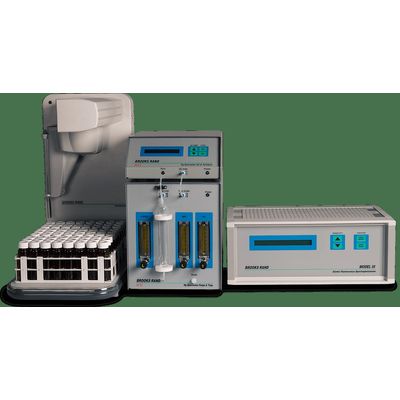
Brooks - Model MERX-M - Automated Mercury Analysis System
In use at Brooks Rand Labs since 2006 and introduced commercially in 2007, MERX is the world’s first commercial automated analytical system based on US EPA Method 1630 for methylmercury analysis. Around the world, numerous national environmental agencies and leading universities have quickly embraced MERX as an easy-to-use, robust, and reliable system that delivers high quality data.
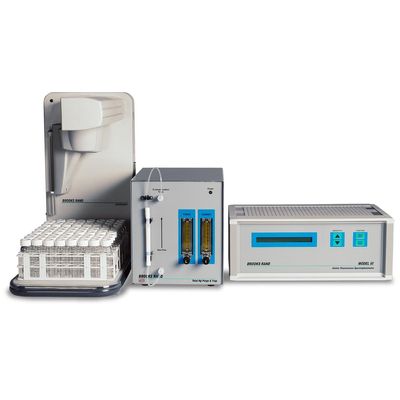
Brooks - Model MERX-T - Automated Mercury Analysis System
At Brooks Rand, we firmly believe that obtaining the highest quality data is essential, but we also recognize the necessity of operational efficiency. Our decades of trace-level mercury analysis experience have enabled us to develop a system that achieves both of these critical goals.
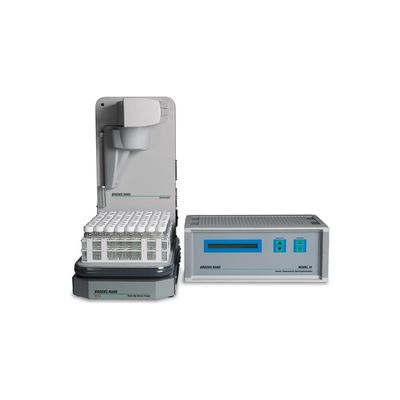
Brooks - Model MERX-T-DP - Automated Mercury Detection System
Increasingly stringent mercury regulations have made old analytical methods based on atomic absorption, such as EPA 245.1 and 245.2, obsolete. To comply with current wastewater discharge permit requirements, many environmental testing laboratories are upgrading their capabilities to satisfy the lower required detection limits by implementing EPA 245.7. This method uses an atomic fluorescence spectrometer, which is considerably more sensitive, has better linearity, and has a more stable baseline than an atomic absorption spectrometer.
Manual Mercury Analysis Systems
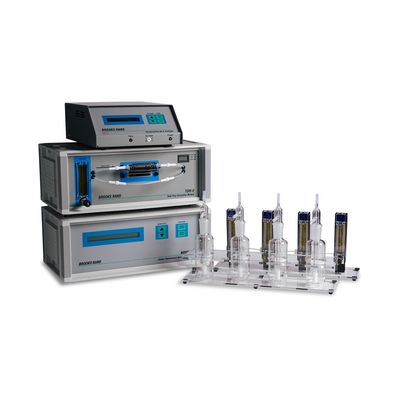
Brooks Rand - Manual Methylmercury Analysis System
The Brooks Rand methyl mercury systems are specifically designed for methyl mercury analysis by EPA Method 1630.
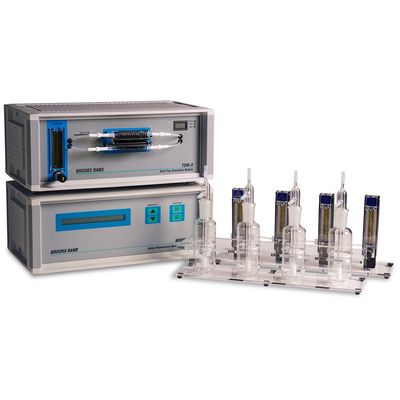
Brooks - Model 1631 - Automated Mercury Analysis System
The standard Brooks Rand 1631 system combines easy to use automated analysis with manual purge and trap for a high-throughput, cost-effective system. This system consists of the Model III and the Amalgamation Control Module for automated trap analysis, along with the manual Purge and Trap Module. This semi-automated system allows for the simultaneous purging of multiple samples while previously loaded amalgamation traps are analyzed. The result is a throughput rate of less than 5 minutes per sample.
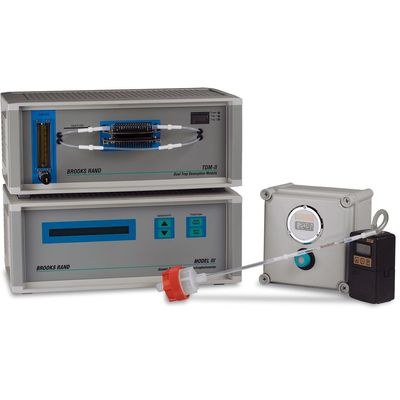
Brooks - Mercury Air Monitoring System
The Brooks Rand air monitoring systems are ideal for collection and analysis of mercury in air. The air monitoring systems combine remote and portable sample collection with easy-to-use automated analysis for a high-throughput, cost-effective system. These systems allow for the simultaneous collection of multiple samples and rapid analysis of loaded gold amalgamation traps for an analytical throughput rate of less than 4 minutes per sample. Achievable detection limits are
Methylmercury Water Sample Distillation System
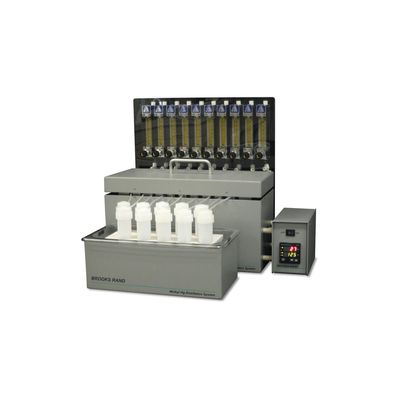
Brooks - Methylmercury Distillation System
The Brooks Rand Methyl Mercury Distillation System is the only commercial system specifically designed for methyl mercury distillation by EPA Method 1630. This system allows for the simultaneous distillation of up to 10 samples, and maintains tightly controlled heating and gas flow across all ten distillation slots. This system was designed with a custom configured heating block and insulated lid to prevent sample reflux, thereby avoiding this significant issue common with more general distillation systems. Refluxing of methyl mercury distillates not only slows the distillation process, but more importantly can result in poor recoveries due to significant breakdown of methyl mercury.

Brooks - Model III CVAFS - Mercury Trace Analysis
The Brooks Rand Model III was designed with input from leading mercury researchers from around the world to meet the most demanding analytical requirements and is cited in US EPA Methods 1631, 245.7, and 1630. With the ability to adjust the sensitivity across a broad dynamic range and with one-button auto baseline zeroing, the Model III is an incredibly stable detector that can run continuously all day without recalibration and is one of the most reliable mercury detectors in use today.
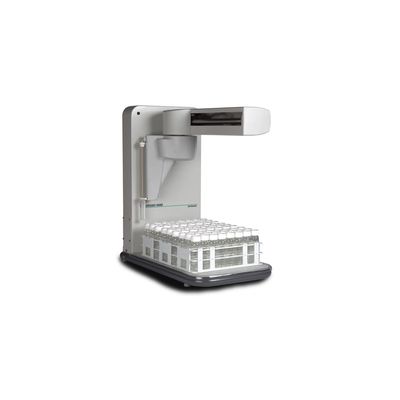
Brooks - Model MERX -A 72 - Autosampler
A 72-position autosampler provides fast and easy analysis of all calibration, quality control, and normal samples through one robust system and with minimal supervision. The MERX® Autosampler design results in a system that generates considerably less waste and requires less maintenance than a flow-through system with a gas-liquid separator.
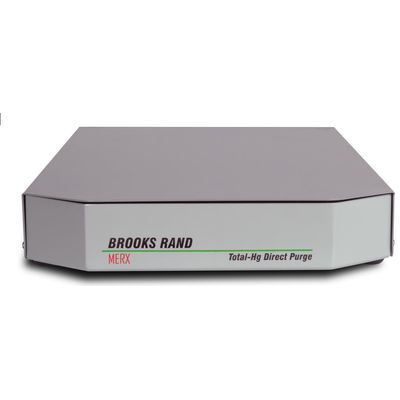
Brooks - Model MERX - Total Hg Direct Purge Module
The direct purge module controls gas flow to the autosampler and detector, and contains a vacuum pump, which is used to clear residual mercury vapor from the system between samples. The Nafion gas dryer is attached to this module. To minimize the bench footprint of the system, this module was designed to fit underneath the autosampler.