


- Home
- Companies
- Caterpillar
- Products
Caterpillar products
Stationary Engine Solutions
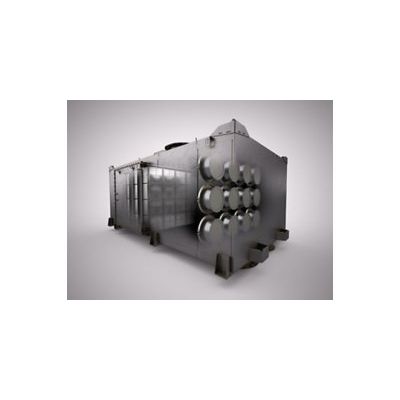
Caterpillar - Selective Catalytic Reduction System
Primary reduces NOx and can be combined with DOC or DPF technology to reduce multiple pollutants in a single package. System consists of SCR catalyst, static mixer, reactor housing and dosing control system. Applicable to natural, gas or diesel engines.
Caterpillar - Model DPF - Diesel Particulate Filter
A wall-flow ceramic filter coated with a high performance catalyst and housed within a stainless steel canister. Optional silencing available. Applicable to diesel engines. A series of alternately blocked channels forces the exhaust gas to flow through the channel walls, capturing and oxidizing PM together with CO and HC by a high performance catalyst
Caterpillar - Diesel Oxidation Catalyst / (Gas) Oxidation Catalyst
A flow through substrate coated with a high performance catalyst and housed within a stainless steel canister. Optional silencing available. Applicable to diesel engines and gas engines. Designed to selectively reduce NOx but can be combined with DOC or DPF technology to reduce multiple pollutants in a single package. System consists of SCR catalyst, static mixer, reactor housing, and dosing control system. Applicable to natural gas or diesel engines. Dosing control system injects Diesel Exhaust Fluid (DEF) into the exhaust upstream of the SCR catalyst. The DEF decomposes to ammonia (NH3), then passes through a static mixer and enters the SCR catalyst where NOx are reduced to nitrogen (N2).
Caterpillar - Three-Way Catalyst
A flow through substrate coated with a high performance catalyst and housed within a stainless steel canister. Optional silencing available. Applicable to rich burn gas engines. A flow-through honeycomb substrate coated with a high performance catalyst and housed within a
stainless steel canister. Optional silencing available. Applicable to rich burn (stoichiometric) natural gas engines. Exhaust gas from
the engine passes over the catalyst where a chemical reaction takes place to simultaneously reduce NOx, CO, and HC emissions. A closed-loop air-fuel ratio controller is required for the TWC to work effectively