


- Home
- Companies
- Chromatotec
- Applications
Chromatotec applications

Context & Challenges How to analyze H2S, mercaptans and/or THT for detecting the odor of the gas with the ability to have total organic sulfur calculation in a metering station?
Polycyclic Aromatic Hydrocarbons (PAHs) are a group of over 100 different chemicals that are known to be formed typically during incomplete combustion of organic matter at high temperature. Their major sources in the atmosphere include industrial processes, vehicle exhausts, waste incinerations, and domestic heating emissions. Due to their carcinogenic/mutagenic effects, 16 PAHs are currently listed as priority air pollutants.

Context & Challenges Globally, the wastewater treatment is the first public health issue. Urban development leads to urbanization near waste water treatment plant and extension of sewerage network. These aspects induce to an augmentation of sulfur compounds (H2S, mercaptans and sulfides) which are very corrosive, odorant and toxic. To monitor this compounds online CHROMATOTEC® offers high meteorological solutions. At the entrance of the waste water plants, where the waste water arrives, strongly smelling and polluted air is captured and neutralised by a chemical cleaning process called ‘’Stripping’’. The correct amount of chemical products needed to neutralise the polluted air has to be calculated.
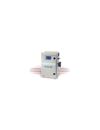
The aim : analyze ppb or ppb of H2S and mercaptans with the TRSMEDOR because of bad smell of exhausts from waste water treatment plants and also the toxicity of H2S and Me-SH.
ontext & Challenges Globally, the wastewater treatment is the first public health issue. Urban development leads to urbanization near waste water treatment plant and extension of sewerage network. These aspects induce to an augmentation of sulfur compounds (H2S, mercaptans and sulfides) which are very corrosive, odorant and toxic. To monitor this compounds online CHROMATOTEC® offers high meteorological solutions. Odors are very distinct air contaminants as they generate nuisances. The factors playing a role in the determination of odor annoyance are: odor concentration and intensity, frequency, appreciation, duration, synergy and location. CHROMATOTEC® proposes an automatic solution to well identify the origin and the level of odors.

It has been established that organic aerosol (OA) makes up for a major fraction of fine particulate matter in all region of the atmosphere. This fraction accounts approximately for half of the total PM2.5 dry mass.1,2 Primary OA is directly emitted in the troposphere from anthropological and natural sources whereas secondary OA (SOA) is formed in-situ in the atmosphere from the oxidation of biogenic or anthropogenic gas-phase precursors and subsequent partitioning of the less volatile products into the particle phase. The current number is that, on a global scale, SOA would represent around 60% of the overall OA.3 However, recent global mass-balance estimations for the removal of volatile organic compounds (VOC) suggest that this number could under-predicts SOA production.4 Recent field measurements in urban locations are also in support of a larger share, indicating that SOA is the dominant fraction of OA, with amounts considerably 20 greater than models predictions.
Context & Challenges Volatile organic compounds (VOC) can be dissolved in water. Sometimes water is polluted and to study contamination of VOC in finished drinking water, VOC must be measured. Chromatotec® Solutions Chromatotec® has developed a specific system for the measurement of VOC in water: a Purge & Trap system, the airmoPURGE. The analyzer is coupled with a degasing system allowing the extraction of dissolved gases. The complete system is based on: - 502.2 method from US EPA – “Volatile organic compounds in water by purge and trap capillary column gas chromatography with photoionization and electrolytic conductivity detectors in series – Revision 2.1”. - 524.2 method from US EPA – “Measurement of purgeable organic compounds in water by capillary column gas chromatography/mass spectrometry – Revision 4.0”.

Industrial companies produce during there manufacturing process toxic compounds such as Benzene or H2S. CHROMATOTEC analysers are able to monitor such compounds. For this kind of applications we generally find ranges of 0.1 to 10 ppm. The corresponding analysers for these applications are the chromaFID and the chromaPID, according to technical specifications (gas to be analysed, environment of the analysis, concentration range,…).
This market is driven by law and legislations made in Europe and/or USA (US EPA). It deals with ambient air monitoring : analysis / calibration / automatic zero air in continuous 7 days a week. Ambient air monitoring: in France this service is controlled by associations that calculate the ATMO index. CHROMATOTEC instruments such as the BTX ,the Sulfur and the VOC analyzers can be a good complement of their analyzers such as O3, CO2, DUST… in the analysis of ambient air.
The ambient air in clean air rooms needs to be constantly monitored for the safety of workers and of the production according to the environment. A clean air room is a room where the concentration of particles is controlled in order to minimize the introduction, the generation, retention of particles inside, for instance for chip production or the production of medicines.