

Clearwater BioLogic, LLC products
Clearwater BioLogic - Floating Modular Bioreactor System for Sulfate Reduction
Clearwater BioLogic has developed an innovative system for sulfate reduction that mimics natural processes and is designed to be highly efficient, even in cold climates. The core of this system is the Clearwater BioLogic floating modular bioreactor, a 4,000-gallon vessel featuring a patented design (US-10.597.318-B2 and US-11.104.596). This bioreactor employs sulfate-reducing bacteria (SRB) to facilitate the conversion of sulfate ions (SO4) to hydrogen sulfide (H2S or HS-) through biological activity. The design incorporates a media that has 90% open void volume, minimizing pressure drop and avoiding preferential flow paths. Each unit contains over 26 acres of non-biodegradable attachment media, ensuring extensive surface area for bacterial growth. The bioreactor achieves more than 99% removal rate of sulfate, converting it into hydrogen sulfide. This hydrogen sulfide is then transformed into iron sulfide using reactive iron, which can be introduced either passively or actively. The iron sulfide is collected and safely disposed of or repurposed for applications such as soil amendment and groundwater remediation.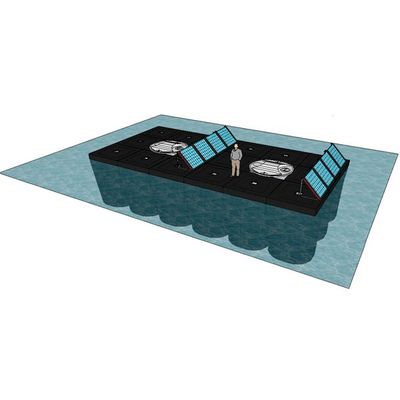
Clearwater BioLogic - Sulfate Reduction System for Environmental Remediation
The Clearwater BioLogic sulfate remediation system was developed and tested in northern Minnesota, where a century of iron and taconite mining has left excess sulfate in abandoned mine-pit lakes. In the mid-1960s, area lakes and rivers were found to contain rising sulfate levels, and at times acidic runoff and dissolved metals. These substances were harming ecosystems, including the wild rice that grows in some of those waters. In 1973 Minnesota established a strict sulfate standard (10 milligrams per liter) to protect wild rice, but it was rarely enforced for lack of a cost-effective remediation method. Over time, reverse osmosis systems were developed to remediate sulfate, but they were deemed prohibitively expensive by the mining companies. The stalemate persisted for decades.