


- Tanks
- Accessories
- Galvanized Corrugated Steel Water Tanks
- Water Tanks - Wood and Wood Wrapped Tanks
- Water Tanks - Stone, Stone Veneered, Concrete, and Brick Tanks
- Water Tanks - Elevated Water Tanks
- Fiberglass Water Tanks
- Poly Water Tanks
- Stainless Steel Water Tanks
- Water Tanks - Steel Bolted, Stainless Steel, Steel Welded, and Industrial Tanks
- Corrugated Cistern Water Tanks
- Filtration - Project Component Kits
- Filtration - Volume Filters
- Filtration - Retention / Filter
- Filtration - Filters with Telescopic Extensions
- Filtration - Integral Filters
- Filtration - Downpipe Filters
- Filtration - Calmed Inlet
- Filtration - Overflow Siphons / Traps
- Tank Monitoring Solutions - Observant
- Tank Monitoring Solutions - Aquatel
- Tank Monitoring Solutions - Yaktek
- Stormwater Treatment Systems
- Greywater Systems
Climate Tanks products
Tanks
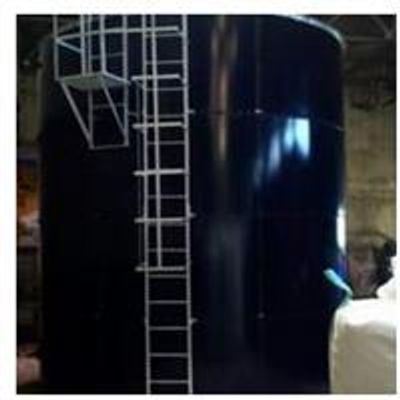
Climate - Glass Fused to Steel Bolted Tanks
Fused glass is glass that has been fired (heat-processed) in a kiln at a range of high temperatures from 593 °C (1,099 °F) to 816 °C (1,501 °F). There are 3 main distinctions for temperature application and the resulting effect on the glass.
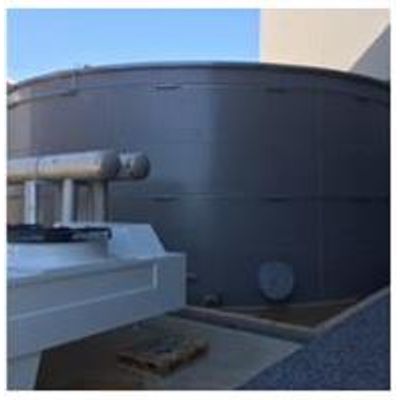
Climate - Epoxy Coated Steel Bolted Tank
Epoxy is either any of the basic components or the cured end products of epoxy resins, as well as a colloquial name for the epoxide functional group. Epoxy resins, also known as polyepoxides, are a class of reactive prepolymers and polymers which contain epoxide groups. Epoxy resins may be reacted (cross-linked) either with themselves through catalytic homopolymerisation, or with a wide range of co-reactants including polyfunctional amines, acids (and acid anhydrides), phenols, alcohols and thiols.
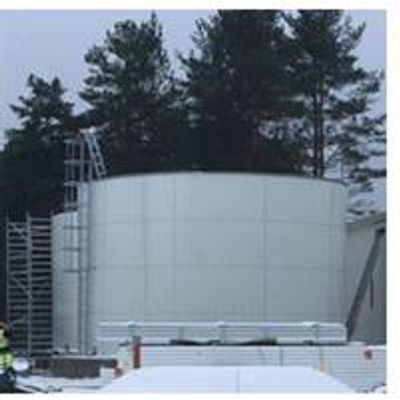
Climate - Powder Coated Steel Bolted Tanks
Powder Coating is a type of coating that is applied as a free-flowing, dry powder. The main difference between a conventional liquid paint and a powder coating is that the powder coating does not require a solvent to keep the binder and filler parts in a liquid suspension form. The coating is typically applied electrostatically and is then cured under heat to allow it to flow and form a “skin”. The powder may be a thermoplastic or a thermoset polymer. It is usually used to create a hard finish that is tougher than conventional paint. Powder coating is mainly used for coating of metals, such as household appliances, aluminum extrusions, drum hardware, and automobile and bicycle parts. Newer technologies allow other materials, such as MDF (medium-density fibreboard), to be powder coated using different methods.
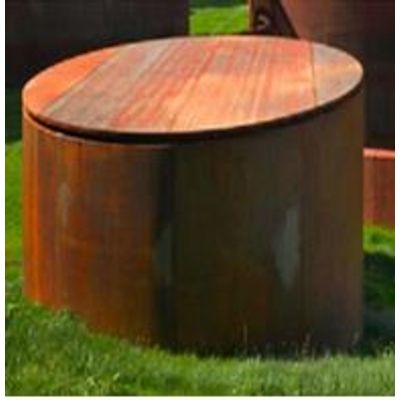
Climate - Weathered Coated Steel Tanks
Weathered steel, often referred to by the genericized trademark COR-TEN steel and sometimes written without the hyphen as corten steel, is a group of steel alloys which were developed to eliminate the need for painting, and form a stable rust-like appearance if exposed to the weather for several years. Weathering refers to the chemical composition of these steels, allowing them to exhibit increased resistance to atmospheric corrosion compared to other steels. This is because the steel forms a protective layer on its surface under the influence of the weather.
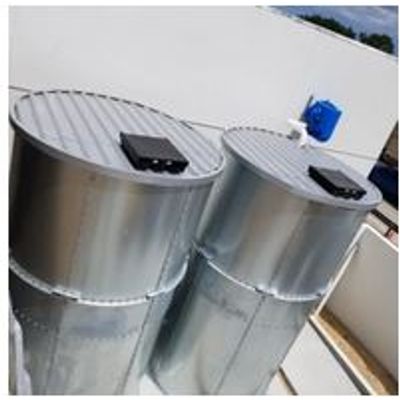
Climate - Galvanized Steel Bolted Steel Tanks
The tank consists of galvanized steel panels and is fixed together with bolts. The tank is lined with a PVC liner that is fixed to the top of the tank through reinforced eyelets. Polyester geo-textile matting is placed on the bolted steel tank floor or foundation and walls to protect the liner from damage during installation and use. Roof is a fixed rigid design consisting of steel decking of ribbed design supported by galvanized Z and C purlins and finished with flashing.
Accessories
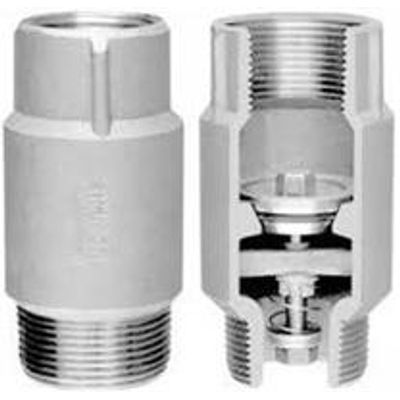
Climate - Model RPZ - Air Gaps Valves
This device meets most plumbing code that requires an air gap separation between potable and non-potable water lines.
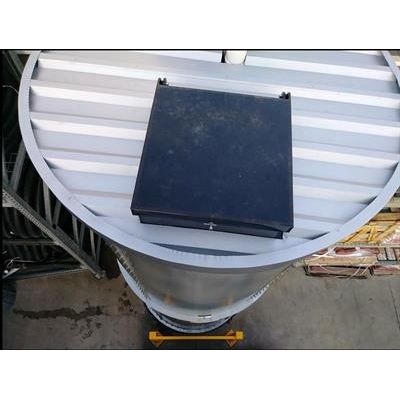
Climate - Lower Profile Flat Roof Access Hatch
Climate Tanks. manufacturers a variety of access hatches for roof top and side wall bulk head for steel bolted tanks. We can manufacture from a variety of materials, but usually manufacture with a composite plastic, galvanized steel, or PE 100.
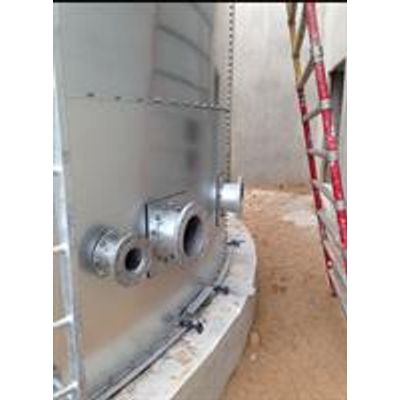
Climate - Flanges
Climate Inc has many tank fittings and tank accessory product lines that are designed to augment our wide selection of storage tanks, making it easy to quickly and efficiently turn any of the storage units into complete operating rainwater harvesting and liquid storage systems. Use any of our water treatment products to ensure your stored water is clean, fresh, healthy and enjoyable. Take the guesswork out of general tank installation with the use of one of our global certified dealers.
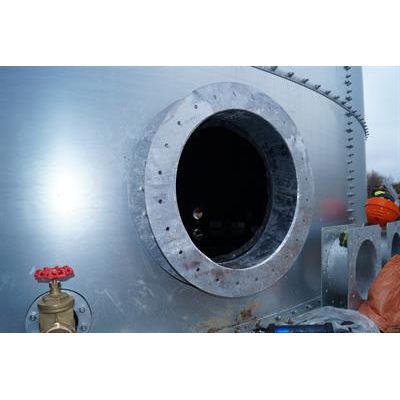
Climate - Hatches and Manways
An entry used exclusively for personnel to travel form the shaft bottom, drift mouth, or the roof to the working section inside of a tank.
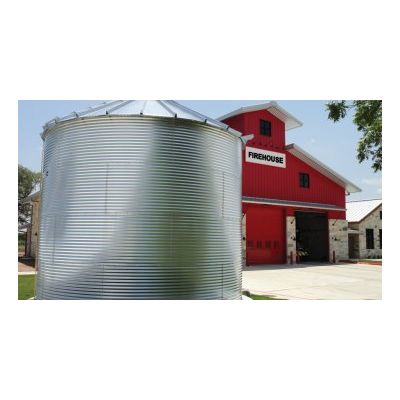
Model 4206 - Fire Protection Systems
In regions where water is either scarce or not connected to a municipal supply, rainwater harvesting can provide the critical water needed for fire protection. In most cases, the requirements of fire suppression sprinkler system design are dictated by various Building Codes. Chiefly in the United States, the National Fire Protection Association – Sprinkler Systems, commonly called NFPA, is the standard for design and code approval.