


Delphian Corporation products
Stand-Alone Gas Detectors
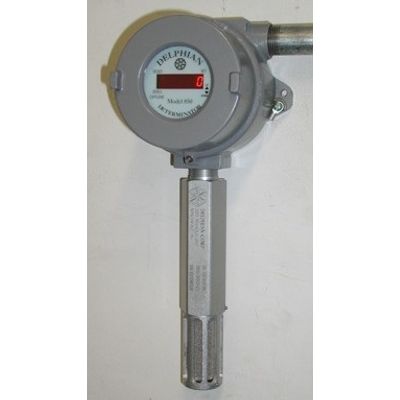
Delphian - Determinator (Fixed Point Infrared) Sensor
The Delphian Determinator (Fixed Point Infrared) sensor is a smart infrared hydrocarbon gas detector. It has no moving parts. It displays gas concentrations up to and above 100% LEL including over-range (above 120% LEL) concentrations up to 999% LEL. It can determine which hydrocarbon gas is being detected and transmit a 4-20 mA signal proportional to the LEL concentration of that gas or vapor. The Determinator displays the correct LEL as well as the gas detected on its five digit LED display. It can be set to show up to three gas alarm levels. An optional four-relay alarm module (SLAM) can be connected directly to the Determinator so that local alarms can be actuated in the event of a gas alarm or failure.
Delphian - Model SafeCAL - One Touch Calibration Stand Alone-Gas Monitoring System
The SafeCAL module installs in a Class ABCD (FMRC) conduit box with a glass dome. A Delphian sensor attaches through gold plated keyed connectors and a weather-proof fitting for easy installation and reliable operation. The entire system is sealed. All calibration is completed without opening the explosion-proof housing. SafeCAL will endure temperatures from -40oC (-40oF) to +85oC (+185oF). It will operate even when its conduit box is one third full of water.
Controllers
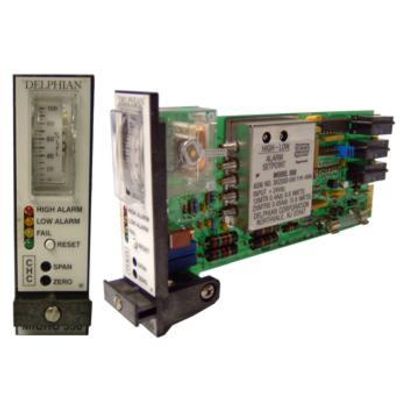
Delphian - Micro Controller
The Micro Controller is fixed installation single channel and slides into the Flexirack. It requires a compact one inch of panel space three and one-half inches high. It is a simple design with few parts there there is less that can go wrong. It is easy to maintain and repair. The controller uses a rugged analog meter and has LED indicators for power, fail, high and low alarms, full 100% RFI shielding and sealed relays.
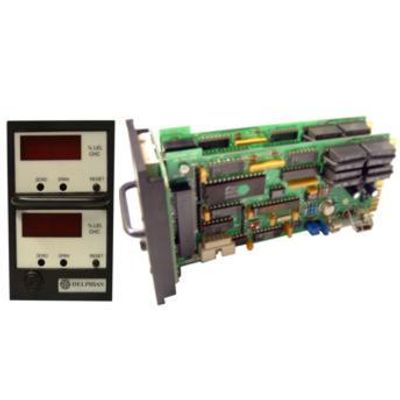
Delphian - DC Controller
The DC controller is a smart two channel digital device which displays alarms and concentrations of the gas(s) to be sensed. Each channel can be configured independently and unlike other controllers, the two channels are completely independent of one another.
Controllers - Zone Alarm Modules
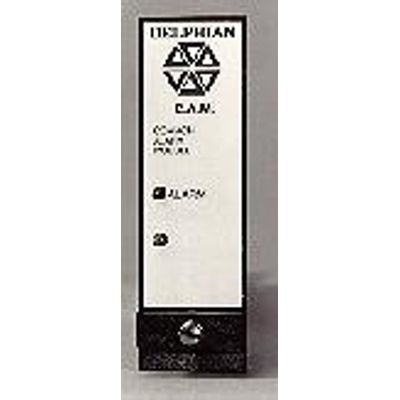
Delphian - Model CAM - Common Alarm Module
A CAM is a simple means to provide a relay contact transfer whenever any one alarm occurs in a zone. This "auxillary" relay automatically esets upon the disappearance of all alarms in the zone. a typical application is to trip a remote alarm to advise personnel to review the status of individual alarms. A CAM can be used with up to 15 channels of gas detection in a Flexirack and with an unlimited number of external inputs.

Delphian - Model VAM - Voting Alarm Module
A VAM provides a relay contact transfer when a specified minimum number of individual alarms occur in a zone. This "auxillary" relay is field selectable to be automatically or manually reset. Manual reset is done with a button on the VAM front panel or with a remote reset switch. A typical application is to avoid costly tranxient alarms by requiring a "vote" of two or more independent individual alarms before an expensive action is initiated (eg a halon dump or plant shutdown).
Other Products
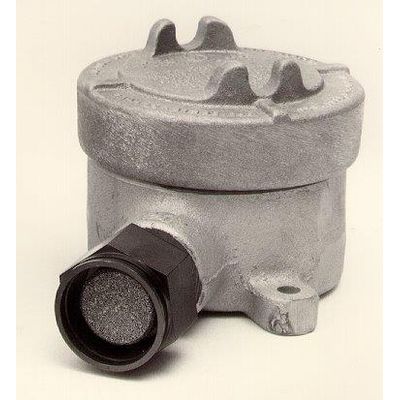
Delphian - Stand Alone Gas Monitors
Delphian`s Stand Alone Sensors can be used with virtually any controller, datalogger or computer-based data management systems that accepts a 4-20 mA input. Delphian`s Stand Alone Sensors are available for every sensor sold by Delphian.
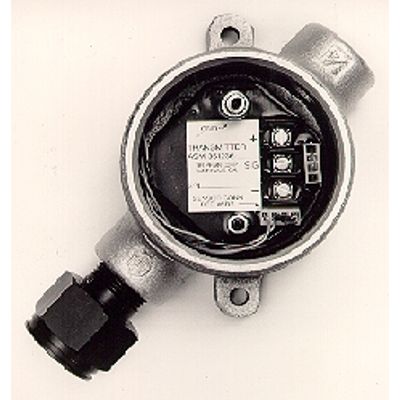
Delphian - Combustible Sensor Transmitters
Delphian`s transmitter is epoxy encapsulated for complete environmental protection and puts sensor power regulation and support electronics where it counts - at the sensor location.
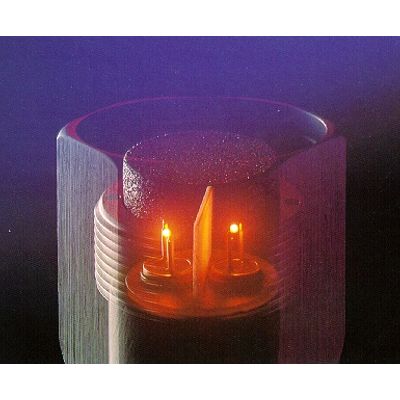
Delphian - Combustible Gas Monitors
A combustible gas is one that will burn when mixed with air (or oxygen) and ignited. Combustible gas-air mixtures can be burned over a wide range of concentrations. The actual minimum concentration varies from about 0.5% to about 15% by volume in air for most common CHCs. This concentration is always referred to as 100% LEL or LFL for that gas.
Delphian - Toxic Gas Detectors
Toxic gas detectors are used in tough environments. Tough sensors are essential because of the serious consequences of malfunction in these environments. False alarms are costly - they result in unnecessary evacuations and shutdowns, as well as loss of credibility. Failure to alarm when there is a gas is even more serious - lives are at stake!