


Droplet Measurement Technologies (DMT) products
Aerosols
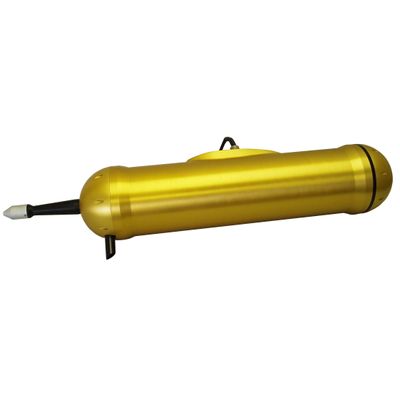
DMT - Model PCASP-100X - Passive Cavity Aerosol Spectrometer Probe
The PCASP-100X is an airborne optical spectrometer that measures aerosol particles in the 0.1 µm to 3 µm range.
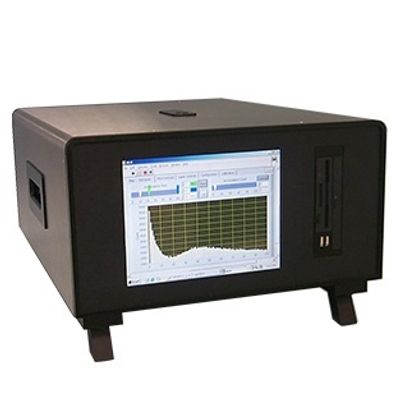
DMT - Model UHSAS-G - Ultra-High Sensitivity Aerosol Spectrometer
The UHSAS-G is an optical-scattering, laser-based aerosol particle spectrometer for sizing particles in the 0.06 µm to 1 µm range. The instrument counts particles in up to 100 user-specified sizing bins, with a resolution as fine as 1 nm/bin. This high sensitivity makes the UHSAS-G ideal for aerosol research and filter testing.

DMT - Model MiniMPL - Mini Micro Pulse LiDAR
The Mini Micro Pulse LiDAR (MiniMPL) is a small form factor, low-power, elastic backscatter lidar. The instrument is a ground-based, optical, remote-sensing system designed to determine the altitude of clouds and to detect atmospheric aerosols. Pulses of energy are transmitted into the atmosphere; the energy scattered back to the transceiver is collected and measured as a time-resolved signal, thereby detecting clouds and aerosols in real time. MPL and MiniMPL are the only LiDARs simultaneously approved for NASA MPLNET, US Dept of Energy ARM program, and EUMETNET.
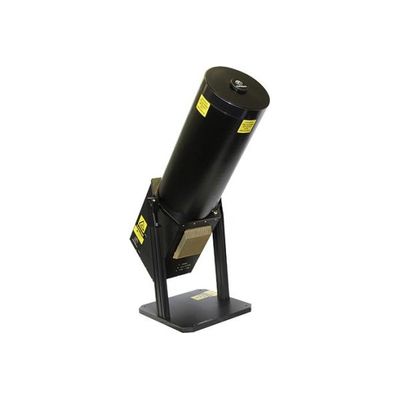
DMT - Model MPL - Micro Pulse LiDAR
The Micro Pulse LiDAR (MPL) is elastic backscatter LiDAR designed for long-term, autonomous aerosol and cloud monitoring. Pulses of energy are transmitted into the atmosphere; the energy scattered back to the transceiver is collected and measured as a time-resolved signal, thereby detecting clouds and aerosols in real time. MPL data can be used for measurement of cloud boundaries, calculating cloud phase and depolarizing aerosols, cloud scattering cross sections and optical thicknesses, planetary boundary layer heights and aerosol extinction and optical thickness profiles, including those into the stratosphere in night-time cases.
Micro Pulse LiDAR - Model MPL - Atmospheric Air Monitoring System
Our Micro Pulse LiDARs use photon-counting detectors with high quantum efficiency at the chosen wavelength, coupled with high pulse rate, lower energy per pulse lasers. When combined with extremely stable optics this efficient approach to photon management leads to much higher sensitivity than big pulse alternatives for detecting and monitoring ambient air particulate, monitoing emissions, monitoring opacity, ensuring urban air quality, atmospheric and dust monitoring. In comparison, millipulse technologies use low pulse rate, high energy per pulse lasers. This often means higher instrument power requirements and larger physical units. Big lasers also tend to overheat and require more labor-intensive cooling systems. Required periods of time when units are switched off to cool make them undesirable as part of early warning systems.
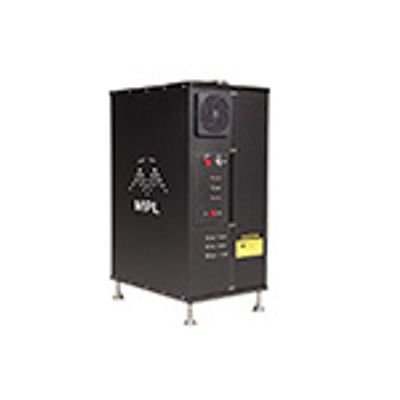
Micro Pulse LiDAR - Model MiniMPL - Atmospheric Monitoring System
The first generation of micro pulse lidar technology was designed by NASA for detecting high cirrus clouds. Our subsequent commercial “Micro Pulse LiDAR” generations (MPL and MiniMPL) have evolved with the goal of making the most cost-effective, robust, and sensitive backscatter lidar possible. This has been achieved by using quality lasers, rigid optics, and a narrow field of view (FOV), all of which contribute to stability, precision and accuracy. Continuous collection of co-polarized and cross-polarized backscattered light is an important distinction of the MPL and MiniMPL systems. Because aerosol particle shapes interact with the polarization states differently the ratio of these interactions can be used to classify scatter from distinct classes of aerosols. This allows the instruments to distinguish Saharan dust from volcanic ash or pollen for example.
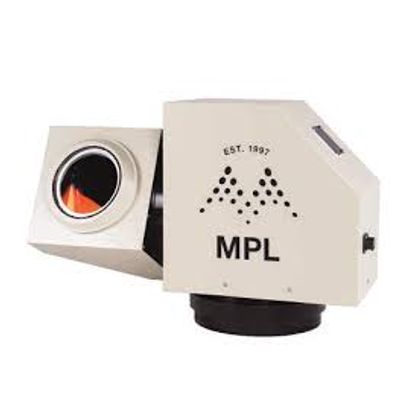
Micro Pulse LiDAR - Scanner for MiniMPL (Atmospheric Monitoring System) Enclosure
The MiniMPL all-sky scanner mounts directly to the NEMA-4 rated all-weather enclosure and is suitable for 24/7 outdoor use. It provides -10° to 90° elevation and -200° to +200° azimuth range scanning. Fully programmable, the scanner enables users to seamlessly run sector scans or stop-stare scan patterns.
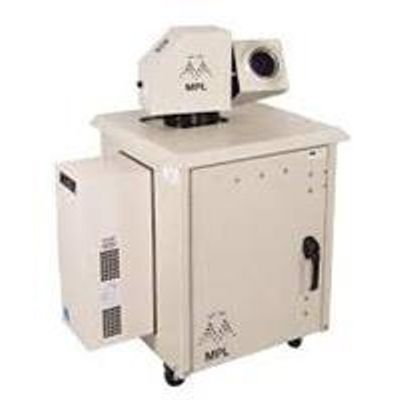
Micro Pulse LiDAR - All-Weather Enclosure for MiniMPL (Atmospheric Monitoring System)
The MiniMPL enclosure is a NEMA-4 rated all-weather enclosure suitable for 24/7 outdoor use. Automatic heat/ cool selection enable operation in conditions up to 100% humidity and from -10°C to 40°C. Integrated remote power switch prevents instrument damage beyond normal operating temperatures. The optical-grade window allows for clear laser transmission.
Micro Pulse LiDAR - GPS Unit for MiniMPL (Atmospheric Monitoring System) Enclosure
For geolocating your data, a Garmin GPS unit can be mounted directly to the outside of the MiniMPL enclosure. The GPS provides integration of longitude, latitude and altitude directly into the MPL software. When coupled with the MiniMPL all-sky scanner, a powerful data product emerges where propagation of aerosol may be tracked.
Micro Pulse LiDAR - Model MPL - Accessories for MPL (Atmospheric Air Monitoring System)
MPL’s are deployed in some intense and challenging locations. The MPL Wide Field Receiver (MPL-WRF) and the MPL Iris (MPL-Iris) speed up deployment, reduce the need for outside intervention, and can extend the life of your instrument