


- Home
- Companies
- Droplet Measurement Technologies (DMT)
- Products
- DMT - Model MPL - Micro Pulse LiDAR
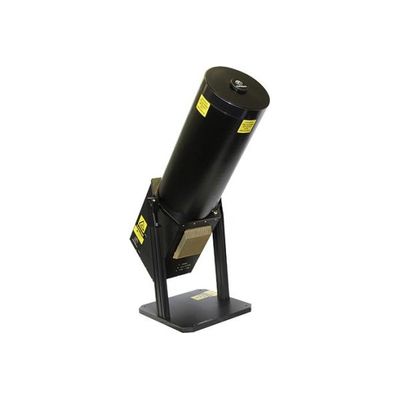
DMT - Model MPL -Micro Pulse LiDAR
The Micro Pulse LiDAR (MPL) is elastic backscatter LiDAR designed for long-term, autonomous aerosol and cloud monitoring. Pulses of energy are transmitted into the atmosphere; the energy scattered back to the transceiver is collected and measured as a time-resolved signal, thereby detecting clouds and aerosols in real time. MPL data can be used for measurement of cloud boundaries, calculating cloud phase and depolarizing aerosols, cloud scattering cross sections and optical thicknesses, planetary boundary layer heights and aerosol extinction and optical thickness profiles, including those into the stratosphere in night-time cases.
Advanced single-photon-counting detectors
The MPL delivers advanced cloud and planetary boundary layer data for atmospheric profiling up to 25 km. Make the fastest and most accurate decisions based on reliable information.
Patented polarization switching technique
Allow co-polarized and cross-polarized backscatter measurements that provide information on the cloud phase (liquid versus ice).
Superior signal-to-noise ratio
Enable the cloud layer mapping feature that outperforms ceilometers by observing through moderately thick fog and low clouds – for a greater number of detected layers, a better range resolution, and faster reporting times.
Rich data set
Use data to calculate cloud phase and depolarizing aerosols, cloud scattering cross sections and optical thicknesses, planetary boundary layer heights, and aerosol extinction and optical thickness profiles – including those into the stratosphere in nighttime cases.
- Planetary Boundary Layer Characterization
- Pollution Characterization
- Weather Modification Research
- Wildfire Monitoring and Prediction
- Urban Air Quality Monitoring and Prediction
- Volcanic Ash Plume Monitoring
Light Detection and Ranging (LiDAR)
- The optical transceiver houses the laser transmitter (operating at a 532 nm wavelength) and the photon counting detection system. The signal is transmitted and received using the same built-in athermal telescope.
- The MPL transmits laser pulses that scatter from particles in the atmosphere.
- It then measures the intensity of backscattered light with single-photon-counting precision, which transforms the signal into atmospheric information in real time.
- When the LCR is operated with zero retardation, the transmitted laser beam is linearly polarized. Backscattered light returning with identical polarization does not pass through the polarizing beam splitter towards the detection optics. In contrast, “depolarized” backscattered light does have some fraction of polarization orthogonal to the incident beam that passes through the polarizing beam splitter towards the detector.
- When the LCR is operated with quarter-wave retardation, the outgoing light is circularly polarized. When circularly polarized light undergoes non-depolarizing scattering, the 180° backscattered light returns circularly polarized but with reversed rotational sense.
- Parameter : Specification
- Range resolution : 5/15/30/75 m (software programmable)
- Minimum range : 250m
- Accumulation time : 1 sec - 15 mins
- Detection range* : Typically to 25 km
- Polarization : Standard
- Scanning : Not Available
- Optics :
- Laser wavelength : 532 nm
- Laser pulse energy : 6 - 8 μJ @ 2500 Hz
- Eye-safety : ANSI Z136.1 2000, IEC 60825
- Receiver diameter : 178mm
- Pump laser diode : Guaranteed to 10,000 hours, user replaceable
- Detector : Fiber coupled
- Dimensions :
- Size : 300 x 350 x 850 mm
- Weight (portability) : 27kg
- Data :
- Operating system : Windows 7/10
- Computer interface : USB
- Data transfer : LAN Ethernet
- Environment :
- Temperature : Operating +10°C to 35°C
- Humidity : 0 to 80%
- Power :
- Supply : 110-240 VAC 50-60 Hz
- Consumption : 500 W
- GPS (GIS Package)
- All-sky Camera
- Weather Station
The Lifecycle Care Program ensures MPL integrity and performance vital to your research mission for three years or three calls (whichever comes first). When conducting complex and time-intensive laboratory or field measurements, it is critical to avoid downtime and ensure data collection accuracy. The program consists of three key deliverables for each year or call:
- Instrument logistics
- Instrument integrity
- Instrument performance
Lifecycle Care Program Includes:
LOGISTICS
- Shipping to and from Droplet Measurement Technologies facility
- Customs handling, including CARNET ATA if required
INTEGRITY
- Incoming instrument evaluation and health check
PERFORMANCE
- Software and firmware validation
- 100%-unit functionality test
- Calibration data
- Calibration report
- Certificate of calibration
At times, our technician might discover an instrument issue, which might not be covered by the Lifecycle Care Program or by our product warranty. In such case, we will reach out to you with a service and repair estimate to allow you to provide us with the next steps of action.