

Enventure Engineering LLC - ComplianceXL articles

The first of two biannual updates to the Registration, Evaluation, Authorisation, and Restriction of Chemicals (REACH) Regulation was issued on January 17, expanding the Candidate List of substances of very high concern (SVHCs) with four new substances.
Companies manufacturing, importing, or distributing in the EU have a duty to communicate the presence of any listed SVHC above the 0.1 percent weight over weight (w/w) threshold to downstream consumers. Substances on the Candidate List
On May 19, 2020, CMRT 6.01 and CRT 2.11 were released and made available for download. As of June 2020 iPoint supports the new versions: On iPoint Conflict Minerals CMRT 6.01 and CRT 2.11 are already active. CMRT 6.0 supports the new EU Conflict Minerals Regulation and is recommended by RMI for the current reporting year.
CMRT 6.0 supports EU Conflict Minerals Regulation
The Conflict Minerals Repo
The SCIP Database is similar to ECHA database of Substances of Very High Concern (SVHC) in articles or in complex objects (products) established under the Waste Framework Directive (2008/98/EC). Any company that is supplying or intend to supply any product containing an SVHC (Substance of Very High Concern) on the Candidate List Substances with a concentration more than 0.1% in weight in the European market are req

What are TSCA Import Certification Requirements?
It is mandatory for importers of any chemical substance, chemical mixtures, or articles that contain a chemical substance to follow the Toxic Substances Control Act (TSCA) to be a part of the U. S. market. Importers need to certify that the chemicals are in compilation with TSCA positive certification. Chemical-free products do not require TSCA posi
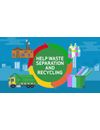
Q1. WHY WAS THE SCIP DATABASE IMPLEMENTED?
Ans. The SCIP database is a result of the European Union’s (EU) Waste Framework Directive (WFD). the goal of SCIP is to create an eco-friendly atmosphere by decreasing hazardous waste substances. The increase in reporting transparency of hazardous substances in products enables better decision-making to substitute SVHC and handle them responsibly at their waste stage. This also helps in reducing SVHC risk to consumers and the environmen
Compliance is not an administrative burden to undertake regulatory deadlines loom. In actual compliance is a successful program articulation on risk management, clear oversight of suppliers for cost savings and efficiency, and preparation for any future disruption. Although it is not possible to frequently check all the boxes of the software, it is always an ideal step to timely gauge and optimizes the program against a professional product compliance checklist.
The year 2019-2020 had
MSDSs are specified by section 1910.1200(g) of the HCS (enclosed). The MSDS lists the hazardous substances of a product along with its physical and chemical characteristics and its effect on human health. It also provides detailed information on the chemicals with which it can adversely react, how to handle them, its precautionary measures, methods to prevent a spill and first aid procedures. With every new regulatory information made available, the MSDS system must be updated with the same.