


GAIKER Foundation / GAIKER Technological Centre services
Solutions for Industry - Environment
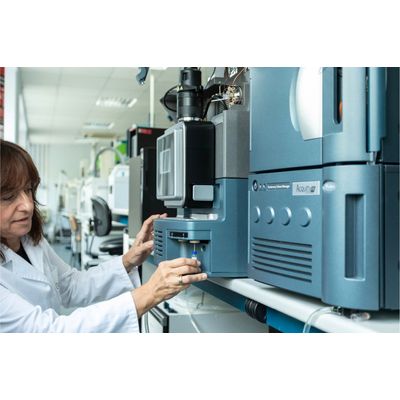
Analytical Services
We carry out the determination of molecules of interest (APIs, contaminants, metabolites…) using different techniques and equipment: Liquid chromatography coupled to various detectors (HPLC/PDA/MS-MS), PDA Photodiode Array, Fluorescence FL, Triple Quadrupole (MS-MS).
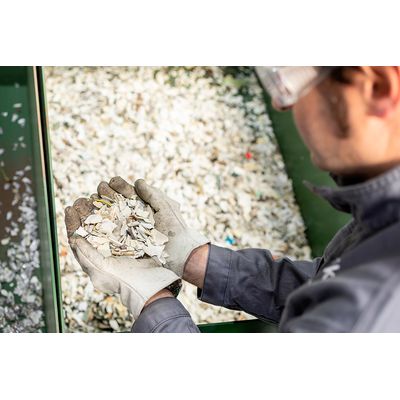
Waste Sampling and Characterisation Services
Waste analysis is a tool used to obtain useful information on the nature of a certain waste stream and optimise its management. However, a key aspect for the proper result of such analysis is the application of appropriate sampling procedures to ensure that representative samples of the waste under study are obtained in terms of composition and proportionality. GAIKER offers an advanced technological service for the sampling and characterisation of solid urban waste from municipal mass and selective collection (organic matter, light packaging, paper/cardboard, glass, bulky waste, others), waste assimilable to urban waste (catering, offices, commerce, etc.) or different fractions derived from industrial end-of-life treatment and recovery processes.
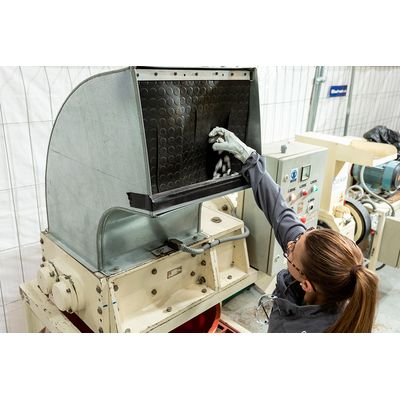
Conditioning of Waste by Crushing and Grinding Services
Grinding is a basic operation in any waste recycling and recovery process which, in addition to reducing the size of the waste so that it meets the requirements of subsequent treatment stages, promotes the release of different materials that remained united in the same particle or element. This also helps to improve the efficiency of the subsequent separation and concentration of materials of interest. Application of crushing and grinding operations in one or several successive stages until the ground material has a medium particle sizein accordance with customer requirements.
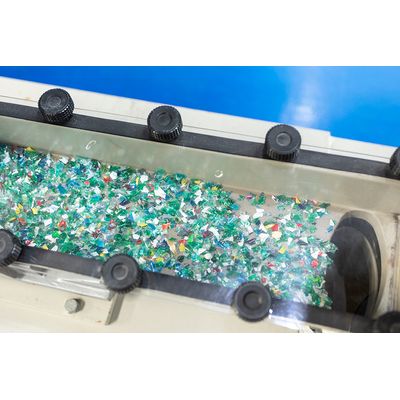
End-of-Life Assessment of Products and Complex Mixtures of Materials ?
Analysis of the potential end-of-life alternatives for a certain product once it has been turned into waste. Taking into account physical characteristics, components, materials and substances, existing treatment possibilities for recovering recycled materials for the secondary raw materials market are assessed, along with alternatives for energy recovery and controlled landfill. Through the development of theoretical and practical work, potential recycling and recovery ratios are obtained. End-of-life product review and treatment of complex mixtures covers the following aspects: analysis of key product parameters from the point of view of recycling and recovery, assessment of existing treatment alternatives, characterisation of complex mixtures of materials, exploration of existing conditioning and mechanical separation technologies applied to complex mixtures, assessment of the quality of recovered materials and potential market options.
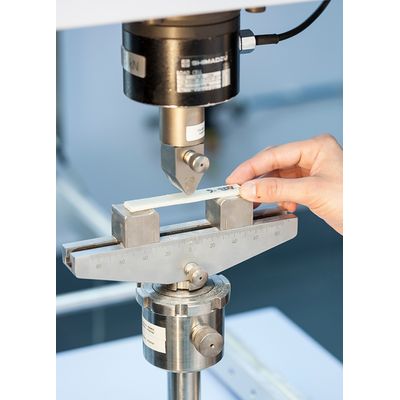
Production of Technical Data Sheets for Recycled Materials
A key aspect to facilitate the reintroduction of recycled plastic on the market is to have a technical data sheet reflecting the main properties of the material obtained from standardised characterisation tests carried out under quality standards.
Solutions for Industry - Construction
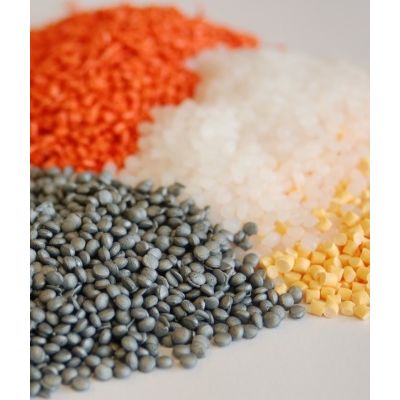
Analysis of Plastic Waste Recovery Services
We analyse the possible recovery of plastic waste through compounding, its needs, the scope of its possible recovery and market opportunities. This analysis is performed under new standards (UNE-EN 15343:2008-Plastics. Recycled plastics. Traceability and conformity assessment of plastic recycling and recycled content) and certifications that enable the quality level of the new recovered materials to be reflected and known.
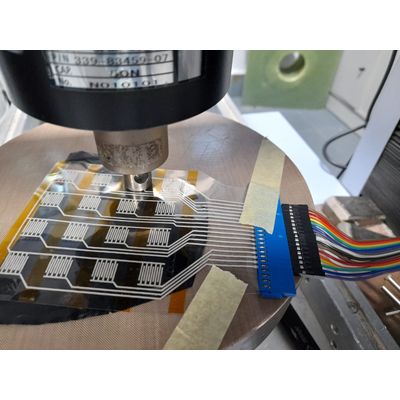
Design and Integration of Sensors In Plastic Products
Design and integration of sensor functionalities through lamination, injection (overmoulding, IME) and 3D printing processes.
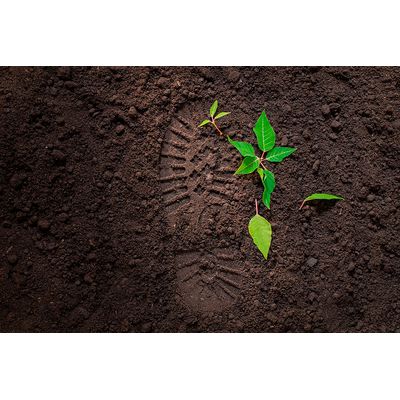
Environmental Footprint Services
The Product Environmental Footprint is the initiative proposed by the European Commission to unify the different existing environmental product accreditation schemes into one. The system is similar to Environmental Product Declarations (EPD) in that it is based on the performance of an LCA and the publication of the results, but in this case, a specific LCA methodology has been defined and must be applied in all cases. The environmental impact categories to be assessed have also been defined, along with a specific methodology for the calculation of a single indicator that aggregates the different impact categories assessed. The European Commission is intensively promoting this scheme and hopes it will become the reference for environmental product accreditation in the European Union in the coming years.
Solutions for Industry - Food
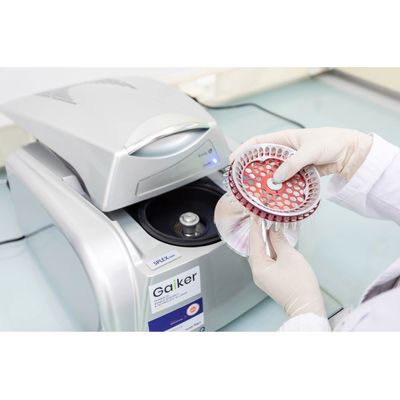
Rapid Nucleic Acid Amplification Tests
We adapt methods, such as isothermal amplification, PCR and its variants (RT-qPCR, NASBA, HRM, etc.) to detect specific analytes. We are specialised in the development of portable systems for microorganism detection (POC) by isothermal amplification of gene sequences, specific to environmental, clinical and food applications. We are experts in developing the LAMP (Loop-Mediated Isothermal Amplification) technique for the amplification of nucleic acids, which, unlike polymerase chain reaction (PCR) technology, is carried out at a constant temperature and does not require a thermal cycler. This has many advantages, such as faster detection, higher amplification performance and simpler and cheaper equipment.