

- Home
- Companies
- Gemwater S.R.L.
- Products
Gemwater S.R.L. products
Water
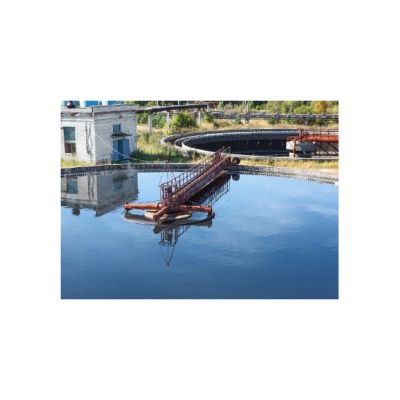
Biological Treatment Plant
Biological treatment is achieved by creating an environment suitable for the survival and reproduction of various bacterial cultures and exposing them to organic substances present in the wastewater. The task of biological treatment is to reduce the oxygen demand exerted by the microorganisms to a level that will have no significant impact on the receiving stream.
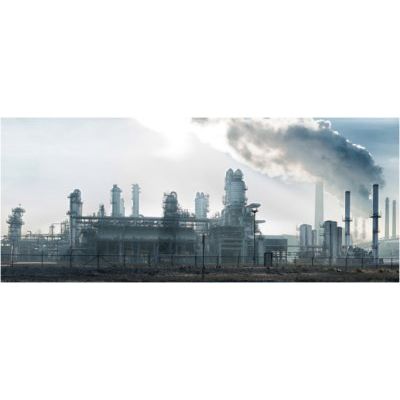
Coalescer Plant
Coalescer is a simple, virtually maintenance-free system for separating oil from oily water utilizing a bed of oleophilic ion exchange resins. Coalescer can be used in petroleum refineries, petrochemical plants and related industries as well as treating ballast water, oil well field produced water and other oily waste waters. The coalescing system for oil removal consists of special filters, filled with oleophilic resin, in order to reach the requested quality of water, even less than 1 ppm of oil. The oily water passes though a layer of granular resins on which a surfactant has been fixed, which makes them oleophilic.
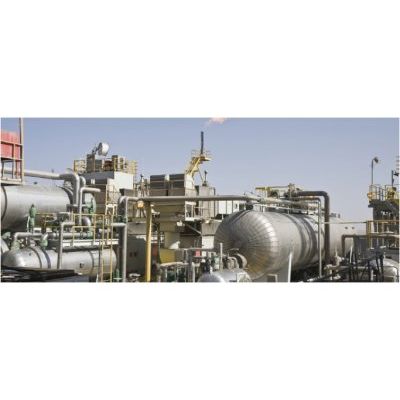
Dehydrator/ Desalter Plant
The purpose of a bath heater is to increase oil temperature in order to improve the performances of the following desalting units. Crude oil flowing inside a tube exchanger immersed in the water bath is heated by hot water whose temperature is controlled and maintained by the fuel gas combustion; heat is therefore transferred from the water bath to the coils and then to the process fluid. Both oil and wash water can be heated. Bath Heater is provided with a burner system using natural gas to heat the water bath by means of a firetube. Combustion air can be supplied by natural or by forced draft by blower. Flue gas exiting the chamber are exhausted to the outside air through a vertical stack. The Bath Heaters are atmospheric vessels and each of them is provided with an expansion tank mounted on the top in order to monitor and control water bath volume changes due to thermal expansion. The expansion tank is connected to the atmosphere through an open vent.
EDI and EDR Systems
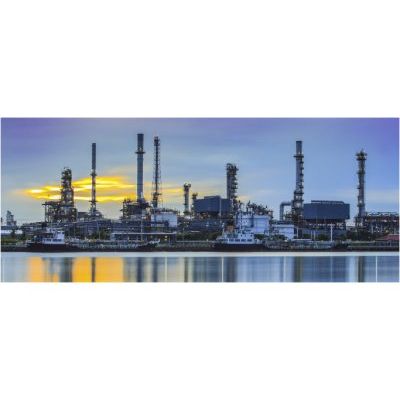
Gemwater designs both EDI and EDR systems for removal of Ionic contaminants in water.
Flotation Unit
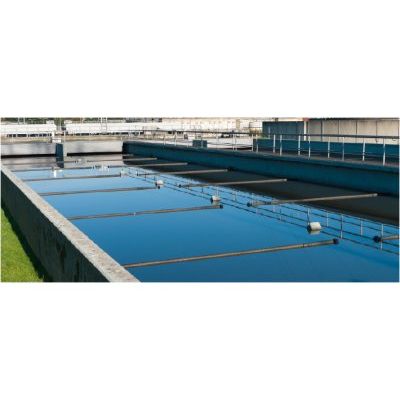
As opposed to settling, flotation is a solid-liquid or liquid-liquid separation process which is applied to particles whose density is lower than that of the liquid they are in. In water treatment flotation units are mainly used for oil separation and for sludge separation. Flotation units can be: Dissolved Air Flotation (DAF), Dissolved Gas Flotation (DGF), Induced Air Flotation (IAF), Induced Gas Flotation (IGF). Compact Flotation units.
Gas Transfer Membrane
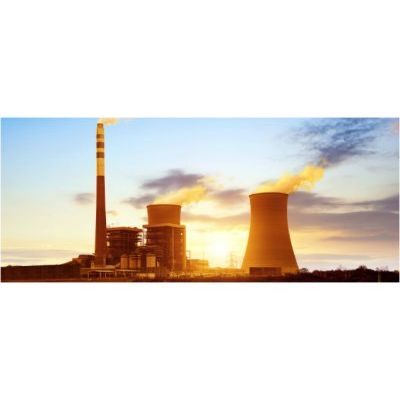
Membrane degassing unit is a system that removes gasses from the liquid and makes possible the direct contact between gaseous phase and aqueous stream without dispersion. The membrane contactor is composed of hydrophobic hollow fibers that don’t allow the aqueous stream to penetrate the pores into the gas side of the membranes.The mass transfer between the two phases is driven by the pressure of the gas phase. Stripping gas is applied to the lumenside (inside) of the hollow fiber, while the liquid stream is introduced outside of the fiber.
The partial pressure of the gas is decreased to remove dissolved gases from the liquid phase. The sweep-gas flows counter-current to the water flow: because of partial pressure gradient, the target gas is forces to transfer to the lumenside and be swept away. The liquid stream becomes saturated with the sweep gas.
Granular Media Filters
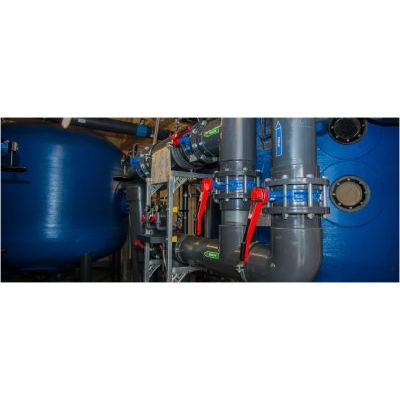
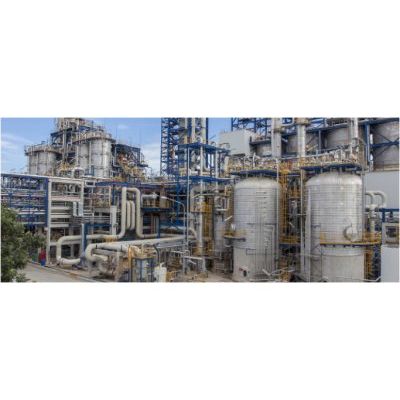
Gemwater is able to provide the design of several types of Granular Media Filters, depending on the specific water composition and environmental condition. The process solutions are studied in order to comply with Client requirements. Depth filtration through a filter bed is suitable for slow or rapid filtration of water when it is desired to merely reduce the concentration of suspended solids, without acting upon the colour or organic matter content. Depending on the proprieties of the particles to be retained, it may be best to use one layer (of varying depth) of a uniformly sized material, two or more layers of different grain size (each layer being uniform), or one of more layers of materials of completely heterogeneous grain size. The most common filter media in water treatment are sand and anthracite.
IX - Exchange Resins
Gemwater designs various IX Exchange Resin Process with internal and external regeneration systems. For internal regeneration method, Gemwater developed and advanced countercurrent process, called “ResinBlock”. In ResinBock regeneration a neutral synthetic resin is placed above the ion exchange resin bed, filling all free board and to top head of the vessel, so to block it down during the reagent upflow injection.
MF and UF Plants
Gemwater is able to design and install MF and UF plants. The principle of these technologies is physical separation through membranes. Microfiltration and Ultrafiltration require low transmembrane pressure to operate. Both processes remove suspended solids and other substances from water to a lesser extent than Nanofiltration and Reverse Osmosis. The degree to which suspended solids, organic matters, turbidity and microrganisms are removed is determined by the size of the pores in the membranes. Substances that are larger than the pores in the membranes are fully removed, while substances that are smaller than the pores of the membranes are partially removed. UF / MF membranes can operate in either crossflow separation or dead-end filtration. Cross flow separation is where only part of the feed stream is treated and the remaining of the water is passed through the membrane untreated. In dead-end separation, all of the feed water is treated. Typical recoveries can range from 85% to 95%.