


Genesis Water Technologies, Inc. articles
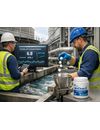
Industrial facilities operating cooling towers face a persistent challenge: balancing water conservation with system reliability. The answer lies in maximizing cycles of concentration (COC), but achieving this without compromising equipment integrity requires sophisticated chemistry and monitoring protocols. Genclean-S tablet technology represents a breakthrough
Data centers consume significant water resources through evaporative cooling systems, with cooling tower blowdown representing one of the largest sources of water waste in these facilities. As water scarcity intensifies and discharge regulations tighten, recovering and reusing blowdown water has shifted from an optional sustainability initiative to an operational necessity.
This article examines proven blowdown treatment technologies that enable data center operators to reduce freshwa

The data center industry stands at a critical juncture. As facilities scale to meet exponential computing demands, water consumption has emerged as a defining operational challenge. Traditional approaches focused on water efficiency are no longer sufficient—leading operators are now pursuing water positive strategies that return more water to local watersheds than their facilities consume.
This shift isn’t driven by idealism alone. Water scarcity affects 40% of the world&r
The exponential growth of artificial intelligence, cloud computing, and edge computing infrastructure has pushed data center cooling systems to their operational limits. As facilities scale to meet unprecedented thermal loads, the traditional approach to data center cooling water treatment faces mounting challenges.
These include persistent biofouling, Legionella contamination risks, mineral scaling, corrosion-induced equipment failure, and increasingly stringent environmental regulat
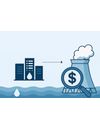
Your facility’s Water Usage Effectiveness (WUE) score looks acceptable on paper. Your cooling towers run reliably. Yet you’re hemorrhaging thousands of gallons of water daily through blowdown discharge while facing mounting pressure to achieve sustainable operations. If this sounds familiar, you’re confronting the hidden inefficiency built into conventional data center water management.

The exponential growth of artificial intelligence and cloud computing has transformed data centers from background infrastructure into critical water consumers. A typical hyperscale facility can consume 300,000 to 5 million gallons of water daily—equivalent to the usage of a small city. As regulatory frameworks tighten across the USA, Singapore, and the EU, facility directors face mounting pressure to demonstrate measurable water efficiency improvements while maintaining operational rel
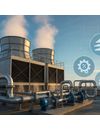
Cooling towers represent one of the most critical—and water-intensive—components across commercial and industrial operations, consuming up to 3% of total freshwater usage globally. For sustainability directors managing facilities ranging from power generation, general manufacturing plants to commercial office complexes, data centers, and healthcare facilities, the challenge extends beyond simple water consumption to encompass complex interactions between water chemistry, equipment
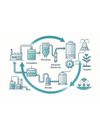
Water scarcity pressures and stricter discharge regulations are driving industrial facilities and municipal operators to implement comprehensive water reuse strategies. However, successful water reuse projects require methodical scoping that matches treatment technologies to specific water quality parameters and operational constraints. This systematic approach prevents costly oversizing, ensures regulatory compliance, and maximizes return on investment.
Water scarcity isn’t coming—it’s here. While your plant operates under increasingly stringent discharge regulations and rising water costs, the solution may be flowing right past your facility. Industrial water reuse has evolved from an environmental nice-to-have to an operational necessity, yet many plant water management teams still approach it with outdated assumptions and incomplete information.
The terminology alone can be overwhelming: water recycling versus wa
The commercial/industrial cooling tower landscape has evolved dramatically over recent years, yet many water and wastewater treatment professionals are still applying yesterday’s solutions to today’s complex operational challenges. With stricter environmental regulations, rising water costs, and increasing demand for operational efficiency, cooling tower management requires a more sophisticated approach than traditional chemical treatment programs can deliver.
<