

Geomaster Geogrid Reinforcement Engineering Co. products
Products
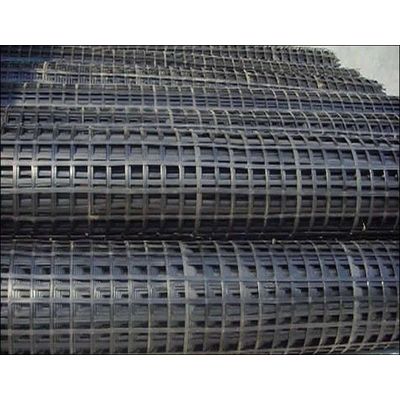
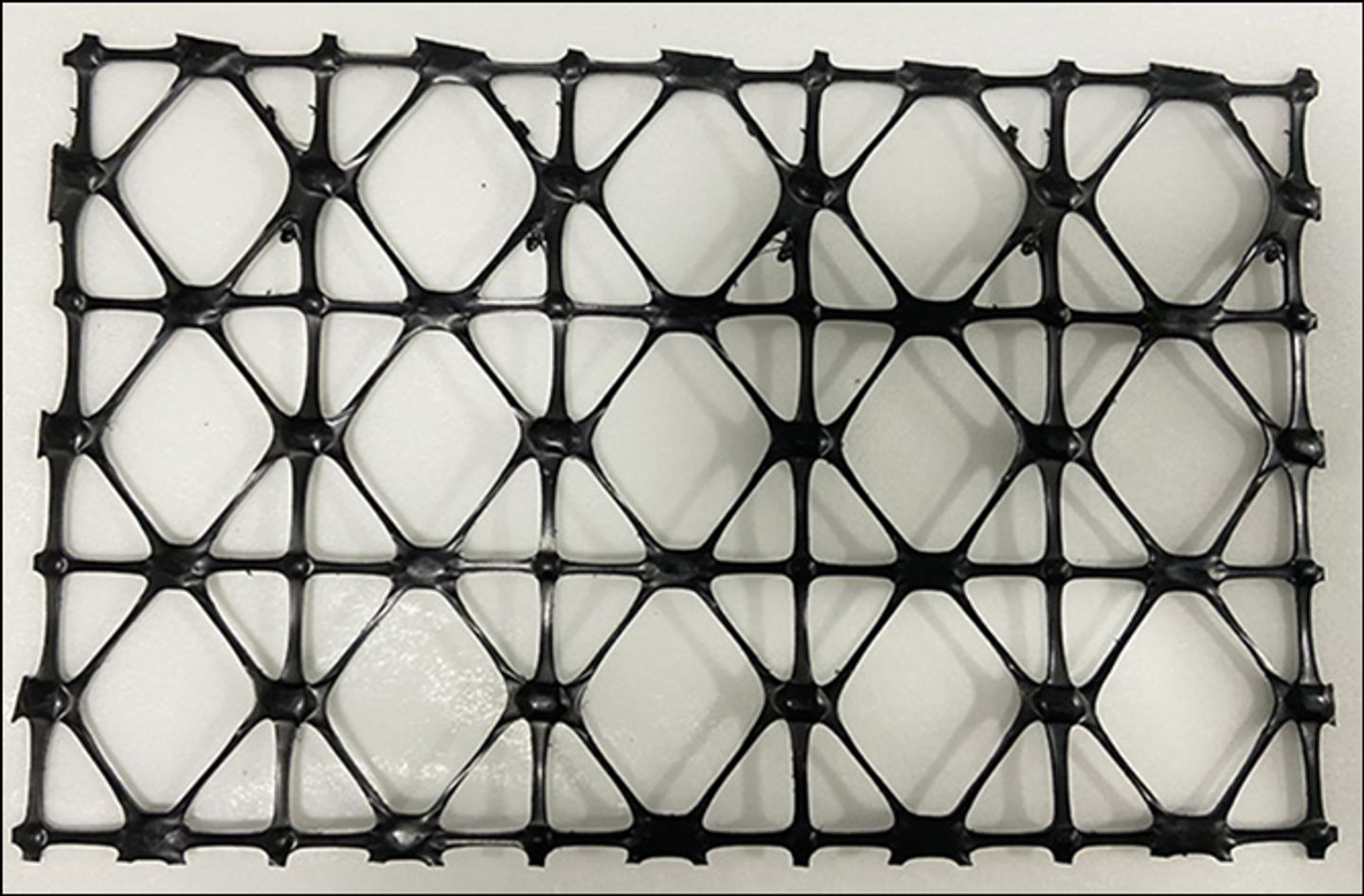
Geomaster - HDPE Polyethylene Geogrids Mesh Geogrids for Soil Reinforcement
Polyethylene plastic geogrids are designed for use in ground stabilization, soil reinforcement, and erosion control. It consists of a grid mesh made from strips of polyethylene fused together to form a flexible net-like structure. The mesh geo grid is widely used in the construction and engineering industry, providing effective soil stabilizing beneath a structure and reducing deformation due to external forces such as wind and water.
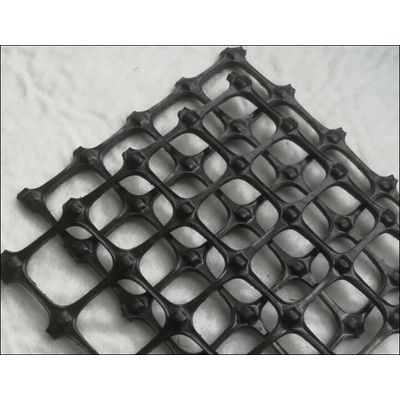
Geomaster - Plastic Polypropylene Grade Geogrid
Biaxial plastic geogrids of Extruded pvc (polypropylene) netting made of high molecular polymer, featuring high tensile strength, both longitudinally and in the transverse direction.
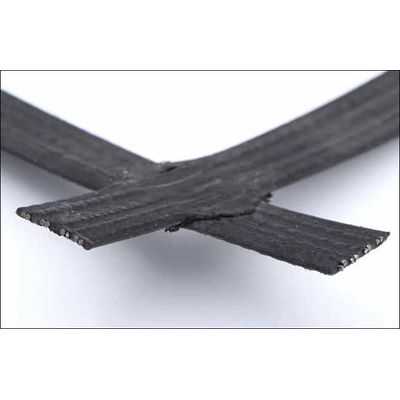
Geomaster - Steel Plastic Composite Geogrids
Steel plastic geogrids are composite geogrid materials with a steel wire wrapped within the HDPE (high-density polyethylene) mesh strips. Steel plastic geogrids feature high strength, low elongation, excellent corrosion resistance and anti-aging.
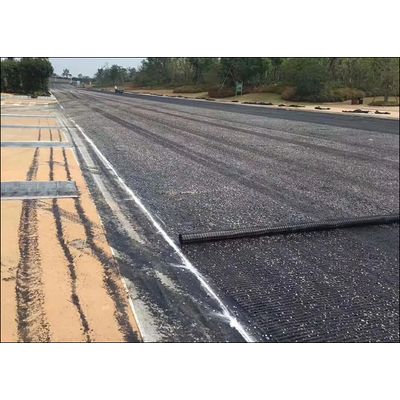
Geomaster - Glass Fiber Geogrid
Fiberglass geogrid is an excellent geosynthetic material for asphalt pavement reinforcement and road base strengthening. This type of goegrid is a semi-rigid mesh product with high tensile strength and low elongation in both warp and weft directions, and it has excellent properties such as high temperature resistance and aging resistance. It is widely used for asphalt pavement, cement pavement and road base reinforcement, railroad road base, dam slope protection, airport runway, sand control, and other engineering projects.
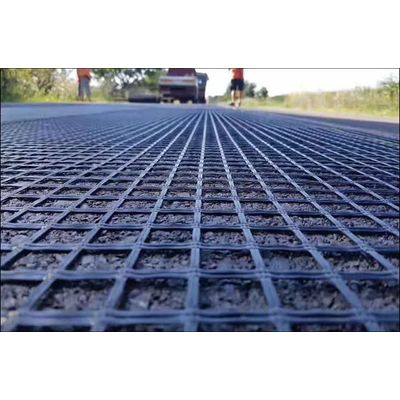
Geomaster - Knitted Polyester (PET) Mesh Geogrid
Polyester geogrid, simplified as PET Geogrid, is manufactured from high molecular polyester multifilament yarns by warp knitting / weaving and coated with PVC. Polyester biaxial geogrid is mainly used for civil engineering such as highway, railway, hill side slope treatment, structural layers for construction and products for water conservancy projects.
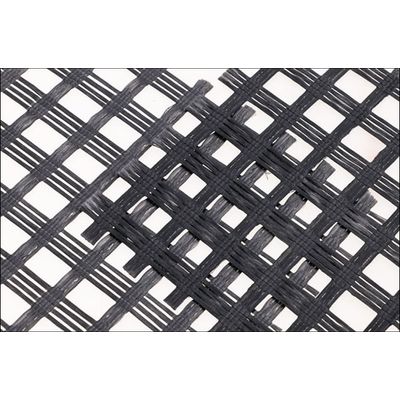
Geomaster - Polyester Warp Knitted Geogrid
Polyester warp knitted geogrid is a strong and cost-effective material that is much lighter than traditional construction materials, it has high resistance to UV radiation. Warp-knitted polyester mat is made from high-strength polyester or polypropylene fibers, which are warp-knitted and diffusion rubber-coated for a special process. Warp-knitted polyester geogrid has high tensile strength, low elongation, erosion resistance, aging resistance, light weight, and improved drainage.
Materials
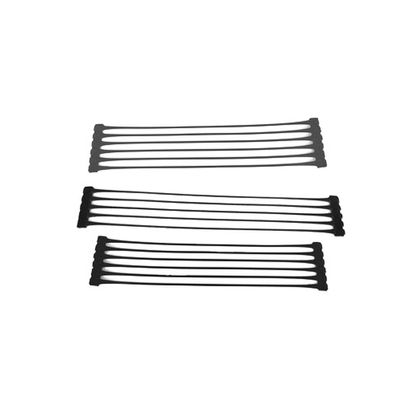
Geomaster - High-Density Polyethylene (HDPE) Mesh
High-density polyethylene mesh is another common plastic material used in geogrid production. HDPE fabrics offer high tensile strength, resistance to chemicals and UV radiation, and good dimensional stability. The manufacturing process for HDPE geogrids involves extruding the polymer through a die to form a sheet. The sheet is then subjected to a stretching process in the longitudinal and transverse directions, which aligns and orients the polymer chains, imparting high strength and stiffness to the geogrid. Commonly used in oblong hole.
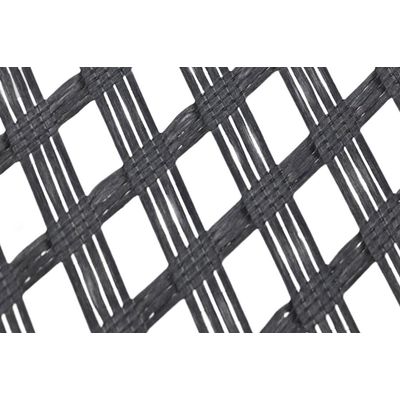
Geomaster - Polyester (PET) Mesh
Polyester mesh grids are manufactured using polyethylene terephthalate (PET), a synthetic fiber known for its high strength, dimensional stability, and resistance to creep. PET mesh fabrics are produced through a process called knitting or weaving. In this process, polyester yarns are interlaced to form a grid structure. The interlaced yarns are then coated with a protective polymer to enhance the geogrid`s durability and resistance to environmental factors.
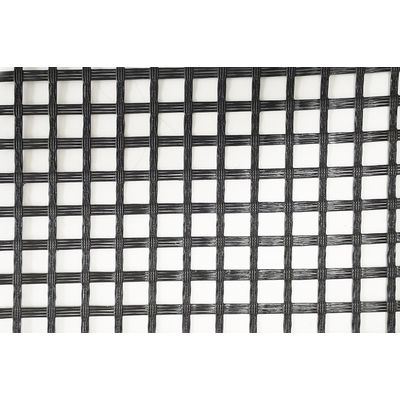
Geomaster - Alkaline-Resistant fiberglass mesh
Fiberglass nets are composed of glass fibers embedded in a polymer matrix, typically a polyester or epoxy resin. Glass fibers are known for their high tensile strength, excellent chemical resistance, and low thermal expansion. The manufacturing process of fiberglass mesh involves impregnating continuous glass fibers with a liquid polymer and then passing them through a heated die to cure the resin. This process creates a mesh-like structure with high tensile strength and rigidity.