

GEOSPECTRUM S.C. services
Seismic Studies
Near Surface Seismics Refraction
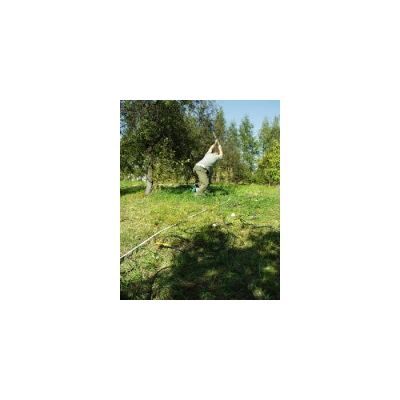
Refraction technique was the first major geophysical technique used for the exploration or deep oilbearing layers. Currently, it is widely used in detailed studies of shallow subsurface.
Near Surface Seismics - MASW/MAM Seismic Surveys
Multichannel Analysis of Surface Waves technique- in active MASW 1D/2D/3D and passive MAM/ReMi 1D versions, bases on seismic S-waves analysis included in dispersive Rayleigh waves. A characteristic feature of the Rayleigh wave is that it represents about 70% of the total elastic energy waves recorded during the measurement. S-wave, whose velocity and attenuation are directly dependent on the elastic properties and density of the soil is ~ 90% of the Rayleigh wave. The difference between the technique MASW and MAM/Remi relies on different types of elastic energy sources. For MASW such sources are: sledgehammer, weight-drop, while for the passive measurements MAM/REMI random vibrations from traffic, building works, etc. in the vicinity of the acquisition area are applied. Often they are generated artificially by tractors, trucks, diggers, bulldozers.
Seismic Refraction Tomography
Refraction tomography bases on the classic seismic refraction studies. Classical refraction gives good results in the ground with relatively low variable structure and layers (which differ significantly in velocities of seismic waves). In contrast, tomography can localize more complex structures where seismic wave velocities change in different directions gradually. Such places are fault zones, areas of karst, voids. Refraction tomography uses `first breaks` of refraction P-waves. The result of refraction tomography is determining velocity field in the tested ground.