

GeoStru - EngSoft S.R.L. software
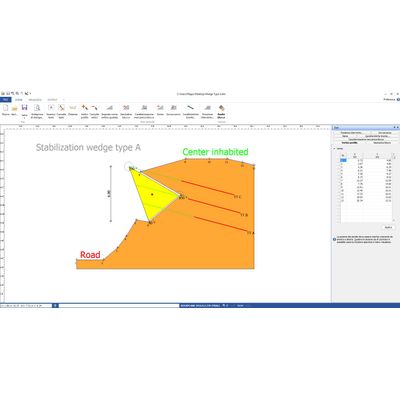
GeoStru RockPlane - Rocky Elements Analysis Software
RockPlane is a software tool for the evaluation of localized instability rocky elements affected by seismic movements and/or by presence of water pressures within intersurface fractures. The software provides slide and overturning risk safety factors that enable verification of the stability of the block and as required the design of stabilization works using active or passive anchors and nails.
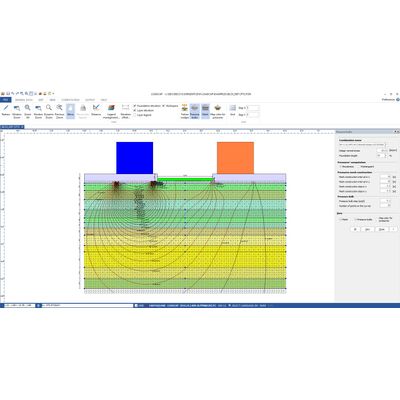
GeoStru Loadcap - Bearing Capacity and Settlements Software
Loadcap is a software for the bearing capacity and settlements computation on rocks and loose soils, according to the methods of: Terzaghi (1955), Meyerhof (1963), Hansen (1970), Vesic (1975), Brinch-Hansen (1970), Richards et al. (1993), Meyerhof and Hanna (1978). The user can chooce several types of settlements such as: Elastic (Timoshenko and Goodier, 1951), Oedometric, Schmertmann (1970-1978), Burland and Burbidge (1985), and post-seismic (Idriss and Boulanger, 2004-2008; Pradel, 1998; Yasuhara and Andersen, 1991). Moreover, Loadcap solves liquefaction cases using the method of Seed and Idriss (1971) and allows to carry out soil reinforced analysis with geogrids by computing of the increase bearing capacity, deformation in the reinforcements, strain tensile force for membrane effect.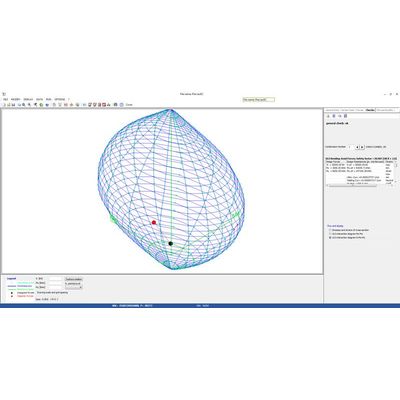
GeoStru - Model Ec – RC-SEC-EN - Calculation of Reinforced Concrete Sections According Software
RC-SEC-EN is a software for the calculation of reinforced concrete sections according to EN 1992-1-1 and EN 1998-1 and eventual national application annexes. This software is a standalone application for checks of reinforced section belonging to beams, columns and walls. In seismic checks is considered the class of ductility demand (DCL, DCM or DCH) and whether or not the section is within a critical region of the member. If the checks are not seismic you must select the low ductility class (DCL) and so only EN 1992-1-1 is applied.
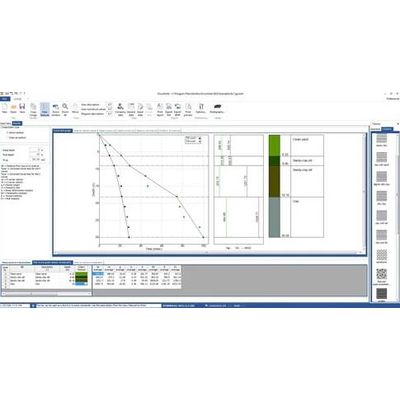
GeoStru - DownHole
Software for processing of seismic tests using DownHole method. The downhole seismic method (DH) measures the time taken for the P and S waves to move between a seismic source located on the surface of the ground, and the receivers, placed inside a borehole.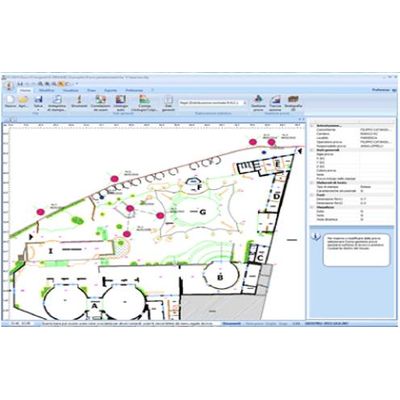
GeoStru - Dynamic Penetration Test Software
Software used for Dynamic Penetration Tests, that is the reading, recording, interpretation, storage and the management of any type of penetrometer including new or custom equipment and of in borehole SPT readings. Dynamic Probing provides functions for the archiving of readings by site and for automatic calculation of the real energy transmitted, including correction for warp and the correlation coefficient with SPT (standard reference tests for geomechanic calculations and geotechnic correlations). Dynamic Probing also BIM compatible with geolocation import ed export in AGS format (Association of Geotechnical and Geoenvironmental Specialists).
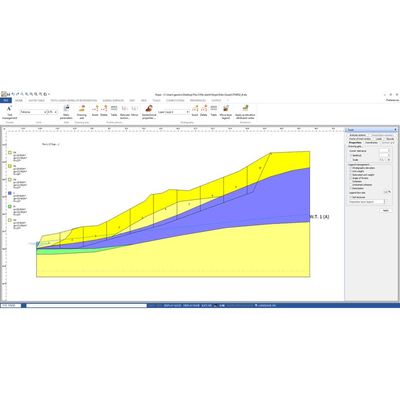
GeoStru Slope - Slope Stability Analysis Software
Slope stability software carries out the analysis of soil or rock slope stability both under static and seismic conditions, using the limit equilibrium methods of Fellenius, Bishop, Janbu, Bell, Sarma, Spencer, Morgenstern & Price, Zeng Liang and (DEM) Discrete elements method for circular and non circular surfaces by which it is possible to ascertain slippages in the slope, examine a gradual failure, and employ various models of force-deformation relationship. Reinforcements with piles, gravity and/or reinforced concrete bracing walls, nettings, geofabrics, anchors, and terracing may be specified. Distributed and point loads may be defined. Supported computation standards Verification analysis can be performed employing EN 1997-1, or classical approach (limit states, factor of safety) EN 1997 – option to choose partial factors based on National Annexes EN 1997 – option to choose all design approaches, consider design situations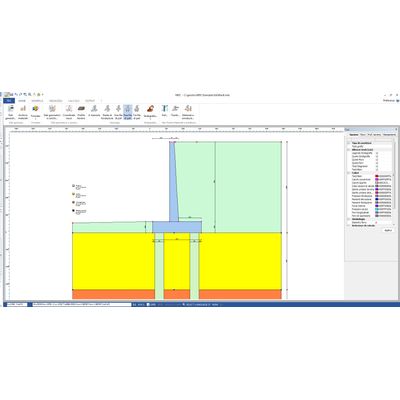
GeoStru - MDC Concrete Retaining Walls Software
MDC is a software product for the design and analysis of reinforced concrete retaining walls either resting on their own foundation or on piles, optionally supported by tiebacks. The geotechnical computation employs the standard geotechnical methods subject to user choice and carries out the verifications prescribed by the selected standard, amongst which global stability even in seismic conditions. Structural evaluations performs reinforcements sizing and verification with Ultimate Limit State or Allowable Tensions. MDC is simple and intuitive but with amazing features including: pre-design work, easy management of the combinations: GEO, STR, GLOBAL STABILITY , localization and automatic import of seismic parameters, displacements analysis in dynamic field, reinforcements editor, Import and export of works that should fall in stabilization operations.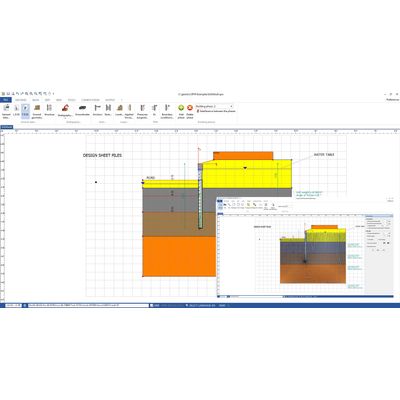
GeoStru - SPW Sheet Pile Walls Design
Sheet walls are relatively thin, vertical structures, embedded in terrain to a depth sufficient to support an uphill embankment/downhill excavation thrust, including water and surcharges. This type of structure can be constructed of driven prefabricated steel pile sections, adjacent, bored cylindrical piles, and reinforced concrete sheet elements usually produced on site. The methods used for analysis / verification are: Limit Equilibrium Method (LEM) and Finite Elements Method (FEM). The methods mentioned are of increasing complexity from both the numerical point of view and for the amount of geotechnical parameters necessary for the calculation.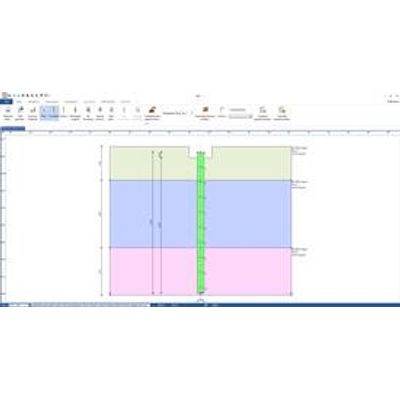
GeoStru - MP Pile and Micropile Bearing Capacity Softwares
Pile and micropile software is intended for calculation of the bearing capacity of the foundation terrain of a pile or micropile (Screw-piles) bearing loads in whatever distribution (moment, normal force, shear). Structural calculation yielding dimensions of longitudinal steel struts, interval and size of rings is also performed.
Liquiter - Soil liquefaction analysis software
LIQUITER software is designed for soil liquefaction analysis and supports various field tests. The results of the analysis are presented as follows: The factor of Safety against Liquefaction / Liquefaction Potential Index; Cyclic mobility of clay; Liquefaction of sand and clay; CSR, variable CSR with depth from SHAKE results; Reconsolidation Settlement, Lateral Spreading; Residual Strength.