


- Home
- Companies
- Geotek Ltd
- Products
Geotek Ltd products
Geotek Core Logging & X-Ray Ct Systems
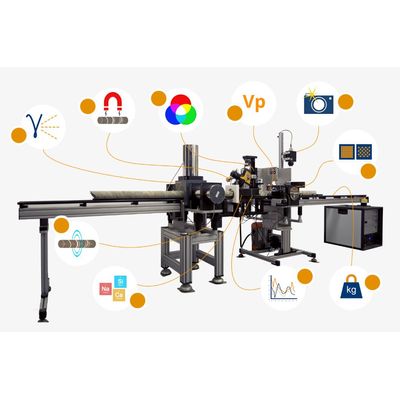
Model MSCL-S - Multi-Sensor Core Logger (Mscl) Systems
Geotek’s standard Multi-Sensor Core Logger (MSCL-S) is recognised as a crucial step in many geological coring workflows, including those for palaeoclimate, mineral exploration, geometallurgy, oil and gas, nuclear or geotechnical. The MSCL-S operates by automatically moving core samples past a series of sensors. The MSCL-S benefits from a modular configuration allowing for a range of petrophysical and geochemical sensor technology to be integrated onto one core scanning system, producing a single depth co-registered data set. The MSCL-S may accept either whole/split unconsolidated sediment cores in liners, or whole/slabbed rock cores with or without a liner. Depending on the requirements of the project, each MSCL-S system can be setup to take depth co-registered measurements for each sensor between 1 mm and 100 mm intervals downcore with a position accuracy of better than 0.1 mm.
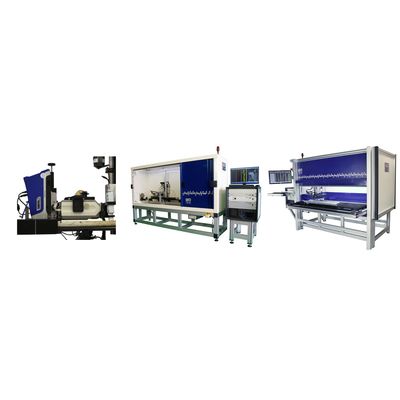
Model MSCL-XRF - X-Ray Fluorescence (Xrf) Spectroscopy and Multi-Sensor Core Logging
Geotek offers a range of specialised core scanning/logging equipment that use XRF spectrometers to acquire elemental abundance from the surface of sediment and rock cores. The ability to continuously scan core samples using both petrophysical and spectroscopic techniques is a product unique to Geotek. XRF spectrometers can now be integrated into new or existing MSCL systems. An MSCL is the perfect platform to acquire XRF data as it offers a stable and repeatable measurement geometry with each measurement depth co-registered with other spectroscopy and petrophysical sensors. Geotek offers two XRF spectrometers: the high resolution and ultra-sensitive Geotek XRF, and the popular hand-held Olympus Vanta. These are compatible with a range of different MSCL systems including: the standard MSCL-S, the small footprint MSCL-XZ, and the multiple core/core box workstation MSCL-XYZ.
MSCL Sensor
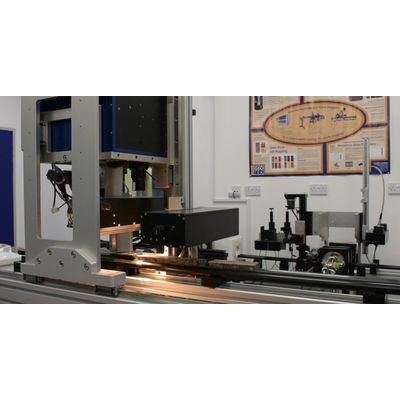
Hyperspectral Infrared Spectrometer
The SpecCam 4 hyperspectral camera uses real-time imaging infrared (IR) spectroscopy to identify and produce semi-quantified mineralogy from the surface of rock cores and cuttings. The acquisition of a continuous dataset allows for the production of mineral distribution maps to spatially understand the impact of clay, carbonate or alteration minerals for the geological assessment of oil and gas reservoirs or mineral exploration sites. Hyperspectral IR spectrometry differs from other point sensor technology, such as the ASD Terraspec 4, by providing full spectral information across the core and down the full core length whereas the point measurement only provide information on discrete areas.