
Harp Renewables Limited news
Schools across Ireland can now take advantage of the Education for Sustainable Development (ESD) Grant, receiving €1,000–€2,500 to introduce projects that teach sustainability while reducing environmental impact.
One exciting way to do this is by introducing home composters in your school. These small, safe systems allow everyday food scraps—like fruit an
Electrocatalysis continues to play a pivotal role in developing cleaner energy solutions and sustainable chemical production, from green hydrogen generation to CO2 electroreduction. Ensuring that research in this field meets the highest standards of rigor and reproducibility is essential for scientific progress and industry impact.
Hiden Analytical’s Gerard Duffy recently attended the Workshop on Rigor and Reproducibility in Electrocatalysis, hosted by the University of Washingt
A single droplet of water can lead a whole range of lives. It might glide through irrigation canals, coaxing wheat and sugarcane from sunbaked soils. It might drift along river currents, sustaining wetlands and slipping past the gills of fish destined for markets. Or it might plunge underground, fracturing shale to release natural gas that powers the tractors sowing the very crops it once nurtured.
Now imagine that same droplet reaching Egypt’s Aswan High Dam, where its path for
National Food Waste Recycling week was running last week 1st to 8th of June 2025, led by the Environmental Protection Agency (EPA) and supported by MyWaste.ie, aiming to raise awareness about the environmental and economic impacts of food waste and to encourage households and businesses to adopt sustainable practices. This marks the fourth National Food Waste Recycling Week, with new research highlighting both t

Harp Renewables is delighted to announce the expansion of our partnership with Interzero, a leading European provider of circular economy and waste management solutions. Already a well-established sustainability partner across multiple European countries, Interzero has been distributing Harp Renewables’ technology in Croatia and Poland. Now, this partnership is growing further—Interzero w
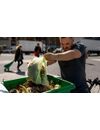
As New York moves forward with its ambitious sustainability goals, businesses across the state must prepare to comply with expanded food waste recycling requirements. These updates to the Food Donation and Food Scraps Recycling Law, effective January 1, 2027, represent a critical step toward reducing greenhouse gas emissions and promoting environmental stewardship. In this article, we explore the changes, their implications, and how bu
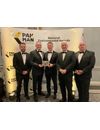
Our team’s dedication to innovative and sustainable waste management solutions led to a prestigious victory in the “Innovation in Waste Resource Products or Service” category.
The Pakman Awards are a celebration of innovation and excellence in waste management, recognizing organizations and projects that make a significant impact on sustainability.
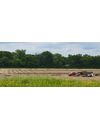
Cincinnati Zoo & Botanical Garden generates roughly 1,000 tons of organic waste a year. That’s TWO MILLION pounds! Mark Fisher, VP of Facilities at Cincinnati Zoo says “We were just sending it to the landfill, and there’s got to be a better way,”. Harp Renewables are delighted to be that ‘better way’ and recently installed a Harp CX5 Biodigester along with a bespoke-made Hopper and Bin lifter, to Cincinnati Zoo & Botanical Gardens.
All organ
Our Maui Upcycle facility will be commissioned in 2021!
Maui Upcycle is designed to fulfill our corporate mission to divert organic material from landfill disposal, create regenerative soil products, and encourage sustainable resource recovery practices.
Maui Upcycle will use our Harp Accelerated Bio-digester (model: CX10) to convert 1 ton-per-day of food waste into natural soil regeneration products, and thus divert over 300 tons-per-year of organic material that would otherw
Harp BioDigesters reduce and eliminate harmful GHG emissions by limiting the oxidation of carbon during our proprietary waste conversion process, and by sequestering the carbon in the resulting soil product(s). We not only reduce waste volume and sequester carbon, but we also reduce waste transportation and the overall real estate area needed for landfills (or compost areas). We can thus provide an opportunity for our company and our customers to obtain carbon offset credits.