


Harrington Process Solutions products
Pipe & Fittings
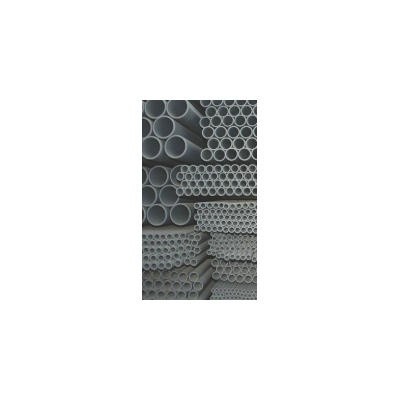
PVC Pipe
PVC is the most commonly used plastic material for manufacturing plastic pipe. It has a relatively high tensile strength and modulus of elasticity and, therefore, is stronger and more rigid than most other thermoplastics. Joining methods are by solvent cementing, threading (Schedule 80 only) or flanging. PVC has been used successfully in such areas as chemical processing, industrial plating, chilled water distribution, salt water, chemical drainage, and irrigation systems. Pressure ratings given are for solvent-cemented systems. When adding valves, flanges or other compo¬nents, the system must be derated to the rating of the lowest component: threaded fittings are rated at 50% of solvent cement systems; flanged fittings are rated at 150 psi; union fittings are rated at 235 psi. See manufacturers` recommendations for other ratings.
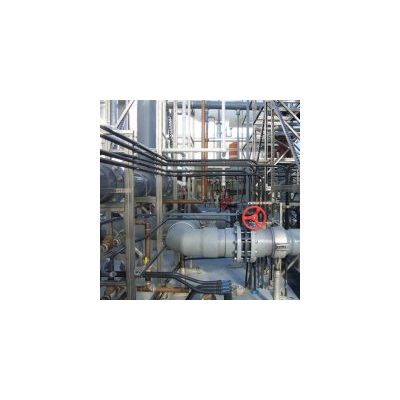
Large Diameter PVC Pipe
Maximum recommended fluid velocity is 5` per second, Manufacturer`s pressure ratings must be strictly followed; many fabricated fittings do not carry the same pressure rating as pipe, Other sizes and configurations available up to 30` diameter, Reduced pressure-rated fittings are available in most configurations, All PVC Schedule 80 pipe shall be manufactured from a Type 1, Grade 1 PVC compound with a Cell Classification of 12454 per ASTM D1784, Large diameter solvent cement assembly requires extra heavy duty slow setting cement and primer, Special tools are available for proper assembly of large diameter solvent cemented piping systems.
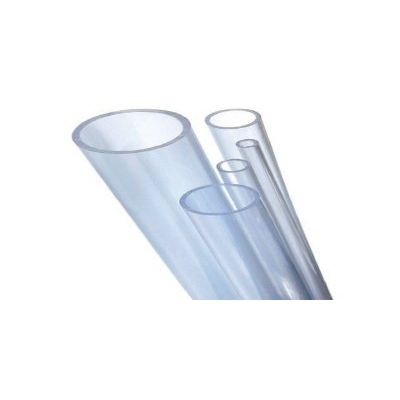
Clear PVC Pipe
PVC clear Schedule 40 or Schedule 80 piping provides optimum clarity for critical visual monitoring of processes fluids. Joined using standard solvent cement welding with clear cement, clear systems provide the many benefits of regular PVC, such as excellent corrosion resistance, smooth interior walls, non-contaminating, non-conductive, light weight, good pressure handling capacity, superior impact strength and does not support bacterial growth.
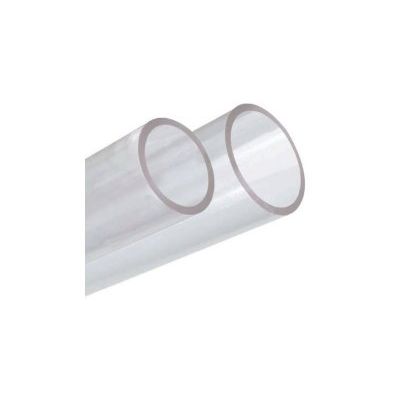
IPEX - Clear-Guard Clear PVC Pipe
With IPEX`s new high pressure clear PVC pipe you can specify Schedule 40 clear pipe for applications where previously only Schedule 80 clear pipe would suffice. Our high pressure formulation, with a long-term hydrostatic design basis of 3,150 psi allows for better clarity and more versatility for various applications. IPEX Clear-Guard Clear PVC pipe is produced from a rigid, virgin Polyvinyl Chloride (PVC) compound with a Cell Classification of 15334 per ASTM D1784. This material also enables Clear-Guard Clear PVC piping to carry a maximum service temperature of 140oF when appropriate temperature/pressure derating factors are applied.
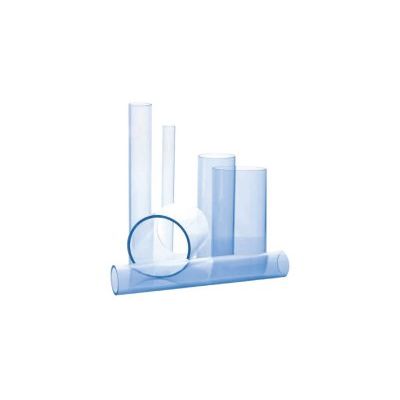
GF Harvel - EnviroKing UV Resistant Clear PVC Pipe
ThinWall™ and standard Schedule 40 dimensions, Joined utilizing simple solvent-welded joining techniques, Manufactured to IPS dimensions Fully compatible with standard PVC pipe, fittings, and valves, Non-conductive, Lower overall installed cost than glass, acrylic, or other transparent alternatives.
CPVC Pipe
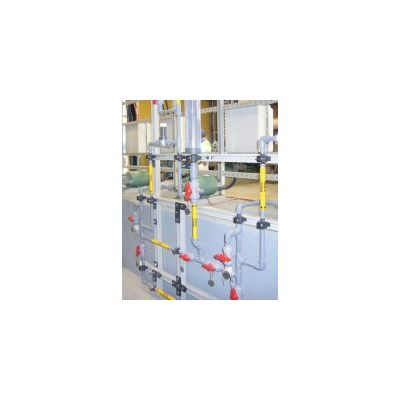
CPVC has similar, but generally better, chemical resistance and physical properties than PVC. Joining methods are by solvent cementing, threading (Schedule 80 only) or flanging. CPVC has been used successfully for process piping, for hot corrosive liquids, and in hot and cold water distribution. Pressure ratings given are for solvent cemented systems. When adding valves, flanges or other components, the system must be derated to the rating of the lowest component: threaded ratings are 50% of solvent-cement systems; flange fittings are 150 psi. See manufacturer`s recommendations for other fitting and component ratings.