

- Home
- Companies
- Hibbard Inshore
- Services
Hibbard Inshore services
Consulting Services
Hibbard Inshore has over 29 years of project management experience in using unmanned robotic vehicles, sensors, and tooling to perform inspection and marine construction projects. Due to this experience, the staff of Hibbard Inshore can work with companies one-on-one, and develop a proper methodology to achieve company goals. Whether clients have an inspection in a difficult to access structure or a complex project with sensitive equipment, Hibbard Inshore can help them achieve their project goals while remaining environmentally friendly and cost effective.Inspections
Tunnel Inspection
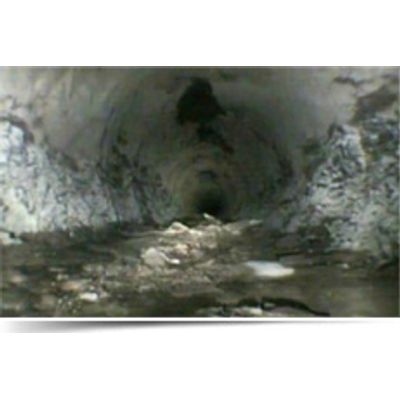
Long tunnels are often an integral part of many large hydroelectric dams and aqueduct systems. They present difficult challenges for inspection and maintenance due to their limited access, long penetrations, and typically large diameters. Hibbard Inshore is a world leader in the inspection of fully flooded long tunnels. Eliminating hydrostatic tunnel pressure through dewatering can increase structural stress and the likelihood of failure. In addition, dewatering typically causes increased outage times. Hibbard Inshore eliminates these problems by offering its clients ROV based alternatives. Hibbard Inshore works directly with its customers to design project-specific inspection methods with a focus on reducing the total cost of inspection by minimizing outage times, performing inspections in flow to allow continued generation, and limiting structural and safety risks.
Dam Inspection Services
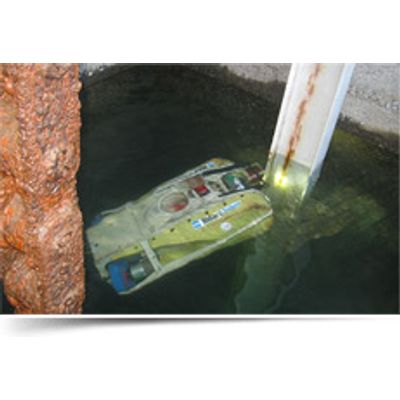
Underwater structural inspections for dams are critical to identify any signs of degradation or loss of functionality. With more than 29 years of experience, Hibbard Inshore’s inspections have included penstocks, face of dam, lower outlets, toe of dam, intakes, head gates and seals, trash racks, turbines, and turbine shut off valves. Hibbard Inshore can equip each of their ROVs with cameras, lighting, multiple types of sonar, and additional non-destructive testing sensors such as ultrasonic thickness gauges in order to provide the best possible look at each underwater portion of a dam. Often, because Hibbard Inshore is able to use these various technologies, inspections can be performed in less time than inspections requiring video only reducing outage times and time onsite.
Sewer Inspection Services
Internal inspections of water and sewer lines are a primary service offered by Hibbard Inshore. Hibbard Inshore’s ROV fleet has the ability to travel extensive lengths through filled, partially filled, and dry pipes to collect data and determine the condition of these pipes using swimming floating and crawling vehicles respectively. By operating all three types of vehicles for all three situations, Hibbard Inshore can perform inspections regardless of conditions, giving their clients the ability to select a single provider for all their sewer inspection needs. When it comes to potable water inspections, Hibbard Inshore has electrical vehicles that are used just for those inspections in order to follow all rules and regulations and to reduce any risk of spills or contamination.
Construction
Underwater Concrete Placement Services
Hibbard inshore has the capability to monitor and control accurate concrete pours and placement in underwater locations. In addition to directing the equipment, Hibbard Inshore’s vehicles can also use sonar to monitor the pour in real-time to accurately signal to the operator when to cut off flow at the surface. This can be performed in areas where low visibility, deep water or restricted access make it difficult for the pours to be monitored by commercial dive teams. Using sonar, Hibbard Inshore can direct the operators on the surface and provide information on the pour elevation and grade to allow stakeholders to determine that specifications are met.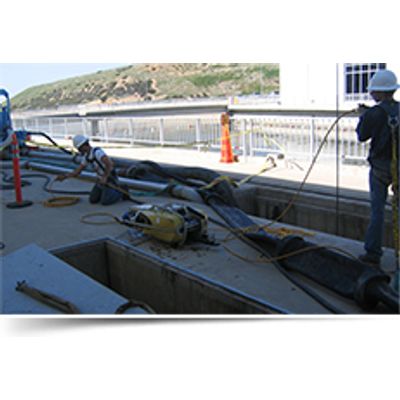
ROV Controlled Dredging Services
Hibbard Inshore understands that dredging and debris removal in low visibility or deep water can be challenging and at times, unsafe for commercial dive teams. Often, there are buildups of debris or sediment in places such as power plant intake tunnels, pump intakes or rock traps that need to be cleaned but are confined in nature. Through the use of ROVs, specialized pumping equipment and multiple forms of sonar, Hibbard Inshore is able to monitor and control the dredging, jetting, and debris removal processes in some of the most difficult areas. Often times, the vehicles and methods used by Hibbard Inshore will allow adjacent generating units or pumps to remain in service while only the unit where the Hibbard team is actively cleaning will require outage.
Bulkheading/Plugging Services
Hibbard Inshore has a wide range of experience in projects involving either permanent or temporary plugging of holes in problem areas such as flooded shafts or tunnels. After consulting with the customer, Hibbard Inshore performs a detailed inspection of the area, taking measurements of any potential sealing surfaces to determine the condition of the area to be plugged. From there, Hibbard Inshore selects the proper type of bulkhead plug for each situation and either designs a permanent plugging method or works with manufacturers to design and build temporary mechanical plugs to be put in place by an ROV. Both permanent and temporary plugs can be installed without dewatering or building of coffer dams in order to allow for the safe replacement of items like turbine shut off valves.Marine Surveys
Multibeam Bathymetric Surveying Services
Hibbard Inshore’s survey team has been performing multibeam bathymetric surveys with a specific focus on delivering high-quality data that affords maximum suitability for a variety of design and visualization applications. We survey ports, harbors, rivers, lakes and reservoirs inshore, as well as in the open ocean offshore. Working in accordance with the standards set by the U.S. Army Corps of Engineers and the International Hydrographic Organization, we aim to meet or exceed the standards of accuracy, resolution, survey coverage, and delivery requirements set for every project.Scanning Sonar and Multibeam Image Surveys
Scanning sonar units are particularly valuable when doing close-up, high-resolution investigation of specific structures such as bridge abutments and structural piers, or in specific work areas where visibility and structural complexity may make it difficult for divers or remotely-operated vehicles (ROVs) to fully assess the layout and condition of a site. These sonar units are typically positioned on the bottom when mounted to tripods or adjacent to bridge piers so that the sonar can scan in a specific sector (or even a 360-degree swath) and generate a very stable, high-resolution image of the bottom. The image can highlight existing structural layout, abandoned or derelict structural members that may be interspersed within structures, scour or deterioration in structural components, or mudline conditions and presence of debris.Side Scan Sonar Surveys
Rather than produce a quantitative set of bottom elevations, sidescan sonar surveys generate a qualitative suite of underwater imagery. For projects where a snapshot “picture” of the bottom is necessary, sidescan sonar surveys can be an excellent choice to identify bottom features such as submerged debris, remnant derelict infrastructure, exposed bottom geology, hazards to navigation, and shipwrecks. Sidescan sonar surveys can also be used to monitor ongoing progress for sensitive underwater construction projects such as protective mattress, rip-rap, and structural placement.