

- Home
- Companies
- KMI Zeolite Inc.
- Applications
KMI Zeolite Inc. applications

KMI Zeolite absorbs ammonia and binds heavy metals. Used to treat stormwater, wastewater and biosolids, it benefits microbes in anaerobic digestion and improves bio gas production.

KMI Zeolite can act as a binding material prior to encapsulation to absorb and immobilize contaminants. Zeolite works as a successful chemical absorbent due to its ability to absorb liquids and gases and can be used to effectively adsorb terrestrial oil spills and remediate oil-contaminated soils.
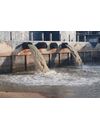
KMI Zeolite can absorb high amounts of heavy metals including nickel, copper, lead, and cadmium. Zeolite is used to remove toxic heavy metals from water supplies through ion exchange. It acts as a water purifier and decontaminates water sources.

Natural zeolite prevents and eliminates mold by absorbing moisture and trapping odors, creating and maintaining a healthier environment.

KMI Zeolite can play an important role in retarding the migration of radionuclides that occur in solution as simple cations, specifically Caesium, Strontium & Barium (Cs, Sr, Ba). Natural zeolite is often used to limit the environmental impact of radioactive waste. It supports cement matrix stability and can significantly reduce leaching rates.
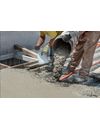
Pozzolan - Supplementary Cementitious Material: KMI Zeolite can reduce the carbon footprint and reduce alkali–silica reaction when replacing up to 30% portland cement. Zeolite is a suitable raw material in the production of concrete and can partially replace Portland cement in cement blends. Zeolite reduces chloride permeability and expansion due to alkali-aggregate reaction, while improving resistance to acid and sulphate attacks.

Zeolite is an environmentally friendly material for use in cement mixes. Natural zeolite has been shown to improve the strength and durability of mortar mixtures. KMI Zeolite can improve the strength of mortars while reducing water absorption and porosity.

KMI Zeolite can serve as an environmentally friendly, corrosion-resistant coating and help reduce VOCs. Many consumers search for environmentally friendly alternatives to lead paints and coatings. One of the most widespread substitutes is zinc phosphate, which has also been flagged because of its environmental impact. A study by Roselli examined the performance of mixtures consisting of zinc phosphate, zeolite, and clay in order to diminish phosphate content in paints.

KMI Zeolite can reduce burner fuel use in warm mix asphalt by 35% or more. Warm Mix Asphalt produces reduced emissions, allows for an extended paving season, and reduces workers` exposure to harmful toxins. A number of benefits were consistently identified as driving the development of Warm Mix Asphalt (WMA) in Europe. These benefits include environmental aspects and sustainable development concerns, or “green construction,” particularly reduction of energy consumption and the resulting reduction in CO2 emissions, and improvement of field compaction. Improvements in the compactability of WMA mixes can also facilitate an extension of the paving season and allow the possibility for longer haul distances. Another important consideration is the welfare of workers, particularly with gussasphalt or mastic asphalt, which is produced at much higher temperatures than HMA.

KMI Zeolite can outperform conventional filtration media in its adsorption and filtration capabilities. Pools and hot tubs are widely used for recreational purposes. Upkeep involves combating the universal problem of water purification and many chemical products on the market strive to ensure water remains clear, sanitary, and odorless. The purification process often involves substantial amounts of dissolved chlorine and over time, high concentrations of the chemical can cause irritation to mucus membranes and eyes.