


- Home
- Companies
- KMI Zeolite Inc.
- Applications
- Absorption solutions for waste ...
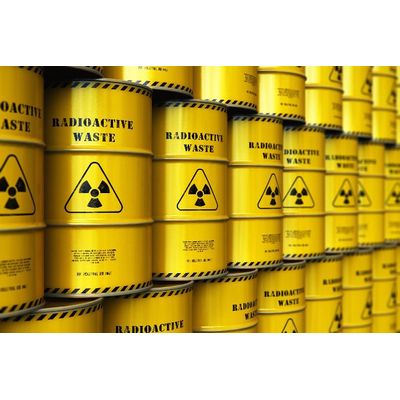
Absorption solutions for waste encapsulation sector - Health and Safety - Radiation Safety
KMI Zeolite can play an important role in retarding the migration of radionuclides that occur in solution as simple cations, specifically Caesium, Strontium & Barium (Cs, Sr, Ba). Natural zeolite is often used to limit the environmental impact of radioactive waste. It supports cement matrix stability and can significantly reduce leaching rates.
KMI Zeolite can play an important role in retarding the migration of radionuclides that occur in solution as simple cations, specifically Caesium, Strontium & Barium (Cs, Sr, Ba). Natural zeolite is often used to limit the environmental impact of radioactive waste. It supports cement matrix stability and can significantly reduce leaching rates.
Natural zeolite is often used to limit the environmental impact of radioactive waste. Historical applications include limiting the impact of the Three Miles Island and Chernobyl nuclear accidents, removing radioactive cesium and strontium isotopes from nuclear industry effluents, and decontaminating water. Since 1985, the Sellafield Ion Effluent Plan has used clinoptilolite to reduce the levels of cesium and strontium discharged into the Irish Sea.
Leaching is a large challenge linked to radioactive waste encapsulation. Studies have found that improving pore structures is one method to contain waste in a solid structure. For example, Bagosi conducted an experiment with a cement and natural zeolite blend to prevent cesium leaching. The results indicated that the addition of zeolite decreased cesium release by up to 75 percent over the course of a three-year period.
Li & Wang studied the effects of zeolite on the strength, hydration heat, and leaching rates of the resin`s cementation matrix. After a simulated leaching test, they determined that the inclusion of zeolite in cement reduced the leaching rates of radionuclides significantly. They concluded that zeolite is a supplement that supports cement matrix stability and can significantly reduce leaching rates.
Hogg and Koop stated that the use of natural zeolite as a binding material prior to encapsulation capitalizes on the unique ability to absorb, trap, and immobilize the contaminants in the zeolite structure. When contaminants are confined, they do not interfere with the concrete development process. Lab results also indicate that there is a reduction in the amount of leachable contaminant when the zeolite is included in concrete formation.
In the process of waste encapsulation, zeolite stabilizes contaminants and contributes to the integrity and corrosion resistance of concrete. Stabilization occurs in five ways: volatile organic compounds are captured by molecular sieving; non-volatile organics are adsorbed onto the surface area of zeolite grains; heavy metals are trapped by ion exchange; radioactive cations are trapped by ion exchange; metals are immobilized by the hydrogen bonding of oxyanions.