


- Home
- Companies
- Latsha Technologies
- Products
Latsha Technologies products
Chlorinator Accessories, Chlorination Plant Chlorine
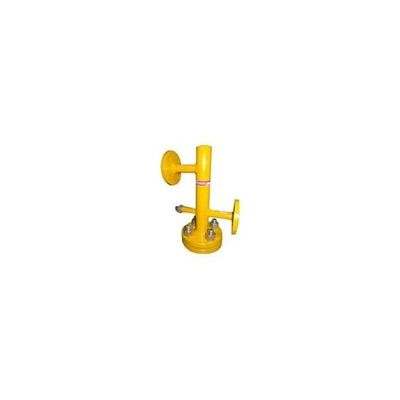
Latsha - Gas Filter
Gas Filter Proper operation of chlorine gas dosing equipment in chlorine gas systems can be ensured only if they are protected against impurities. With the chlorine gas filter, a product is available that removes impurities such as particles and chlorine condensates from the inflowing chlorine gas. Inside the chlorine gas filter, there is a Fiber filter element, on the surface of which the impurities are deposited when the gas flows through the filter.
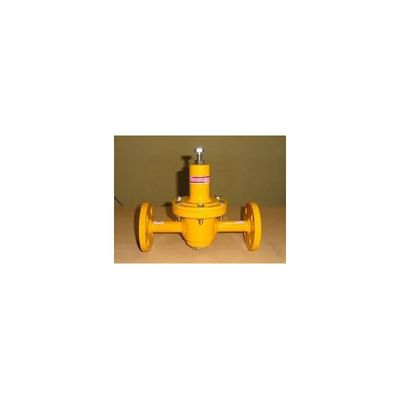
Latsha - Pressure Reducing Valve
Pressure Reducing Valve (PRV) is a spring-loaded diaphragm-actuated valve. The normal set pressure of a PRV is 1-2 kgs/cm2 for an upstream Pressure of 9-13 kgs/cm2 depending on the ambient temperature. The PRV provides superheat for the chlorine vapor thereby reducing the chance of reliquification in the pipeline downstream of PRV. If the PRV is by-passed the superheat provided by well be lost. Besides, chlorine gas metered at the flowmeter/rotameter will be more precise. If the flow of chlorine is metered at reduced pressure. Use PRV in conjunction with a gas filter to avoid impurities getting stuck in the seat of the PRV
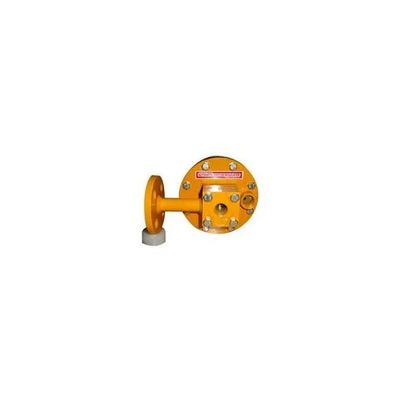
Latsha - Automatic Vacuum Regulator
We are providing completed services for water treatment plant especially in chlorination plant Spares Accessories like Automatic vacuum Regulator Automatic Vacuum Regulator is the most important part of the Chlorinator. Automatic Vacuum Regulator [AVR] is designed to close at pressure and open at a vacuum (normally). So, without vacuum, it should not allow chlorine gas to the injector of the Chlorinator. The logic is that, whenever there is loss of vacuum in the Injector due to no flow or low pressure of motive water, Pipe breakages in Vacuum line, the regulator does not allow the flow of hazardous Chlorine gas, making this system foolproof in terms of safety an operation
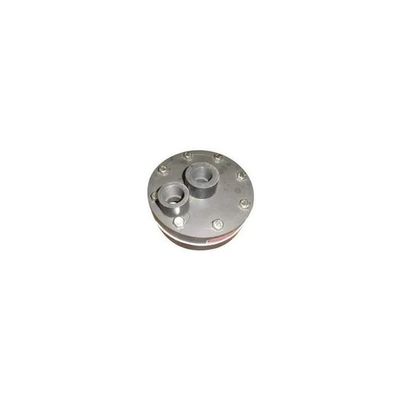
Latsha - Differential Pressure Regulator
Function is to regulate the pressure drop created due to the differential across the Orifice of the Flow Control Valve. Differential Pressure Regulator [DPR] is provided to get stable reading across the Rotameter and also to regulate turbulent action of Vacuum to manageable level.
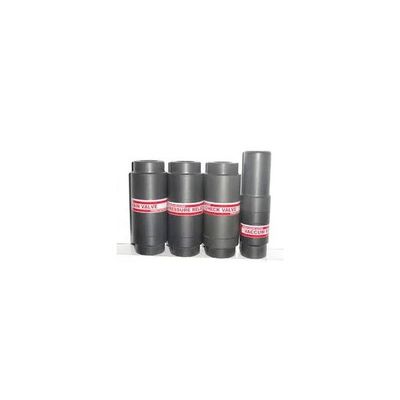
Latsha - Chlorine Safety Valve
Pressure Relief Valve : Releases the held-up volume of gas in the vacuum pipeline, during vacuum breakage. The set relief pressure is 0.3 KSC. These are Vacuum to close and pressure to relieve valve [>0.3 bar] 2. Vacuum Relief Valve: Relieves the excess vacuum (i.e.) vacuum greater than 500 mm of Hg. Prevents the effect of “Suck Back”. Also called Vacuum Breaker. 3. Check Valve: Allows only “Chlorine Gas” to pass through and prevents the water to enter 4. Drain valve: Drains the water that passed through a failed Check Valve. The second line of protection from water entering the system.Please change both the “O” rings of Check Valve and Drain Valve after you notice the water, gas passing through this valve.
Chlorinator- Chlorination Plant
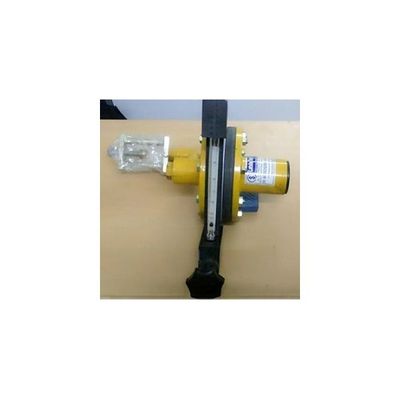
Latsha - Cylinder Mounted Chlorinator
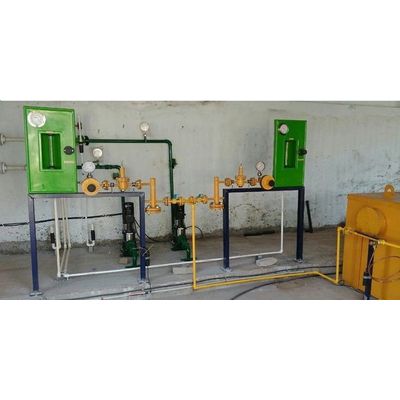
Latsha - Frame Mounted Chlorinator
Chlorinators are devices used to inject gaseous chlorine into the water. They are used to add chlorine to water treatment plant for disinfection. Chlorinators can also be used to add chlorine to sewage to destroy bacteria and eliminate odors. chlorination plant are said to be fairly simple to operate. Easy operation, combined with chlorine`s ability to destroy bacteria within a desirable period, makes chlorinators popular for many applications. Furthermore, chlorine offers long-term protection against certain bacteria and is fairly low in cost.
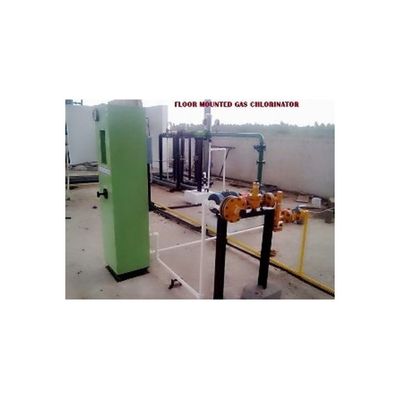
Latsha - Floor Mounted Gas Chlorinator
Gaseous chlorine is cabinet mounted vacuum operated, solution feed type. It is designed for floor mounting, Frame, or wall mounting and incorporates a filter, flush-mounted chlorine pressure gauge, are liable vacuum regulator, and an accurate flow-meter, a precise flow control valve, and effective differential regulator, an injector, and a positive non-return valve. All the components are mounted in a two-tone, gel-coated attractive fiberglass cabinet. The vacuum the regulator is of an exclusive design, which opens only when the vacuum is generated by the injector. On failure of water to the injector the vacuum regulator closes automatically. D P Regulators are provided only in Capacities of 10 kgs/hr and above.
Evaporator
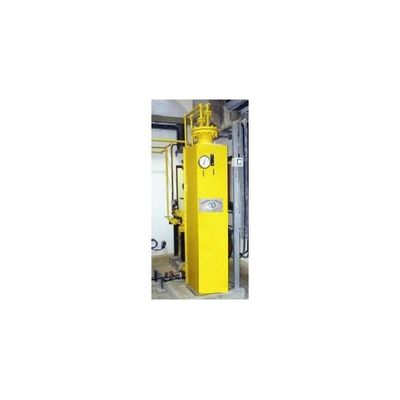
Latsha - Chlorine Evaporator
Liquid chlorine from the toner /Cylinders is transferred to the inner chamber of the vaporizer due to tonner pressure. This chamber is immersed in a water bath, which is heated by 3 Nos. heaters. The water to the water bath is supplied via a pipe which is controlled by an on-line solenoid Valve, which opens once the water level falls below the preset level and closes once the water reaches the higher preset level. The temperature of the water is controlled by a thermostat, which switches on or off depending on the temperature reached, by the water bath. Cathodic protection is provided where DC current is passed through sacrificing carbon anodes to protect, the Heat Exchanger, and Hot water tank surface exposed to water from Galvanic Corrosion. water treatment plant chlorination plant gaseous chlorinator.
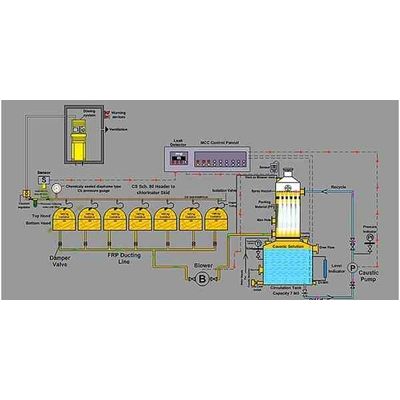
Latsha - Chlorine Absorption System
CHLORINE TONNER LEAK ABSORPTION SYSTEM ( Chlorine Scrubber) gaseous chlorine has manifold diverse uses. As its usage and handling rise, the danger associated with it also rises. As such a potential risk involves a severe emergency that may suddenly and unexpectedly occur, such eventualities should be anticipated and proper methods should be devised in advance to meet them. Nowadays the industrial safety and protection control Personnel are very serious about accident-prone poisonous gas leakage, particularly chlorine leakage.