


- Spectral Lamps and Light Sources for Spectroscopy
- Monochromators, Spectrometers & Spectrographs - UV-Visible to Long Wave Infrared
- Monochromators, Spectrometers & Spectrographs - Deep UV and Vacuum Ultraviolet (and into the UV-Vis and IR)
- Monochromators, Spectrometers & Spectrographs - Soft X-ray and Extreme Ultraviolet (and into the VUV)
- Detectors and Visualization Systems for Spectroscopy
- Detectors and Visualization Systems for Spectroscopy - VUV Si Detector
- Detectors and Visualization Systems for Spectroscopy - Wavelength Drive Stepper Systems, Controllers and Power Supplies
- Accessories - Drives & Controllers
McPherson products
Detectors and Visualization Systems for Spectroscopy
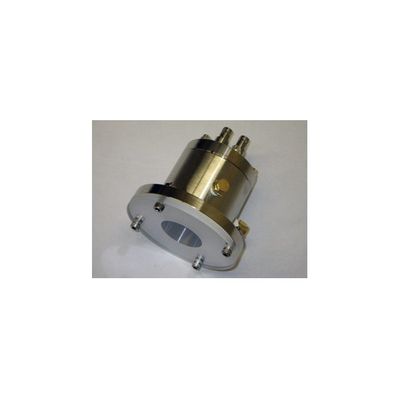
McPherson - Model 425 - Channel Electron Multiplier
The Model 425 Channel Electron Multiplier is a windowless, solar blind detector for operation in the 1 to 180 nanometer region. It is encased in a vacuum tight housing for vacuum operation. The Model 425 is ideal for measurements in the Extreme and Vacuum UV (EUV and VUV) where the solar blind feature eliminates potential interference from long wavelength ultraviolet and visible light. It may be operated in pulse-counting mode or DC. The CEM is also available with coatings like Cesium Iodide or Magnesium Fluoride to enhance response in different energy regions.
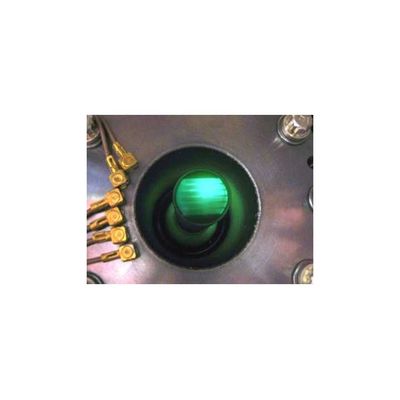
McPherson - Model MCP - Microchannel Plate Intensifier
Operating in the Soft X-ray Extreme UV or Vacuum UV requires specialized detection systems. Difficulties with conventional detection schemes in this wavelength range include window transmittance, vacuum sealing and photocathode materials sensitivity. In order to operate a multichannel or array based detection system in the vacuum ultraviolet, one method is to use an open, windowless microchannel plate (MCP) as an intensifier. MCP intensifiers are most frequently employed when direct detection charge coupled detectors (CCDs) cannot be implemented due to geometry or packaging (e.g. at grazing angles) or when shutter, or gating is required.
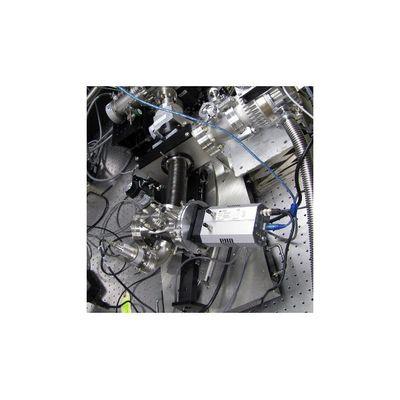
McPherson - Windowless, Back Illuminated CCD Sensors
We do not have a wafer fab or foundry for making CCD sensors at McPherson. We buy these cameras. A CCD array detector can speed up data acquisition of spectra – collecting a whole spectrum in the time scanning acquires one point. Direct detection CCD sensitivity is better in the soft x-ray, extreme and vacuum ultraviolet (response graph below). CCDs enable rapid data collection, imaging spectroscopy and more. For now, because pixels are relatively large, monochromator exit slits with single channel detectors provide better spectral resolution and faster data acquisition.
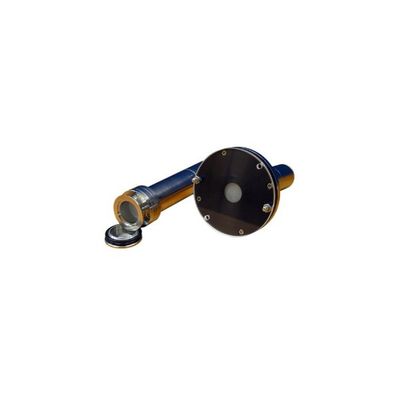
McPherson - Model 658 - End-on Photomultiplier Tube (PMT) Housing Assembly
The photomultiplier tube (PMT) is among the most popular photosensitive devices. Various tube types and scintillator treatments permit use of these detectors from the Extreme Vacuum Ultraviolet (EUV) through the Visible and into the near Infrared. They provide large photosensitive areas, secondary emission multiplication (high gain), low dark noise and fast time response. Photomultipliers are ideal for a broad range of spectroscopy applications.
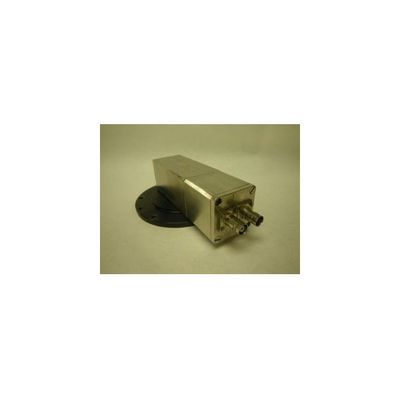
McPherson - Model 654 - Side-on Photomultiplier Tube (PMT)
The photomultiplier tube (PMT) is among the most popular photosensitive devices in use today. Various tube types and treatments permit use of these detectors from the Extreme Vacuum Ultraviolet (EUV) through the Visible and into the near Infra-Red. Featuring large photosensitive areas, secondary emission multiplication, low dark noise and fast time response - photomultipliers are ideal for a broad range of spectroscopy applications. The Model 654 provides the user with a light tight housing for mounting 1 1/8" (28-mm) side-on type PMT`s. The housing is equipped with RF shielding and has connectors for current output and high voltage (HV) input. Some models are equipped for VUV operation. All 654 assemblies are provided with a socket for a specified tube. Tubes are specified separately.
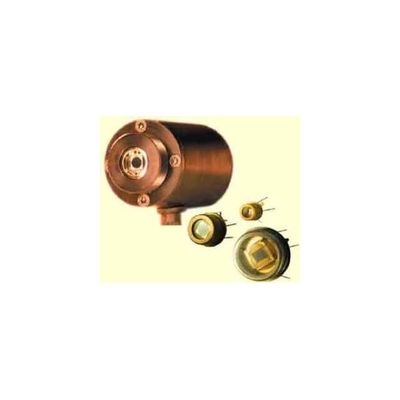
McPherson - Model 663 Series - Silicon Photodiode Detector
Model 663-2 UV Silicon (Si) Detector for 250-nm to 1-micron, 2-mm diameter element, 2 stage TE cooler with controller, may be operated DC or modulated. This high performance photodiode/receiver is operated with a thermoelectric cooler for stabilization/cooling with fdeatures a dual gain input transimpedence amplifier. The output voltage is proportional to the input signal. The photodiode amplifier is a DC coupled dual gain system. Care should be taken in shielding the unit from stray light during operation to prevent saturation of the amplifier (and potential failure). Comes with bias supply, TE cooler control, and is mounted to a mounting flange.

McPherson - Scintillator for VUV Detection
Photomultipliers offer high gain, low noise and fast time response. They are among, if not the most popular and widely used detectors for spectroscopy. It makes sense then, to detect vacuum ultraviolet radiation with a photomultiplier tube. But photomultiplier tubes cannot detect very short wavelengths by themselves. Their glass or quartz enclosure limits the response range. Addition of a scintillator is one method to easily sensitize a PMT for shorter wavelengths (to at least 30nm).