

- Home
- Companies
- Micro Analysis Inc.
- Products
Micro Analysis Inc. products
Elemental Analysis
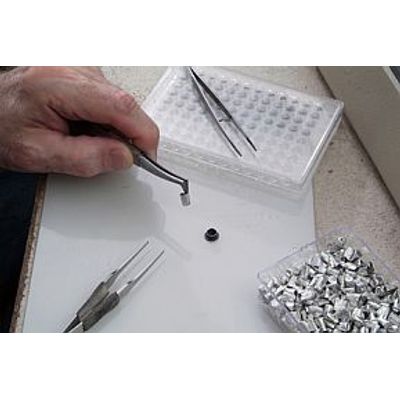
Elemental Analysis is a process where a sample of a compound is analyzed to determine its elemental composition. Micro Analysis has provided elemental analysis services for customers in a great number of industries, research, and academic organizations: Fuel and oil, Biodiesel, Biofuels, Farming products, chemicals, residues, soil, Paint, Foam, Sealants, General Chemical and Specialty Chemical, Pharmaceutical products, Cosmetic products, Food and Beverage, Milk compounds. Micro Analysis commonly performs Carbon, Hydrogen, Nitrogen, Oxygen, Sulphur, halogene and halide analysis, Kjeldahl Nitrogen, inorganic analysis, trace metals, and ICP-AES.
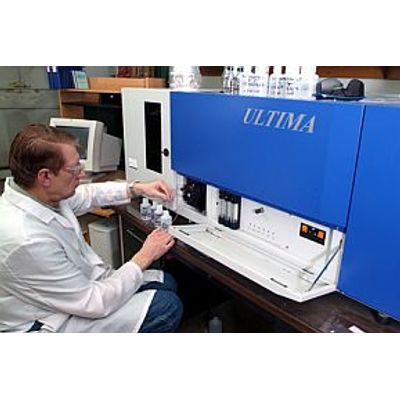
CHN Analysis, Carbon Hydrogen Nitrogen Analysis
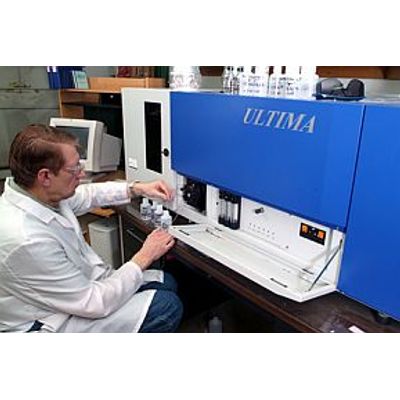
ICP Analysis, ICP-AES
ICP Analysis, performed by ICP-AES, Inductively Coupled Plasma-Atomic Emission Spectroscopy. Micro-Analysis, Inc. has accumulated a great deal of experience providing ICP Analysis services for our clients. ICP Analysis provides quantitative determination of metals present in a range of materials from organic compounds to metal alloys. Over 65 different metals can be detected down to less than 1 ppm to percent content. An ICP scan is helpful in addressing concerns with unknown metal contamination and material identification. This semi-quantitative/qualitative analysis scans for the presence of 68 metals. Please see the list of visible elements by ICP-AES below.
Ion Chromatography Analysis
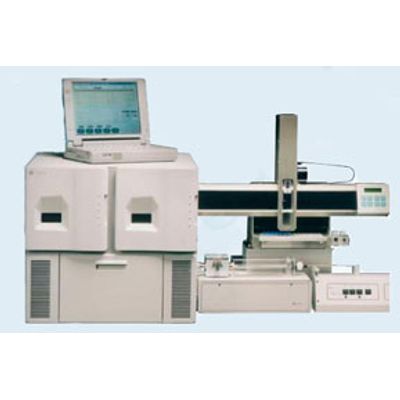
Ion chromatography (or ion-exchange chromatography) is a process that allows for the separation of ions and polar molecules based on their charge by way of an ion-exchange resin. It is a form of liquid chromatography whose greatest use is in the analysis of anions.
Nitrogen by Kjeldahl
Description of Process: Total nitrogen is converted to ammonium acid sulfate by digestion with sulfuric acid in the presence of potassium sulfate and a catalyst. The resulting solution is made alkaline and the ammonia evolved by steam distillation and caught in excess boric acid and titrated directly with standard acid. This method is applicable to all compounds where nitrogen is linked to carbon or hydrogen. Compounds containing nitrogen linked to nitrogen, oxygen or sulfur cannot be detected by this method. Precision and Limit of Detection vary based on N concentration and sample weight. Precision: +/- 0.020% LOD: < 0.020%. The Elements We Currently Process: Organically Bound Nitrogen