


MirSense products
Industry and Environment
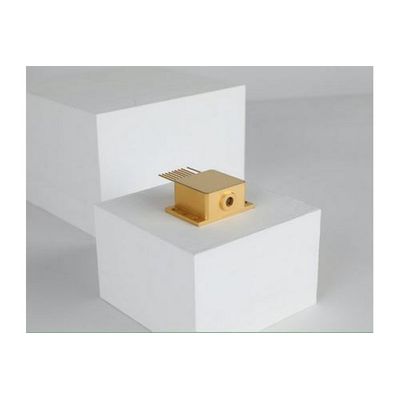
Unimir - Distributed feedback Quantum Cascade Lasers (QCLs)
Power and precision; Laser spectroscopy is a technique used to measure concentration of molecules in various applications like pollution monitoring, process control or non-invasive medical monitoring. Indeed, most molecules absorb infrared light at specific wavelengths and therefore, by tuning our infrared laser at the right wavelength and shining it on a given gas, liquid or solid sample, our clients can determine the amount of molecules present in the sample with the right detection setup (using pyroelectric detectors or photoacoustics for example).
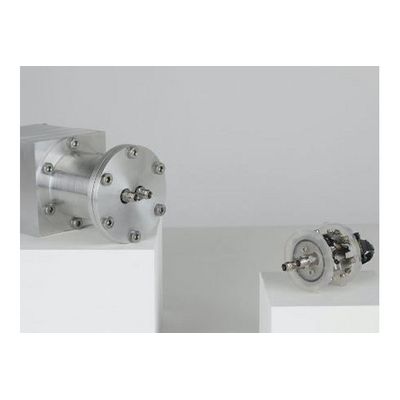
Multisense - Industrial Gas Analyser
MultiSense module is a OEM multigas on line analyser for industrial use, specifically designed to meet the expectations of integrators, gas system manufacturers, gas analyser manufacturers. This module is based on photoacoustic spectroscopy using the mirSense patented Quantum Cascade Laser (mid-IR wavelengths).
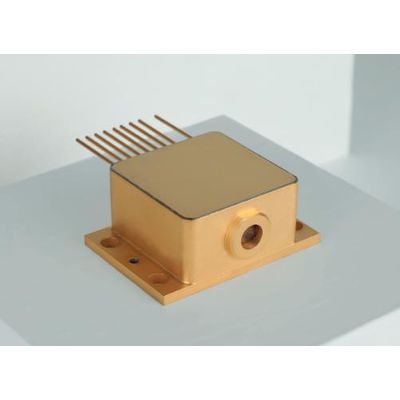
UniMir - Model UN0674C005HNA - Single Mode Distributed Feedback Quantum Cascade Laser
The UniMir products are Distributed Feedback (DFB) Quantum Cascade lasers (QCL) that emit CW (continuous wavelength) inf rared light at room temperature. The laser is mounted on a thermoelectric cooler inside a hermetically sealed High Heat Load (HHL) package integrating a collimation lens and a thermistor to readout the laser chip temperature. By controlling the chip’s operating temperature through the Peltier element inside the laser’s package, customers tune the emission wavelength without mode hopping while keeping a single-mode operation.
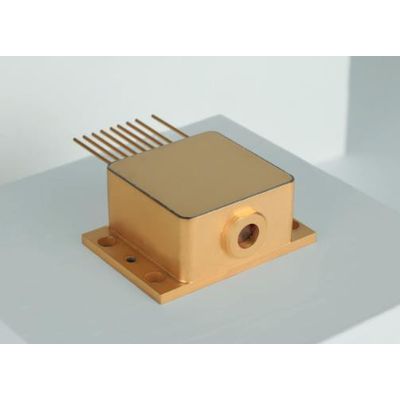
UniMir - Model UN0713C005HNA - Single Mode Distributed Feedback Quantum Cascade Laser
To monitor HCN Hydrogen Cyanide ~713 cm-1 wavelength. The UniMir products are Distributed Feedback (DFB) Quantum Cascade lasers (QCL) that emit CW (continuous wavelength) inf rared light at room temperature. The laser is mounted on a thermoelectric cooler inside a hermetically sealed High Heat Load (HHL) package integrating a collimation lens and a thermistor to readout the laser chip temperature.
Defense and Security
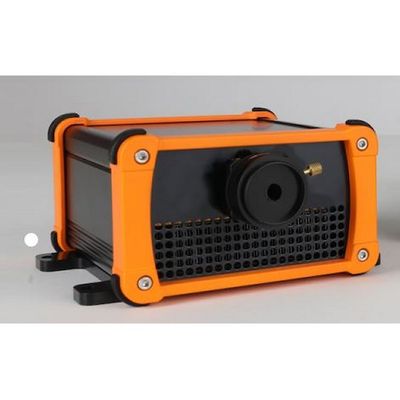
PowerMir - Model 4 µm QCW QCL - ITAR Free MIR High-Power QCL Systems
The PowerMir product line is high power pulsed Fabry Perot Quantum Cascade Lasers (QCL) based on high-performance proprietary technology. The lasers emit in the 2 transmission bands of the atmosphere (MWIR : 3 to 5 µm and LWIR : 8 to 12 µm). Proudly manufactured in France, mirSense lasers are ITAR f ree and have outstanding power and wall-plug efficiency performances. Customers can purchase different laser system configurations like plug-and-play benchtop turnkey systems, OEM driver + laser modules or just the HHL-packaged lasers.
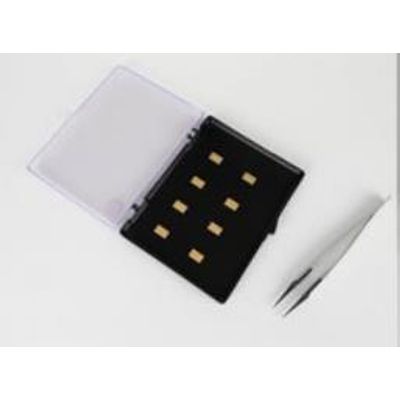
PowerMir - Model 4.6µm QCW QCL - ITAR Free MIR High-Power Quantum Cascade Laser Systems
The PowerMir product line is high power pulsed Fabry Perot Quantum Cascade Lasers (QCL) based on high-performance proprietary technology and the lasers described in this
datasheet emit around 4.6 microns of wavelength.
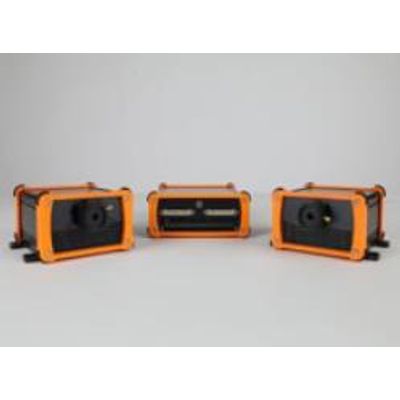
PowerMir - Model 4.8µm QCW QCL - ITAR Free MIR High-Power Quantum Cascade Laser Systems
The PowerMir product line is high power pulsed Fabry Perot Quantum Cascade Lasers (QCL) based on high- performance proprietary technology and the lasers described in this datasheet emit around 4.8 microns of wavelength.
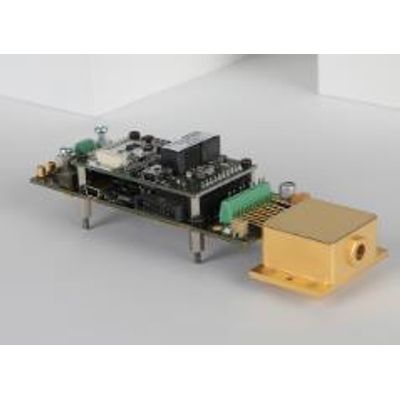
PowerMir - Model 9.4µm QCW QCL - ITAR Free MIR High-Power Quantum Cascade Laser Systems
The PowerMir product line is high power pulsed Fabry Perot Quantum Cascade Lasers (QCL) based on high- performance proprietary technology and the lasers described in this datasheet emit around 9.4 microns of wavelength.
Technology
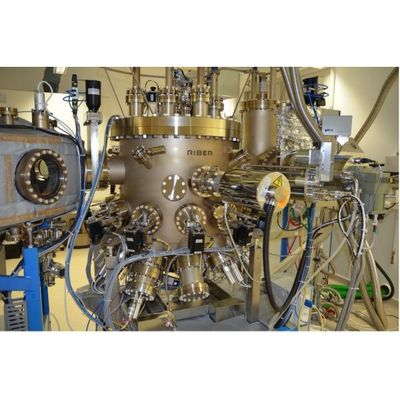
MirSense - Model QCL - Quantum Cascade Laser (QCL) Technology
The core technology underlying mirSense activity is the Quantum Cascade Laser (QCL). The QCL is a compact, lightweight and robust solid state laser source emitting in the mid-infrared. It is the result of state of the art scientific research on semiconductor quantum devices and years of academic and industrial developments since its invention, 25 years ago.
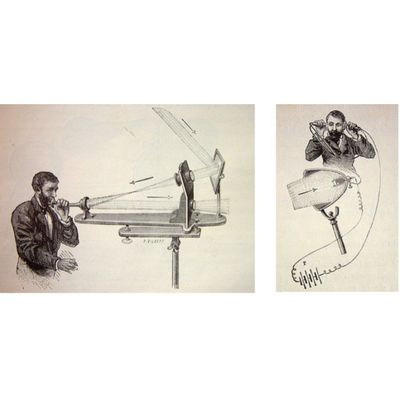
MirSense - Photoacoustic Spectroscopy Technology
The photoacoustic effect has been discovered in 1880 by Alexander Graham Bell. This effect designates the generation of sound waves by a solid, liquid or gas illuminated by an electromagnetic wave modulated at an acoustic frequency.