

- Home
- Companies
- Moldow A/S
- Products
Moldow A/S products
Dust Extraction - Filters
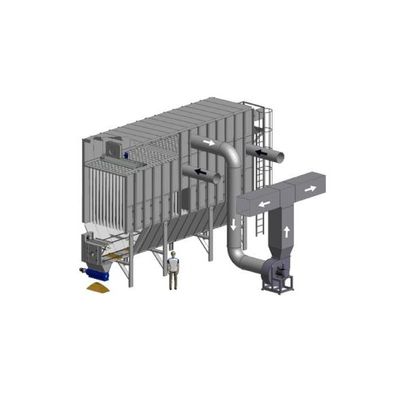
Moldow - Model MHL - Modular Baghouse Filter
Most Popular Baghouse Filter: Moldow’s MHL filter, “Moldow High Load”, is a modular baghouse filter designed for air volumes ranging from approx. 20,000 to 250,000 m³/h (11,500 and 150,000 CFM) and continuous operation, 24 hours a day, 7 days a week. It is no doubt our most popular filter system due to the high capacity and easy expansion and adaptation. The MHL filter can be used in both positive and negative pressure systems, and it can withstand a differential pressure of up to 5,000 Pa (20 in wg).
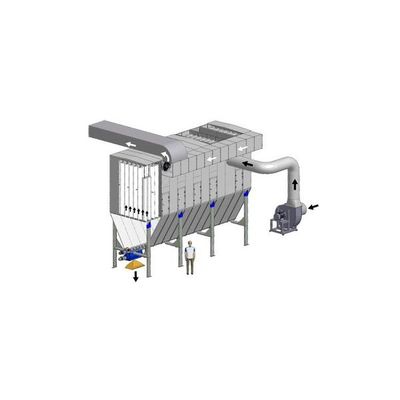
Moldow - Model SB - Baghouse Filter
The SB filter is an efficient filter suited for positive operation and air volumes from 5,000 to 175,000 m³/h (3,000 to 100,000 CFM) depending on how the filter is constructed and the waste type and volume. The filter is an enclosed, modular bag filter for outdoor installation either on roofs, above waste containers or at ground level outside the building.
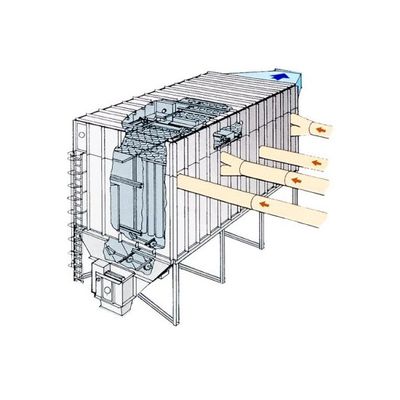
Moldow - Model MX - Bag Filter
The MX filter is a reliable, modular designed bag filter for continuous operation and intended for both positive and negative pressure systems. The dust collector is used within the fiber industry for production facilities handling e.g. mineral wool, spun glass, cellulose fibers and non-woven fabrics, and within the woodworking, paper, printing and cardboard industries where large amounts of waste material are produced.
Separators
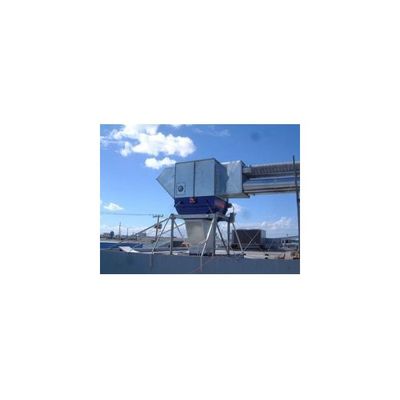
DanSep - Material Separator System
Effcient material separation within paper, carton and corrugated cardboard. Moldow offers the highly trusted DanSep material separation unit for energy efficient, effective and compact waste and trim separation. The DanSep material separator unit can be used as the main separation component in your extraction system, and it can be placed directly over balers, containers and compactors of all kinds and before dust extraction systems. DanSeps separator can separate most paper and polymer materials in thicknesses from films to corrugated cardboard, and is an essential production component for many manufacturers of e.g. paper, coffee filters, corrugated cardboard boxes and much more.
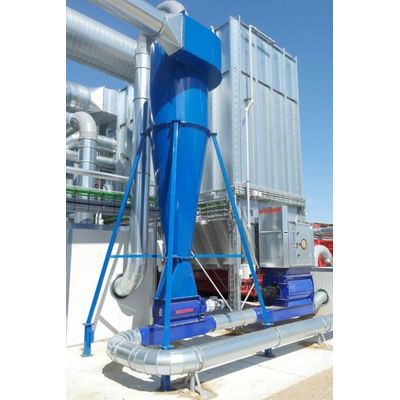
Moldow - Cyclone Separators for Dust
Cylones for use in Dust Extraction Systems for Dust Separation: For cyclonic separation of coarse material from the air before it reaches the dust collector and filtering unit, a cyclone can be used. The metal construction and cyclonic filtering action allow for the safe separation of all materials even those which are very course or sharp which otherwise might damage typical cloth filters.
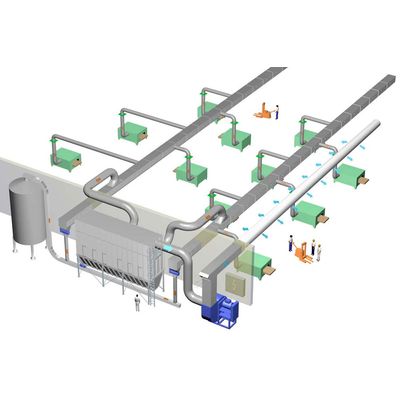
Moldow - Transflow Separation Ducting System
The Transflow system can be a great advantage for production facilities within the woodworking industry with large amounts of extraction material as it allows for handling of large dust loads and flexible machinery placement and connection. As the waste material enters the Transflow, the airspeed is greatly reduced due to the plenum design. This forces all but the finest particles to fall out of the airstream and into the base of the Transflow system where a chain conveyor transports it to a rotary valve situated at the end of the unit. After passing through the rotary valve, the material is transported in a dilute pneumatic conveying system or alternatively to a chain conveyor system and further to a waste silo or container. The light air-borne dust, which remains in the airstream, is passed on to a traditional bag filter system.
Rotary Valves
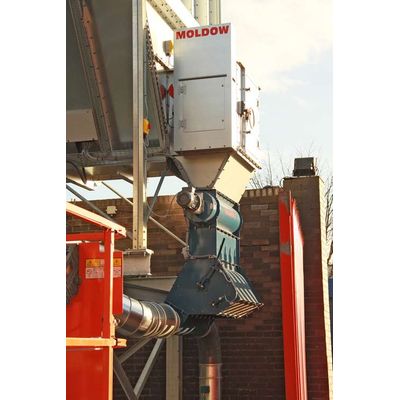
Model ATEX and non-ATEX - Rotary Valves
For use in combination with our dust collectors, Moldow supplies both ATEX and non-ATEX rotary valves. Further to that, two types of ATEX approved rotary valves are offered: RS-EXL without pressure control unit, and RS-EXH with pressure control unit for increased safety in case of explosion. The Moldow Rotary Valve is universally suitable for continuous pressure-less and non-compressed discharge of material from filters, cyclones, silos or conveyors, and they also function as safety components for isolation of explosions in the filter. The ATEX rotary valves are type approved for dust explosion class ST 1.
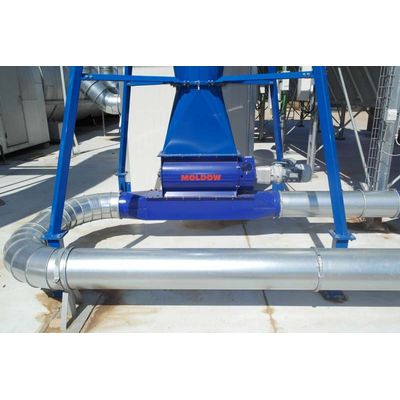
Moldow - Model RS-EXH - Valve With Pressure Transmitter
Contrary to the RS-EXL valves, the RS-EXH valves are designed with a pressure control unit ensuring that the rotary valve automatically stops in case of an explosion, thereby preventing flames and burning debris from passing through the rotary valve. A pressure transmitter located on the side of the filter registers the pressure inside the filter. If a significant increase is detected, the control unit automatically shuts down the rotary valve. At the same time, a signal is released that can stop the whole system if connected to the system’s emergency stop device.
Conveying
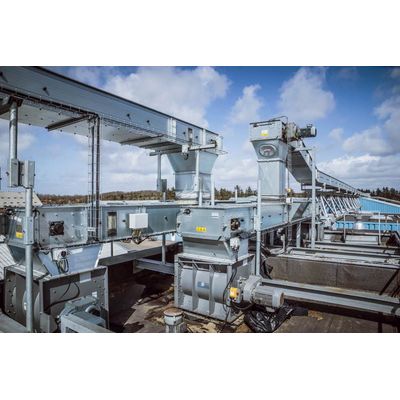
Moldow - Chain Conveyor Transport System
Energy Efficient Chain Conveyor System: The Moldow Chain Conveyor System is an environmentally friendly and energy saving solution for horizontal or vertical transport of chips from the filter to e.g. a silo. The system is an alternative to the traditional Pneumatic transfer system and it uses only about 1/10 of the energy that a pneumatic system uses. The chain conveyor system is built up of modules with different lengths and bending radius. The conveyor system is supplied in two models: type 450 for handling up to 60 m3/h (35 ft3/min) of waste, and type 650 for up to 100 m3/h (60 ft3/min). The chips are transported by means of a simple drag chain in an enclosed rectangular duct.
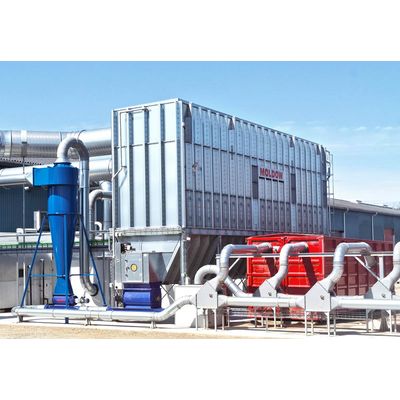
Moldow - Pneumatic Transport System
Moldow has installed a large number of extraction systems which utilize dilute pneumatic conveying principles. A Dilute Pneumatic conveyor is established using traditional round ducting and fans. The system can be used to transport waste from the filter unit to a silo or container. Since the system uses air to transport waste, there are limits to the amount of waste which can be transported. Typically the system is used to transport light to moderate amounts of waste. Dilute pneumatic conveyors are very easy and cost effective to establish when compared to Chain Conveyor systems, however they are far less energy efficient.