

Particle Technology Labs
7 Applications found



Particle Technology Labs applications
Particle size, particle concentration and other physical characterization analyses are critical to many environmental applications. Regulatory agencies in the environmental sphere demand strict compliance to standards and discharge regulations. Physical testing of samples for parameters such as particle size and concentration can give insight to the process control engineer on how effective and compliant a discharge handling system is operating. Particulate loading from both air emissions and waste water discharge are monitored in many industry sectors and PTL testing provides valuable supporting data in this monitoring process.
Supporting drug development with pharmaceutical testing is some of the most exciting work we do. As a premier cGMP contract service laboratory, PTL partners with pharmaceutical scientists to identify key physical characteristics of pharmaceutical APIs and excipients ranging from powders, solids and liquids. With over a decade of experience testing a vast array of pharmaceutical products, PTL’s analytical staff uses custom-designed test methods for particle size, particle shape, surface area, pore volume, pore size, thermal analysis, powder flowability and zeta potential analyses.
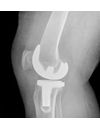
Advances in biomedical implant and device technology continue to present new challenges in the area of physical testing. Particle Size Distribution, Surface Area and Porosity measurement data are invaluable to the biomedical researcher. PTL partners with each client to design projects that provide this needed information while controlling the costs of research. Applications have included particle size analysis of wear particles in fluid submitted from implant fatigue studies and pore size analysis of tricalcium phosphate granules compressed into bone grafting media. Evaluation by photomicroscopy and mercury porosimetry of artifical ligament materials have provided insight to researchers on their products.
PTL`s service to the food and beverage industry is consultative and exacting. Manufacturers need to identify and control particle size distribution and other physical properties of food powders and emulsions in order to control the quality of the food_beverage_particle_testing_analysisfinished product. Factors such as appearance, taste, “mouth feel”, processing and handling are all affected by physical characteristics including particle size, particle shape, surface area, thermal properties, powder flowability, and for emulsions, zeta potential.
Concurrent with the U.S. Food and Drug Administration’s final rule establishing regulations to require current good manufacturing practices (cGMPs) for dietary supplements, PTL can offer cGMP services to all supplement manufacturers. PTL has sustained its FDA registration since 1994, which involves rigorous inspections by FDA every 2 years or sooner. According to the final rule, proper controls must be in place for dietary supplements to be produced in a consistent manner for identity, purity, strength, and composition. PTL’s particle characterization tests can be conducted following FDA regulations. Valuable testing such as particle size and shape, image analysis, B.E.T. surface area, pore volume and pore size can be analyzed under cGMP compliance. These analyses can give insight into absorption, strength, and composition of the material being processed.
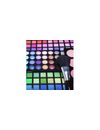
PTL’s analytical staff has years of experience designing test methods and performing analysis for cosmetic, skin care, fragrance and personal cosmetics_particle_testinghygiene samples. Whether your company needs a third party verification, routine QC confirmation, stability studies or one time testing, PTL will create a project to meet your needs. Applications include the size and shape of cosmetic enhancers (glitter particles for example) in a final product, droplet size from spray nozzles/atomizers and particle size of emulsion particles comprising creams/lotions. In addition, the particle size of powdered cosmetics is of tremendous importance in how they flow, cover and can directly affect their appearance as well as the user’s skin.
Serving the abrasive industry over the last 2 decades, the most common testing performed for this field is particle size and shape analysis. The world of abrasives can encompass a host of varying materials from diamond dust, silicon and tungsten carbide, fused silica and quartz, to polished glass and medical abrasives. particle_size_of_abrasives With sizing instrumentation capable of measuring from a few nanometers up to 2000 microns and classic techniques such as sieving for even larger sizes, PTL has the expertise and equipment capable to measure any abrasive type and size. Particle size distribution analyses on abrasives provide valuable insight to engineers in several areas. For example, attrition products from classified spent abrasives can often be seen as a shift to smaller particle sizes.