

Porometer a Division of Aptco Technologies Nv products
Pore Size Distribution - Gas Liquid Porometry
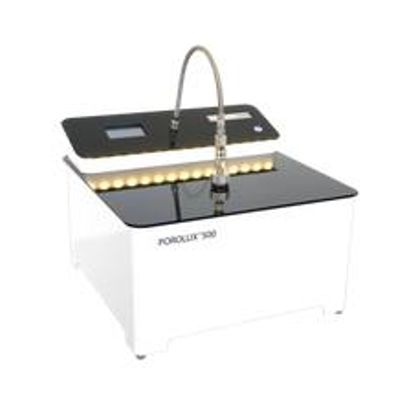
Porolux - Model 100, 200 and 500 - Gas Liquid Porometer
The POROLUX™ 100, 200 and 500 are gas liquid porometers based on the pressure scan method developed for the rapid measurement of through-pores in materials such as filters, nonwovens, textiles, paper, membranes, hollow fibres, etc.
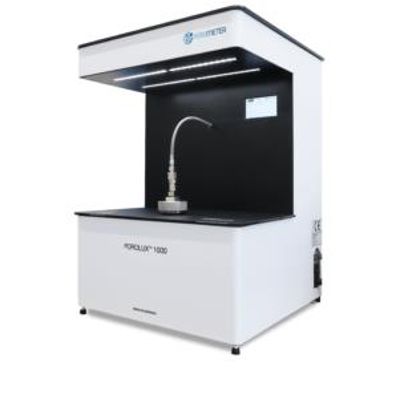
Porolux - Model 1000 series - Comprises Research Grade Gas Liquid Porometers
ThePOROLUX 1000series comprises research grade gas liquid porometers for the rapid measurement of through-pores in porous materials based on the pressure step/stability method. The target pressure is achieved by combining an inlet valve for the gas, which generates the initial pressure, and a specially designed needle valve, which subsequently adjusts very precisely the pressure. The pressure and flow sensors will only take a data point when the user defined stability algorithms are met for both pressure and flow. In this way, the POROLUX™ 1000 detects the opening of a pore at a certain pressure and waits until all pores of the same diameter are completely opened before accepting a data point. This results in very accurate measurement of pore sizes and allows a calculation of the real pore size distribution.
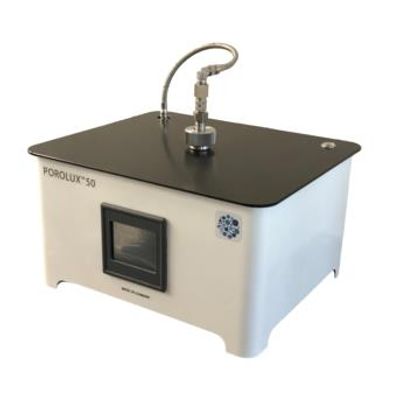
Porolux - Model 50 - First Bubble Point Tester
The POROLUX™ 50 is our newly developed first bubble point (FBP) tester, and is used to detect only the largest pores (FBP) in filtration and separation media. With a pressure going up to 5 bar (75 PSI), the instrument is able to detect pores down to 0.1 µm.
Pore Size Distribution - Liquid Liquid Porometry
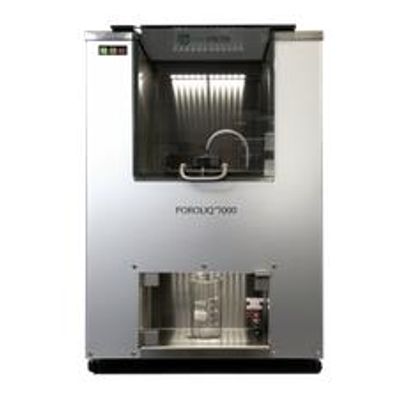
Poroliq - Model 1000 series - Liquid Liquid Porometer (LLP)
The POROLIQ 1000 is a Liquid Liquid Porometer (LLP). This rapid, precise method employed by the POROLIQ™ 1000 allows for testing of pore size down to 2nm and, compared to other techniques, uses lower pressures for characterisation of traditional micro-, nano-porous materials.
Pore Size Distribution - Consumables
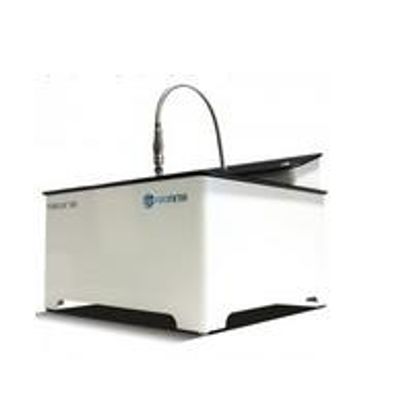
Porometer - Wetting Liquids System
Also, it has to be chemically inert and should not cause swelling of the sample. In many cases, the best results are obtained by using fluorinated hydrocarbons. These liquids have low surface tension (around 16 dyn/cm) and low vapour pressures, which minimises any potential evaporation during the measuement. Sometimes silicone oils are used. They have a high viscosity, a low surface tension and a low vapor pressure. The disadvantage of silicone oils is that it is hard to clean them out of inserts. the sample holder and supports. The residual silicone oil can contaminate subsequent tests, which can prevent the porometer from getting good dry curves.
Membrane Synthesis
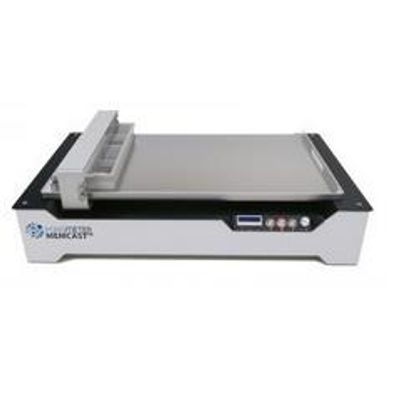
Memcast - Automatic Film Coater
The automatic film coater MEMCAST™ is ideal for the synthesis of flat sheet polymeric membranes by coating a thin film of a polymer solution followed by the immersion of the films in a coagulation bath to obtain the final membrane via wet phase inversion. Reproducible film layers can be prepared, either self standing (e.g. coating directly onto glass, stainless steel, etc.) or on various substrates (e.g. nonwoven, polymeric supports, etc.). The design minimises movement during film application in order to obtain smooth and consistent films. It is robust, durable, easy to clean and very user-friendly.
Membrane and Filter Testing
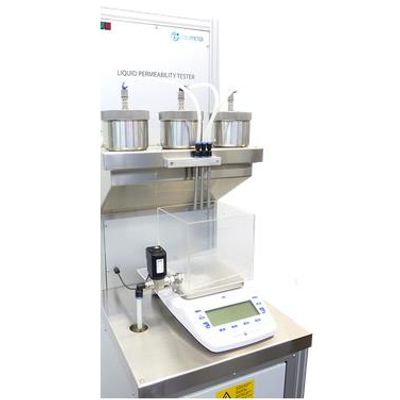
Porometer - Model LPT400 - Liquid Permeability Tester
The Liquid Permeability Tester (LPT 400) is designed to determine the liquid permeability and the Silt Density Index (SDI) in technical materials in a pressure range between 50 mbars and 4 bars.
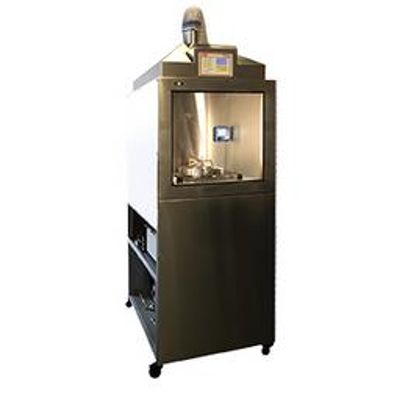
Porometer - Model HTGS - High Throughput Gas Separation System
The new High Throughput Gas Separation (HTGS) system is a device designed to run up to 16 different membrane-based separations of variable single and mixed gas feeds simultaneously. Up to 5 gases (O2, CO2, CH4, N2 and H2) can be mixed at a set flow. The on-line analysis option permits screening mixed gas selectivities, in comparison to single gas permeation experiments.
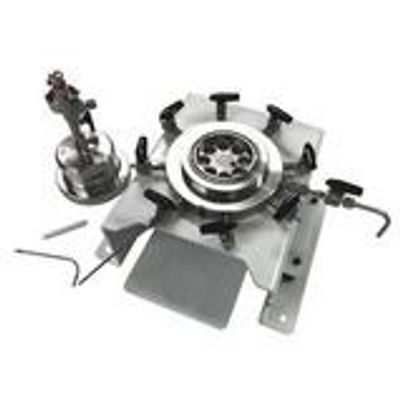
Spider - High Throughput Membrane Testing System
The High Throughput (HT) dead-end filtration module for single feed liquid filtration, SPIDER™is built in stainless steel and it is suitable for both water or solvent based feed solutions. In one single experiment it is possible to carry out either 8 or 16 simultaneous dead-end filtrations (depending on the SPIDER™model), which supposes an extreme gain of time compared to conducting the same experiments one by one with a single cell.