

Process & Control Technologies, Inc. products
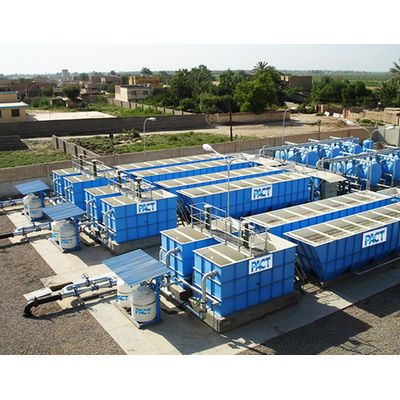
PACT - Model CWTP - Compact Water Treatment Plant
PACT Compact Water Treatment Plant (CWTP) is a state-of-the-art pre-engineered water treatment system, benefiting from decades of hands-on experience in clarification, filtration and disinfection hardware and software. The PACT CWTP utilizes high efficiency chemical and physical processes to achieve portable water standard TSS in a very compact foot-print. NOTE: Ranging from 10 to 300 cum/hr serving populations of 1200 to 36,000 with one unit, can serve much larger populations with additional modules.
PACT - Model UV - Wastewaster Ultraviolet Disinfection
Ultraviolet disinfects waste water by damaging the DNA and RNA of microorganisms such as salmonella, giardia, microscopic worms and viruses. PACT UV systems can have lowpressure or medium-pressure lamps. Medium-pressure lamps are normally used at large treatment facilities. The effective UV dose is dependent primarily on the combined effects of the UV light intensity, the exposure time and the UVT (ultraviolet transmittance). UV Transmission varies over time and from site to site as it is related to the quantity of organics, colloidal solids and other material in the water, which absorb and scatter the UV light as it passes through water.
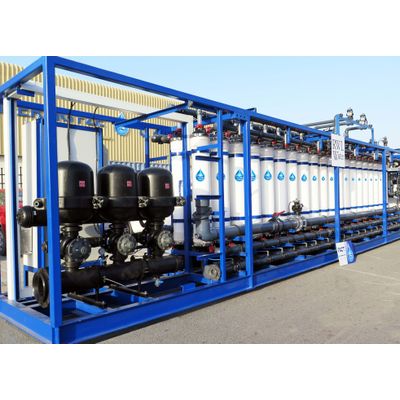
PACT - Model UF - Ultrafiltration Filter
PACT Ultra Filtration (UF) involves pressure-driven separation of materials from a feed solution. Ultra filtration membrane productivity is high, while pressure differences remain low. Ultra filtration can be applied in cross-flow or dead-end mode and are commercially available in tubular, hollow-fiber, plate and frame, and spiral wound configurations. PACT® Ultra filtration (UF) utilises a semi-permeable membrane to physically remove suspended particles from water based on particle size and the pore size rating of the UF membrane. Suspended solids and solutes of high molecular weight are retained in the so-called retentate, while water and low molecular weight solutes pass through the membrane in the permeate (filtrate).
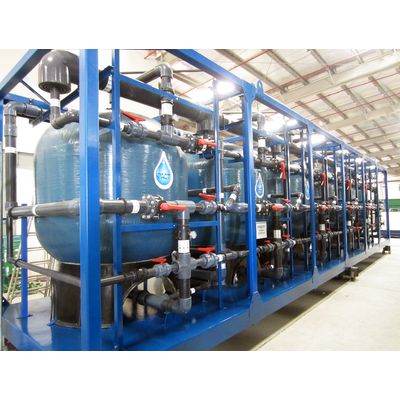
PACT - Model MMF - Multimedia Filter
PACT Multimedia Filter is used to reduce the level of suspended solids in incoming feed water. Suspended solids consists of small particles such as slit, clay, grit, organic matter, algae and other micro-organisms. Incoming feed water that is high in suspended solids can cause a high-pressure drop and reduce the effectiveness of downstream filtration equipment such as reverse osmosis membranes and ion exchange beds. A multimedia filter typically consist of three layers of media consisting of anthracite coal, sand and garnet, with a supporting (non filtering) layer of gravel at the bottom.
PACT - Model OZ - Ozonation System
The PACT OZ is used as a disinfectant in water as well as an oxidizer for COD removal in wastewater. The PACT OZ consists of an ozone generator, catalytic or thermal ozone destructor, oil-less compressor and dryer, titanium diffuser, air or water cooled chiller, programmable logic controller, dewpoint/oxygen/ozone analyzers, oxygen/ozone leak detectors, temperature and pressure indicators, all mounted as a compact unit on a high alloy steel skid.
PACT - Model BWT - Ballast Water Treatment
The PACT BWT a ship-deployed system consists of two main treatment steps that of filtration (PACT SCF) and disinfection (PACT UV). The ballast water is treated at seawater intake (ballasting) and again at ballast water discharge (de-ballasting). During ballasting, water is processed through both the filter and UV stages as it is pumped from sea chest to the ballast tanks. At any one time roughly 7,000 different species are being carried in ships` ballast tanks, and when discharged many of these organisms have the potential to create disastrous biological invasions with serious ecological, economic and public health consequences.
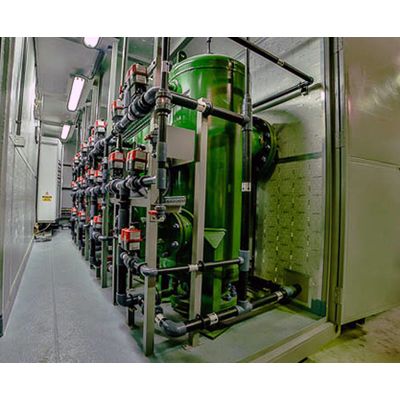
PACT - Model GWT - Grey Water Treatment
Grey water is defined as wastewater, collected separately from sewage flow that originates from clothes washer, bathtub, shower or sink, but not from a kitchen sink, dishwasher or toilet. Grey water is distinguished from black water, which is waste water from toilets, kitchen sinks and dishwashers. Black water should not be reused in the home because of high risk of contamination by bacteria, viruses and pathogens. As water is precious and a lot of water is wasted during flushing of toilets it is a waste to use drinking quality water for the same. This can be achieved by treating grey water. Also this treated water can be used for irrigation in some cases. Grey water treatment is removal of unwanted suspended material from the grey water collected and disinfecting the same to make it useful for toilet flushing or irrigation or discharging to sewer lines according to the local laws applicable.
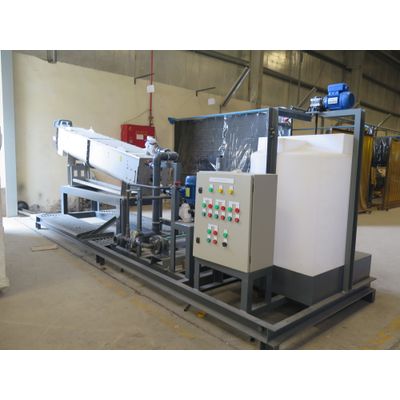
PACT - Model MSD - Mechanical Sludge Dewatering
PACT MSD machines for municipal and industrial water and wastewater dewatering are backed by expert process engineering support, and over 30 years of experience in the industry. Depending on type of sludge to be dewatered, PACT recommends one of several dewatering mechanisms it supplies, namely filter press, belt press or centrifuge. All critical parts (motors, variable drives, bearings, solenoids, pistons, limit switches, E&C, instrumentation, etc.) are sourced from globally reputable name brands.
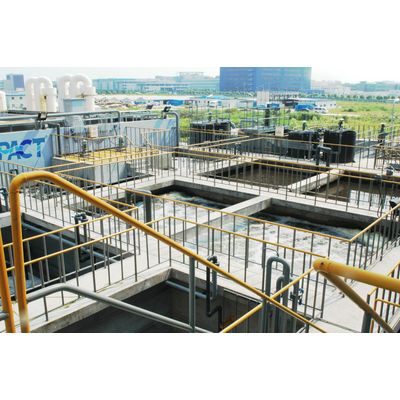
PACT - Model EEAS - Extended Aeration Activated Sludge
PACT extended aeration process offers certain benefits that can be combined with conventional processes to obtain a high quality effluent. Extended aeration agitates all incoming waste in the sludge from a single classifier. The combined sludge starts with a higher concentration of inert solids than typical secondary sludge and the longer mixing time required for digestion of primary solids in addition to dissolved organics produces aged sludge requiring greater mixing energy input per unit of waste oxidized. Sludge may be periodically removed by septic tank pumping trucks as sludge volume approaches storage capacity.
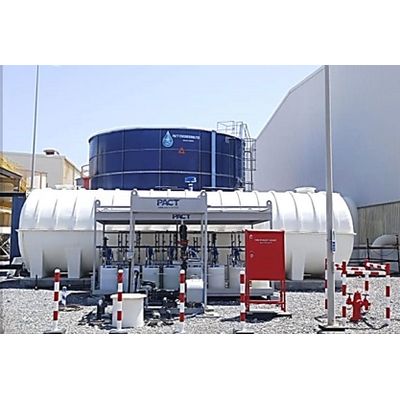
PACT - Model MBBR - Moving Bed Biofilm Reactor
Normal biological water treatment is done traditionally by suspended growth mode (e.g. activated sludge and extended aeration process) or attached growth mode (tricking filter rotating biological conductors). The technology adopted in MBBR is combination of both which works on higher MLSS concentration in MBBR systems fast bio-reactions take place between bacteria and organic matter. There are generally two compartments thereby permitting more efficient and compact treatment.